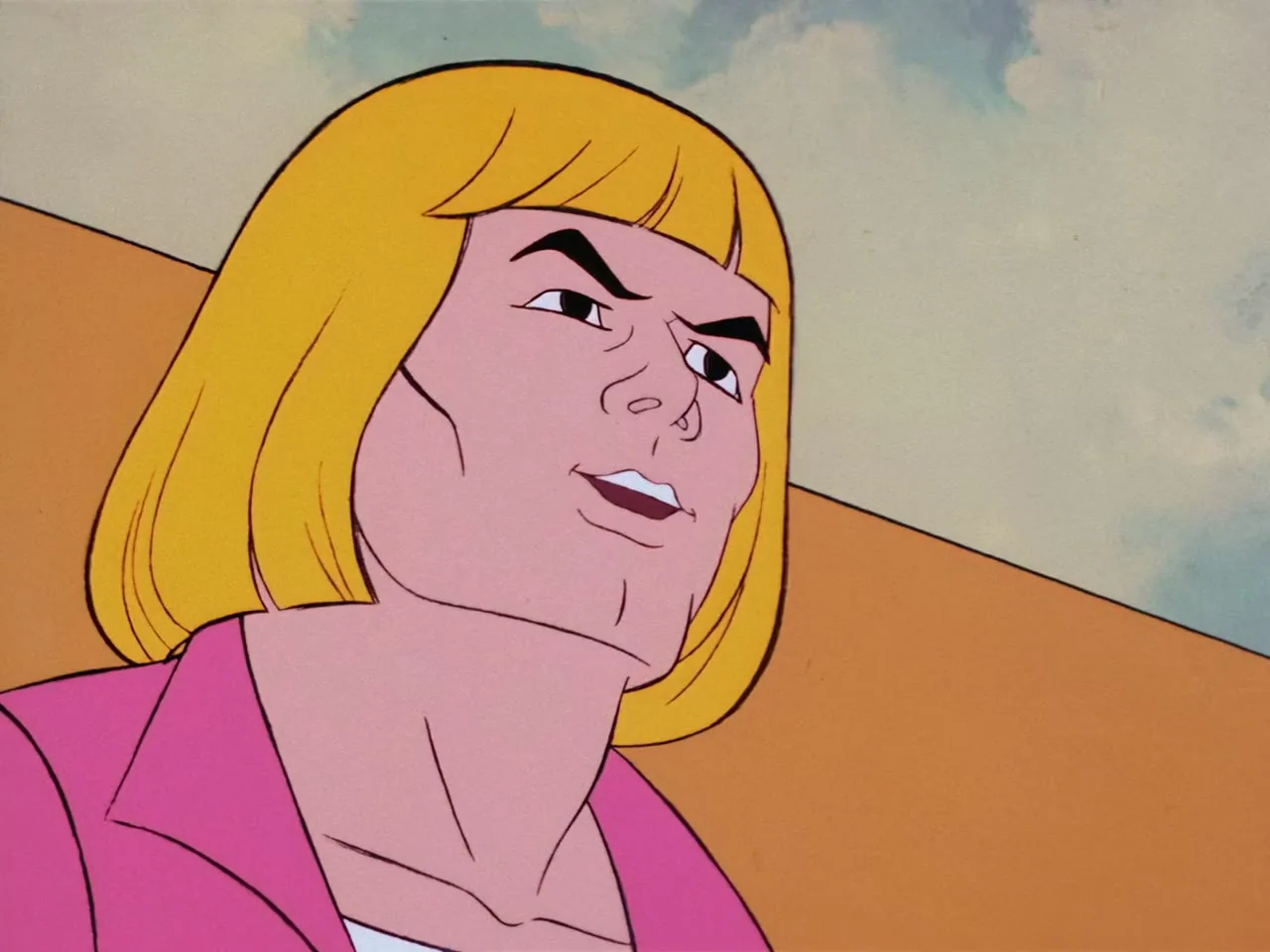
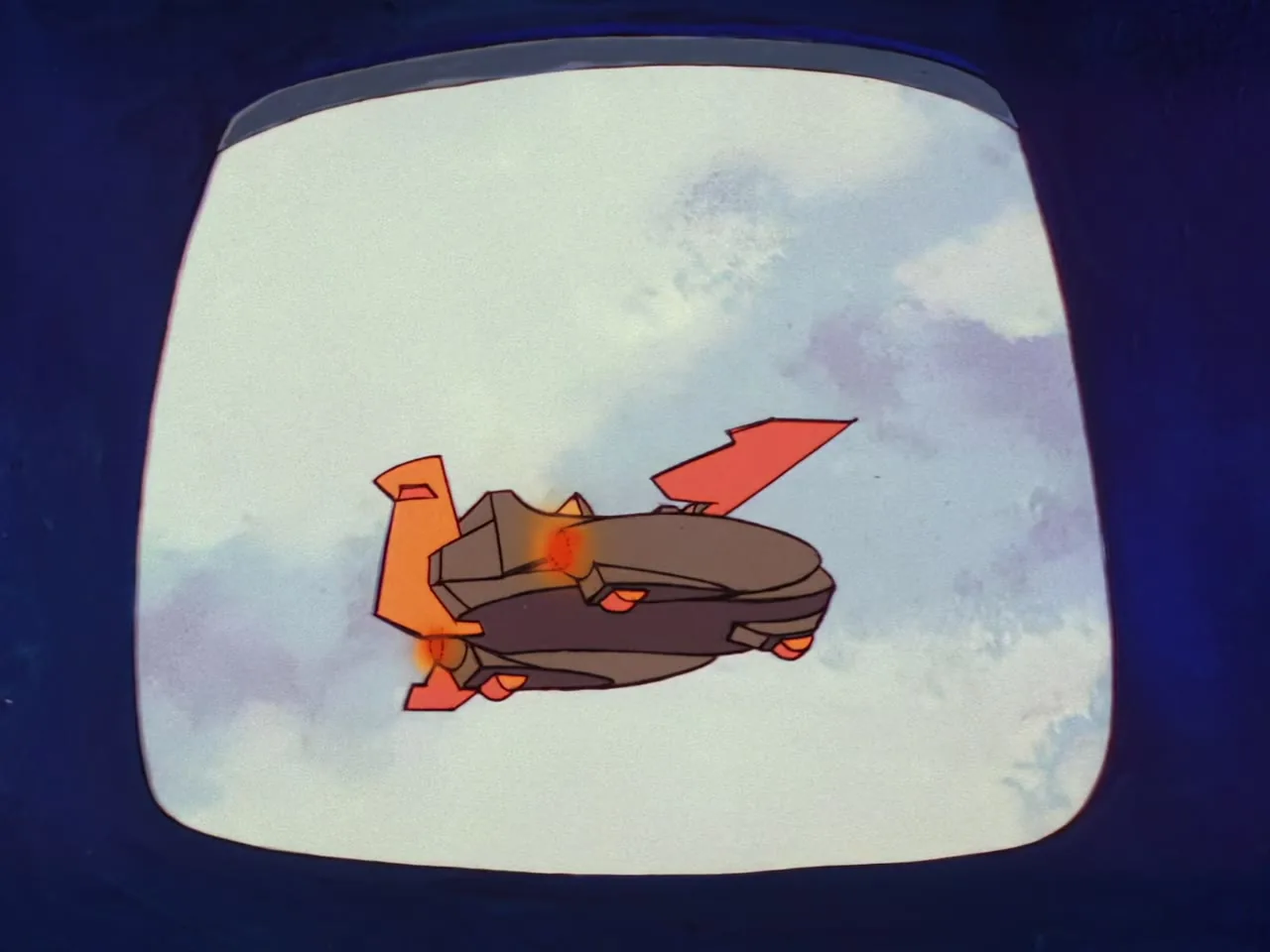
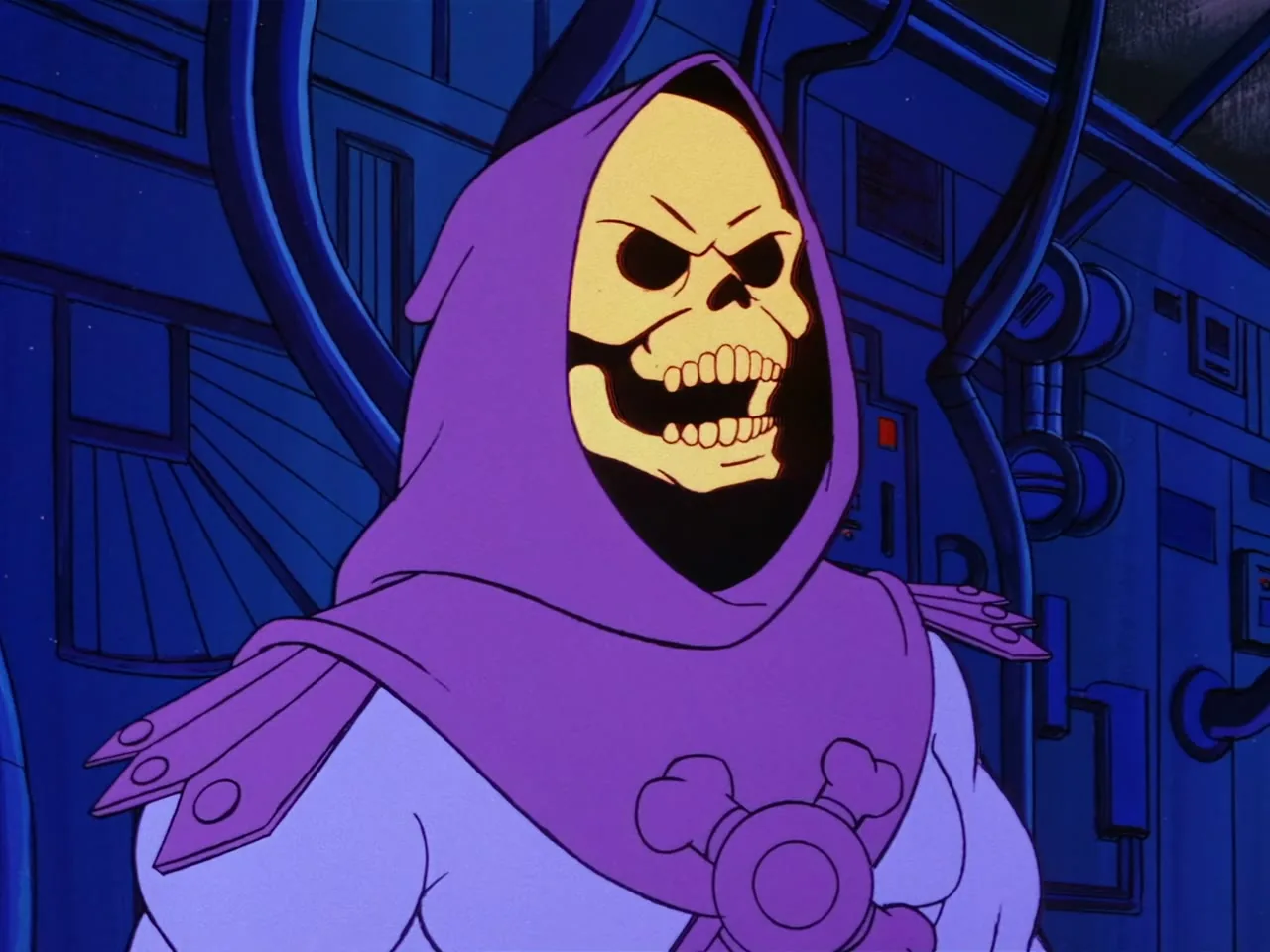
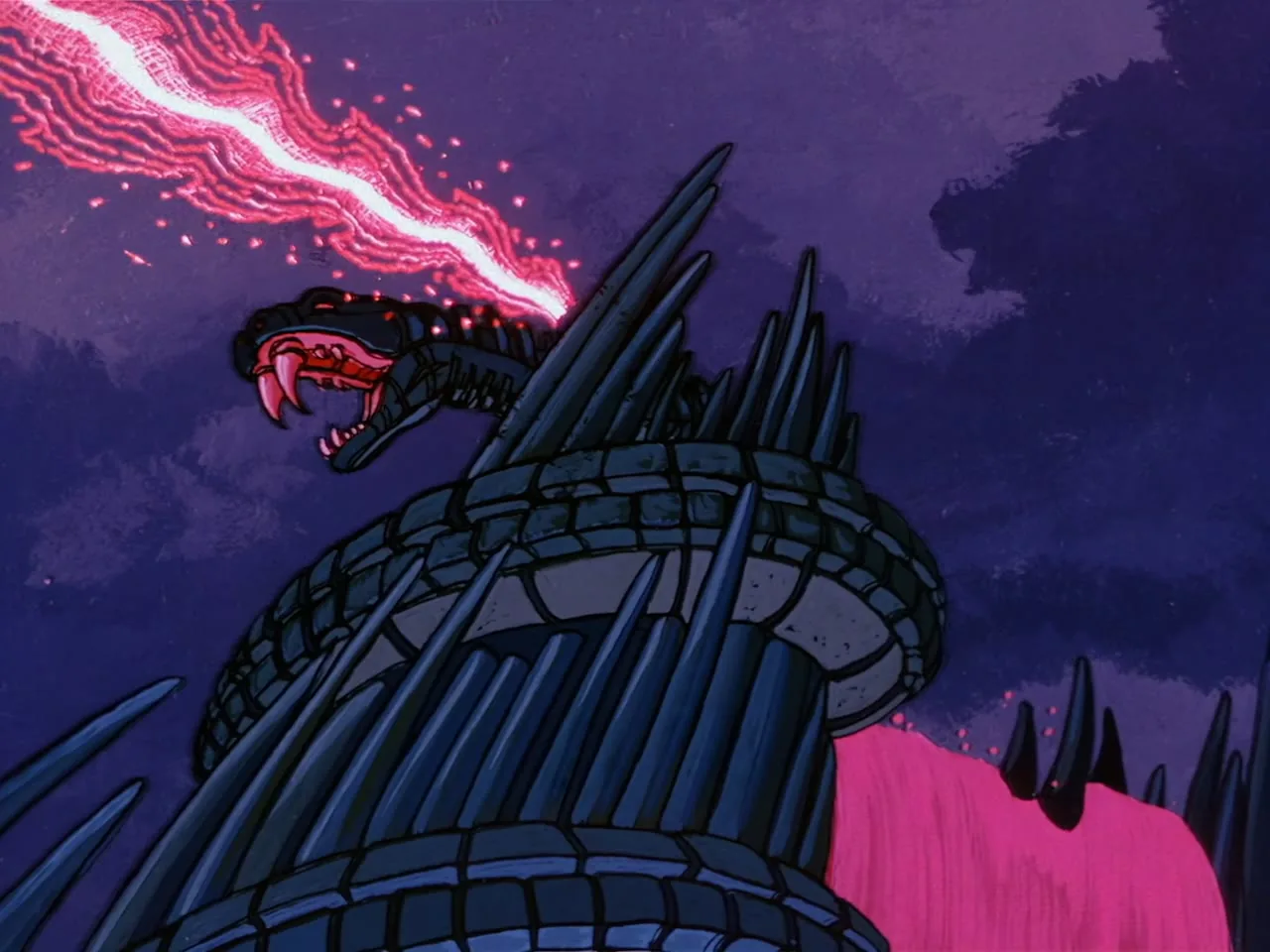
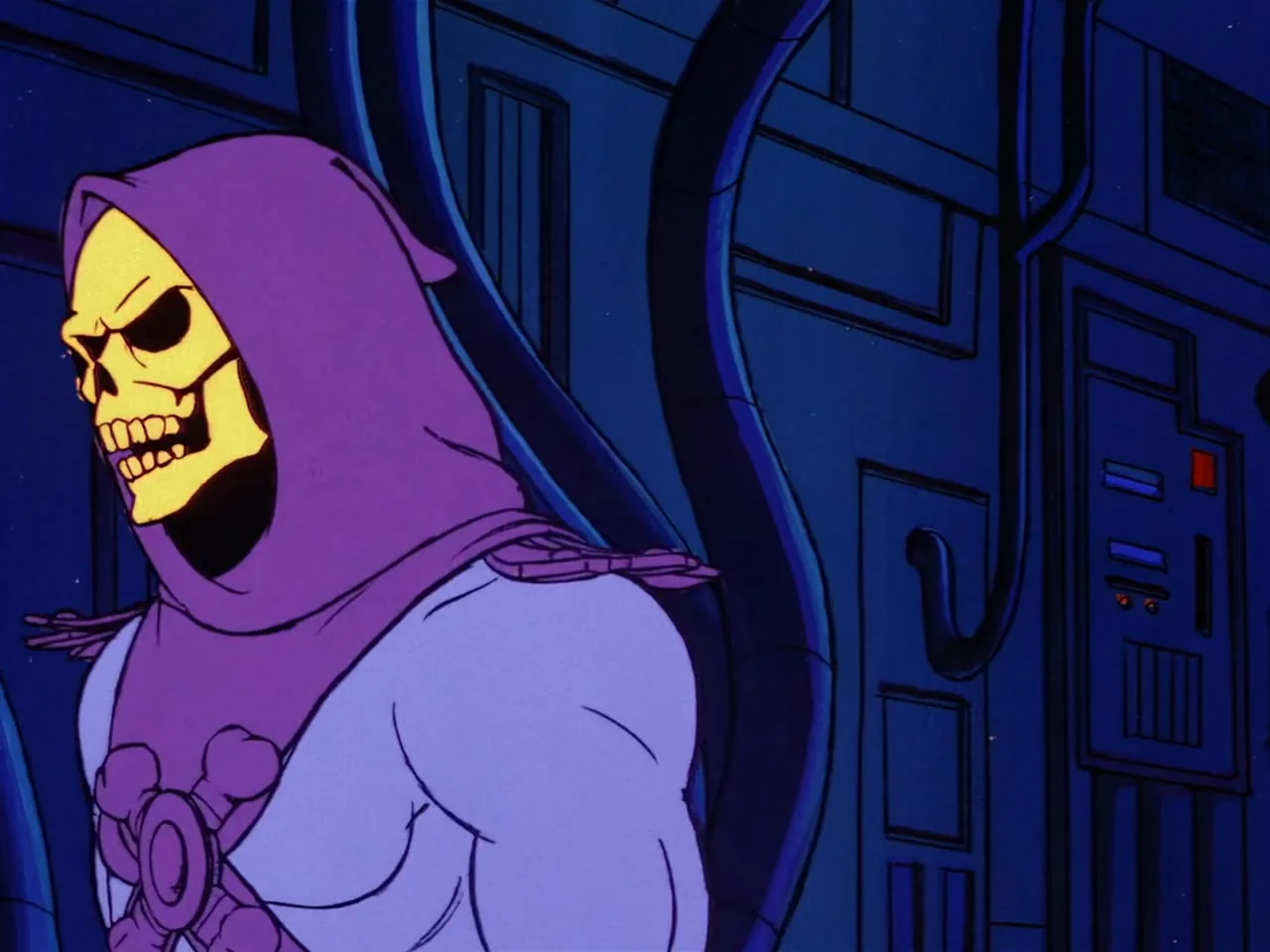
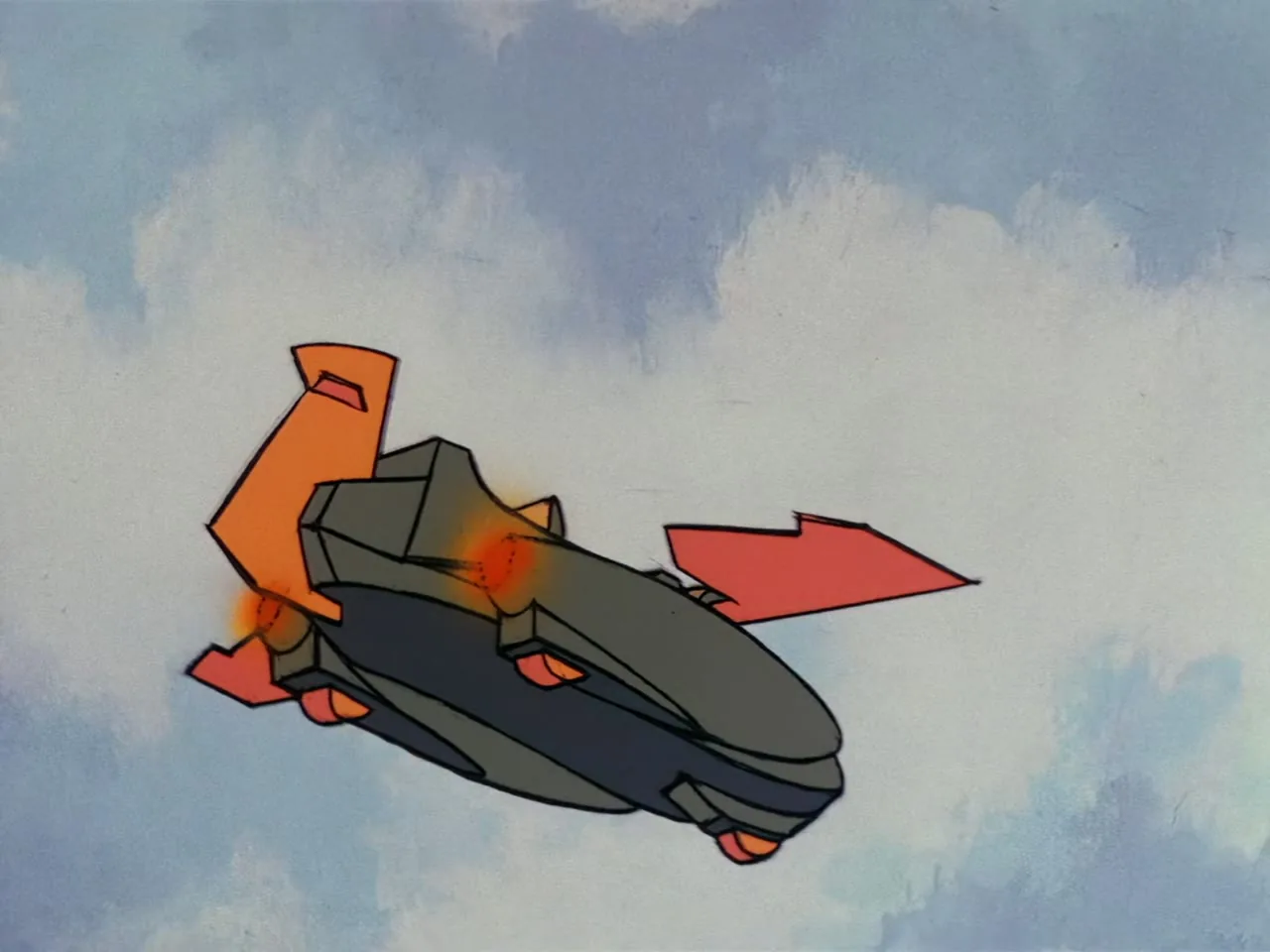
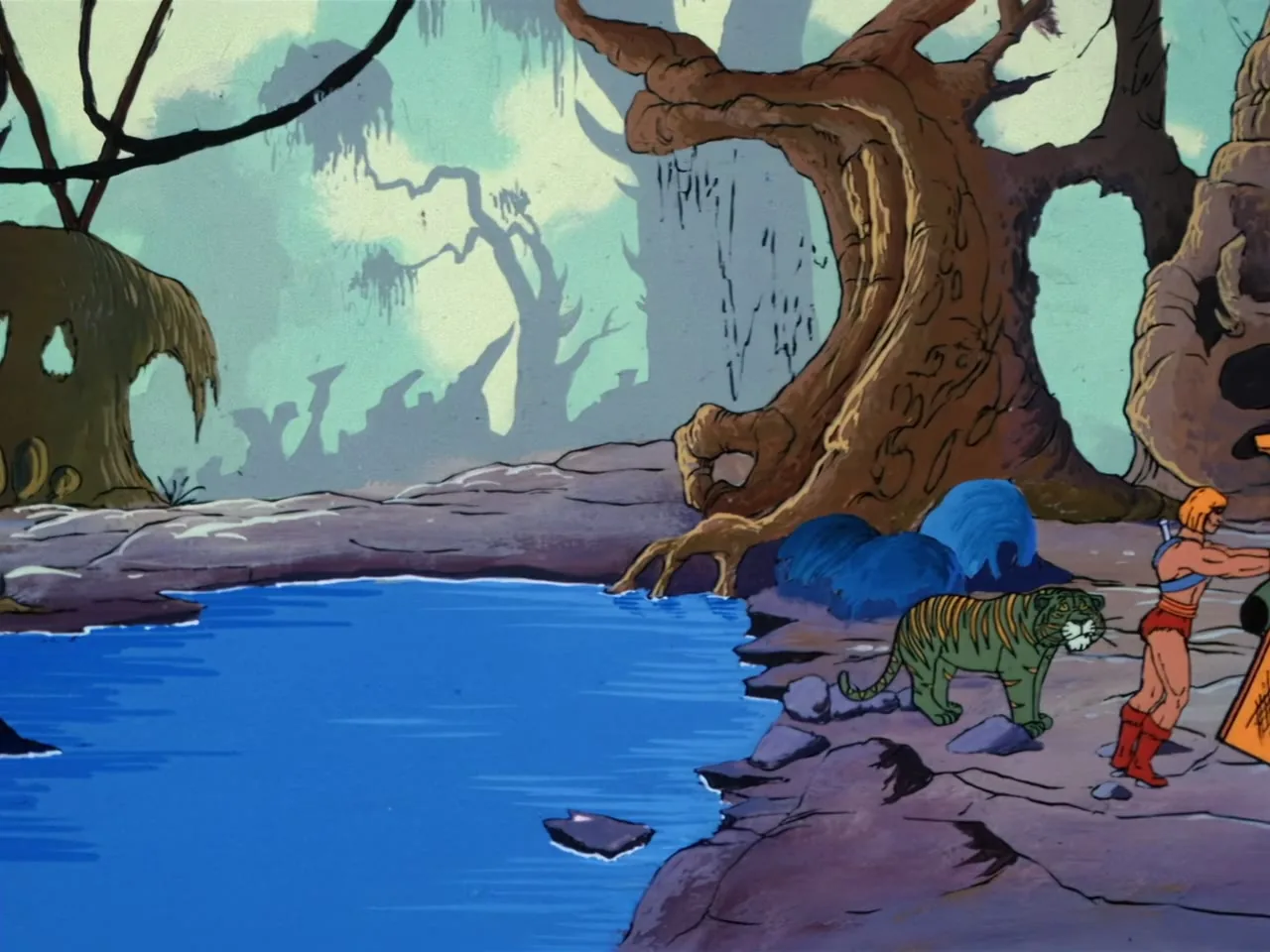
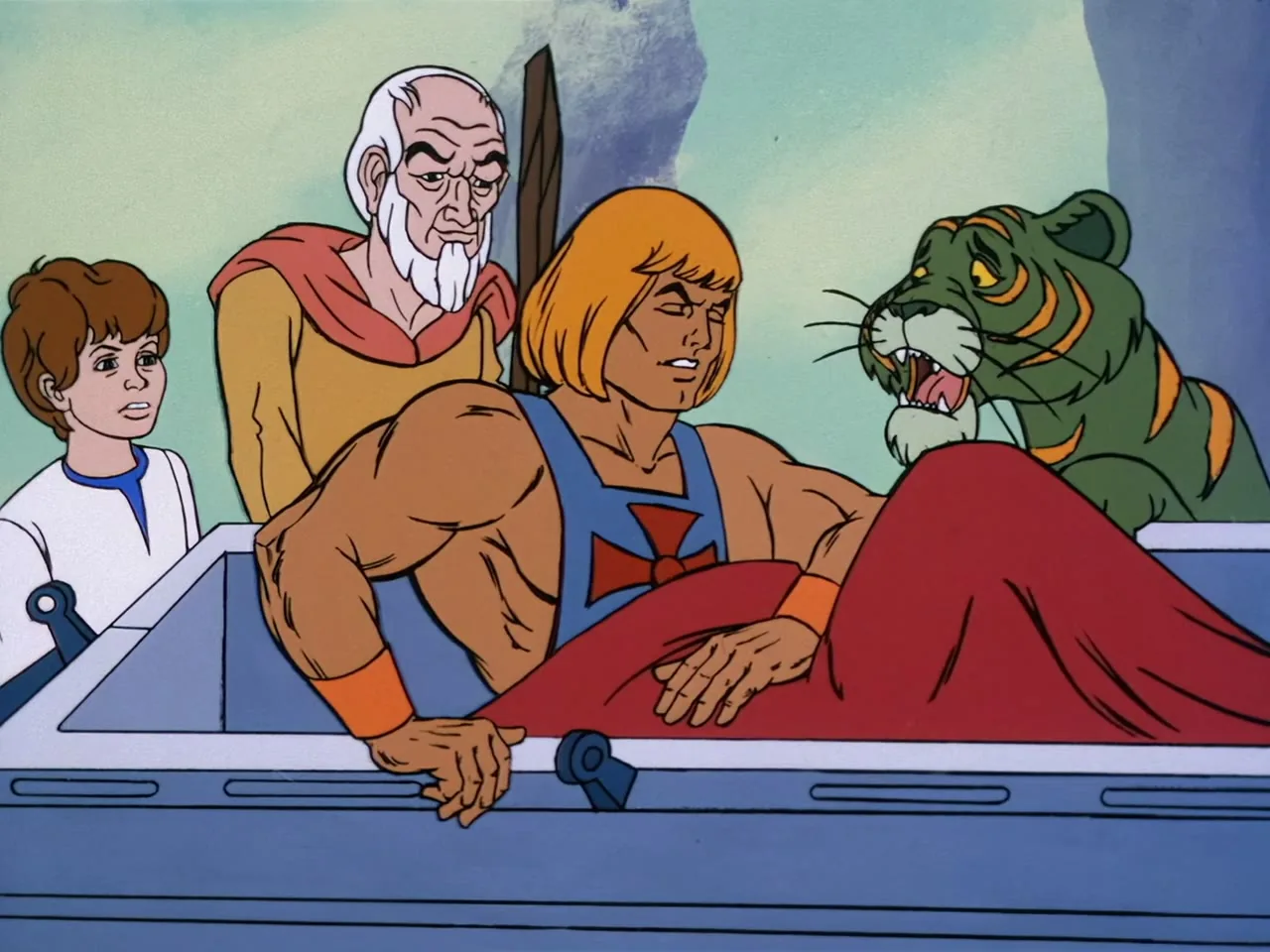
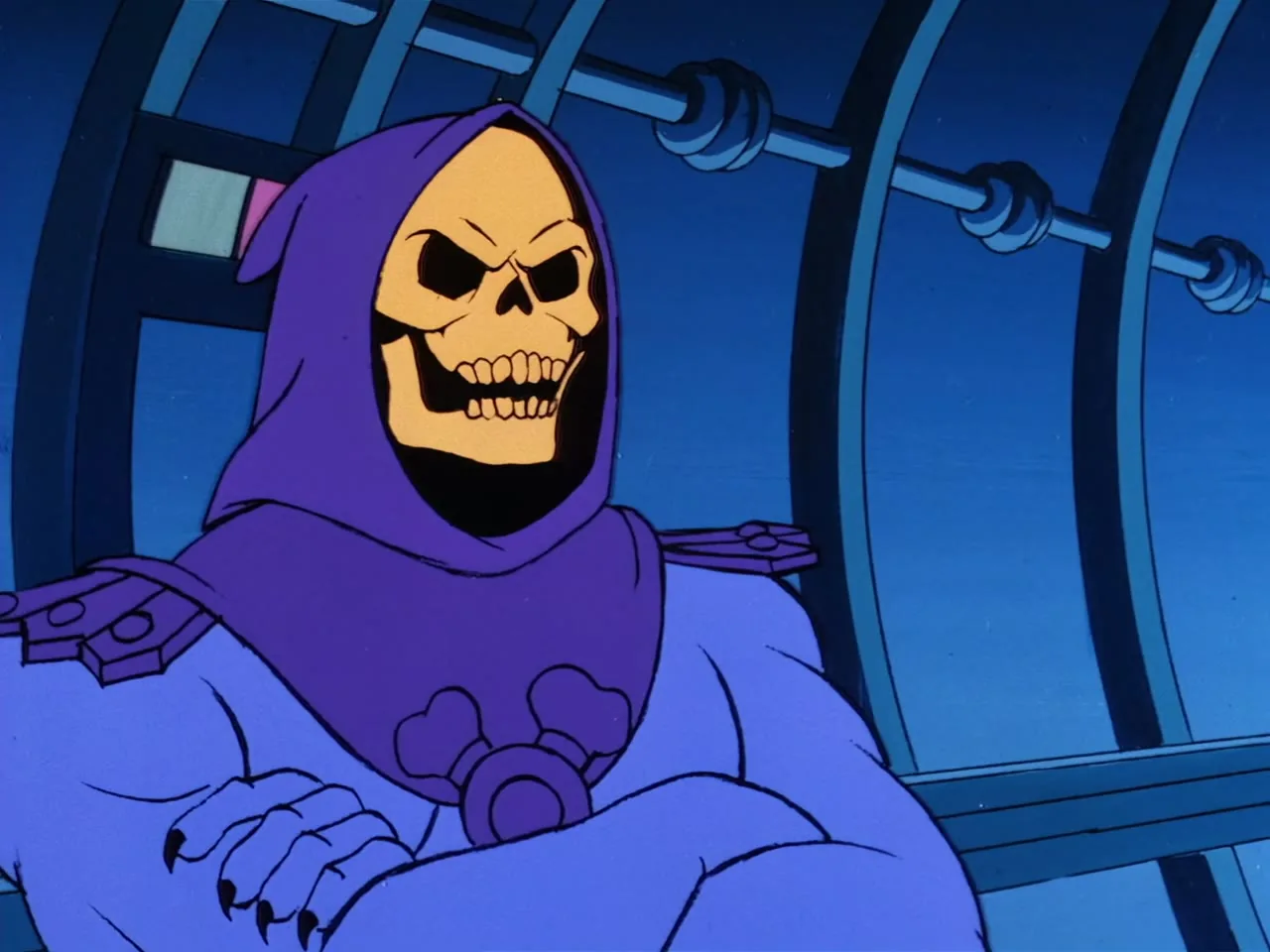
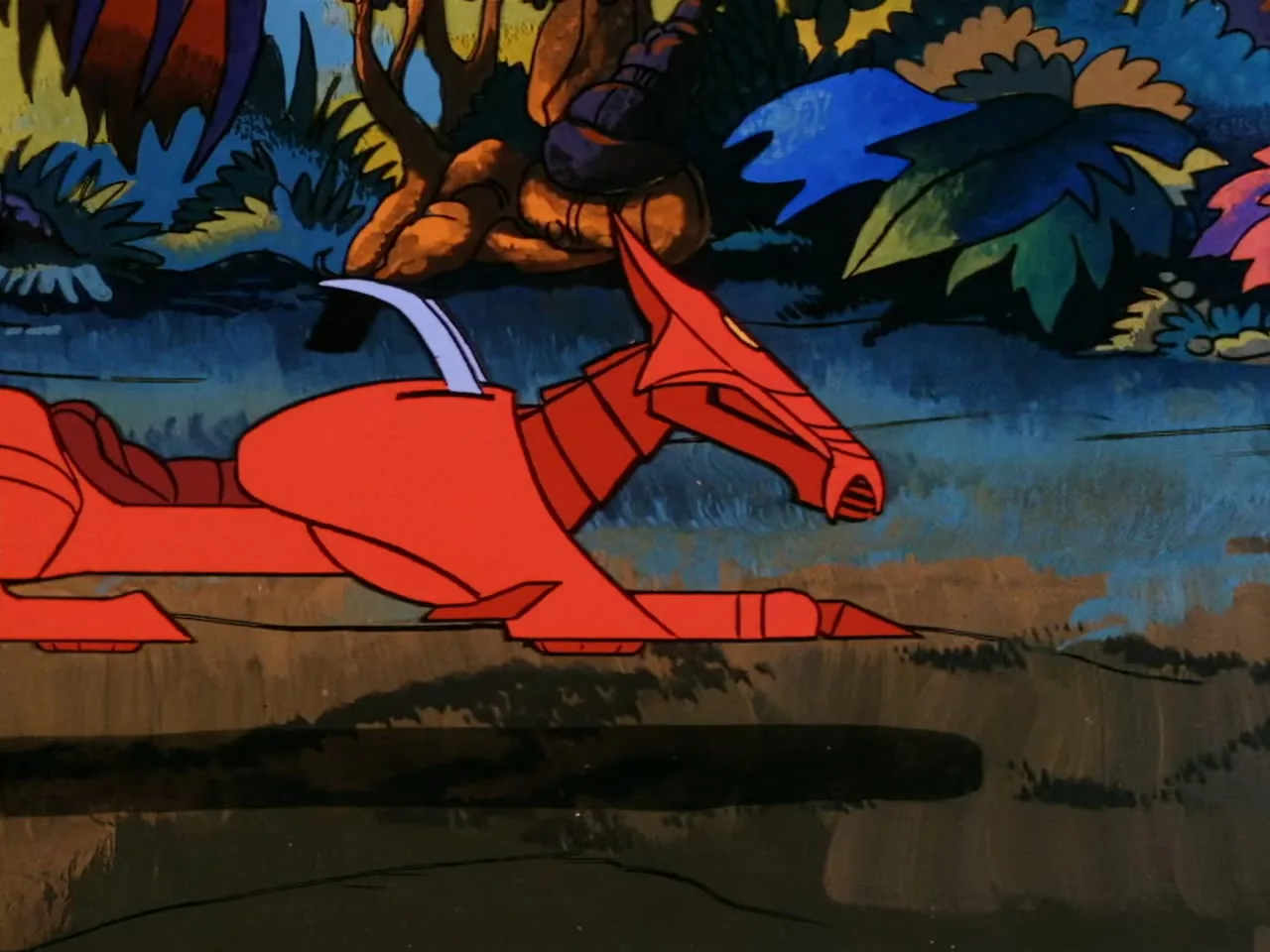
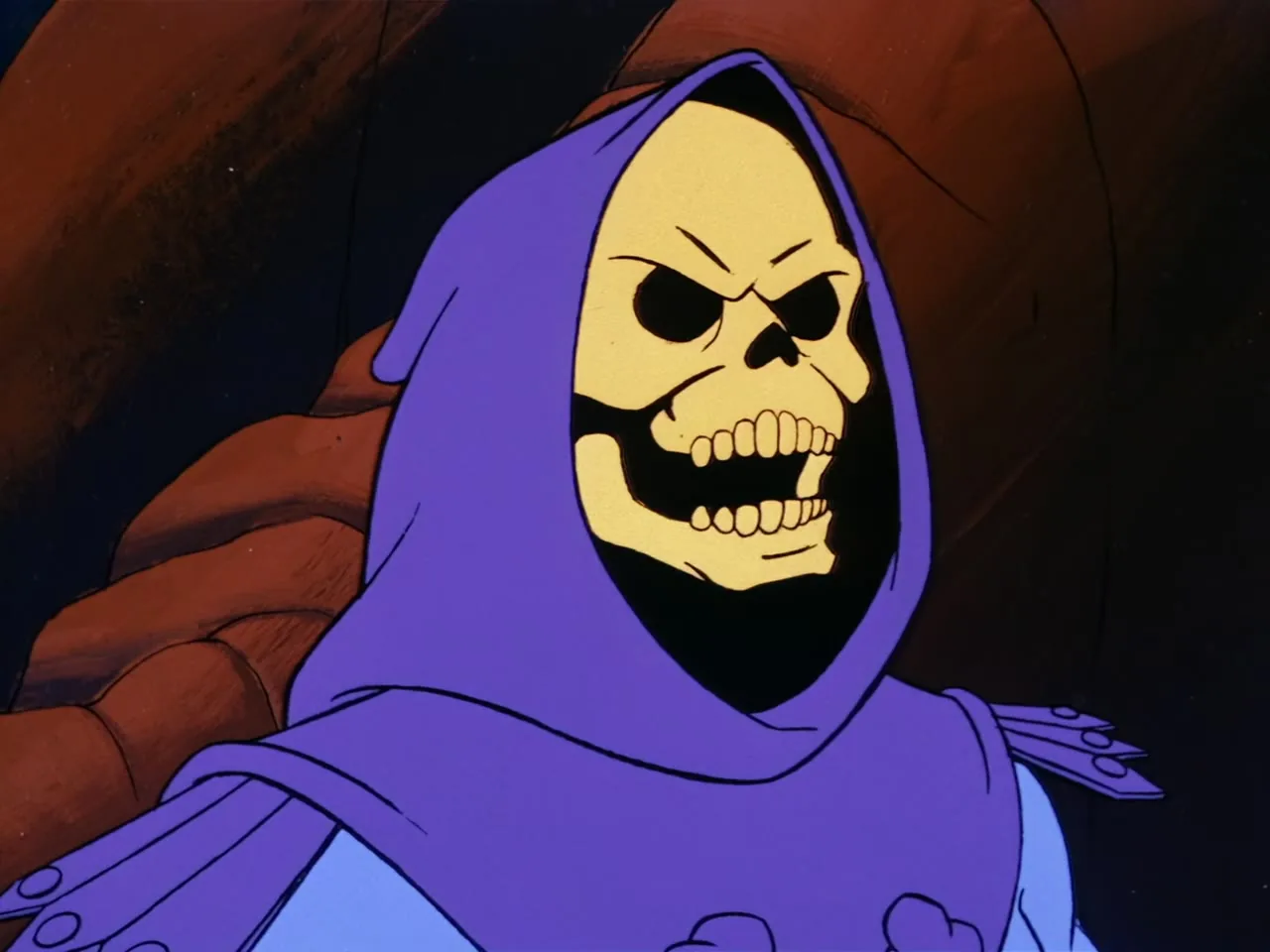
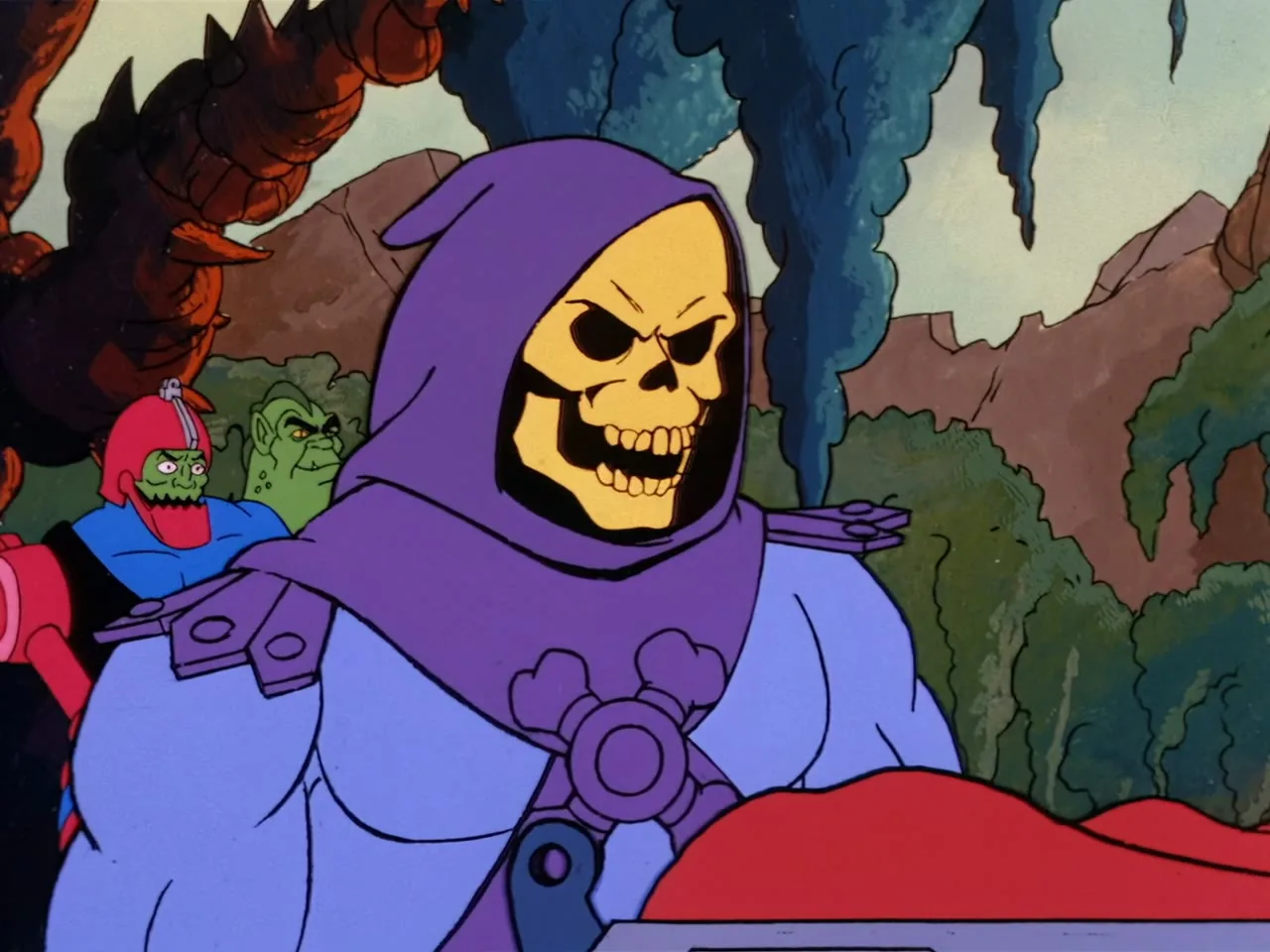
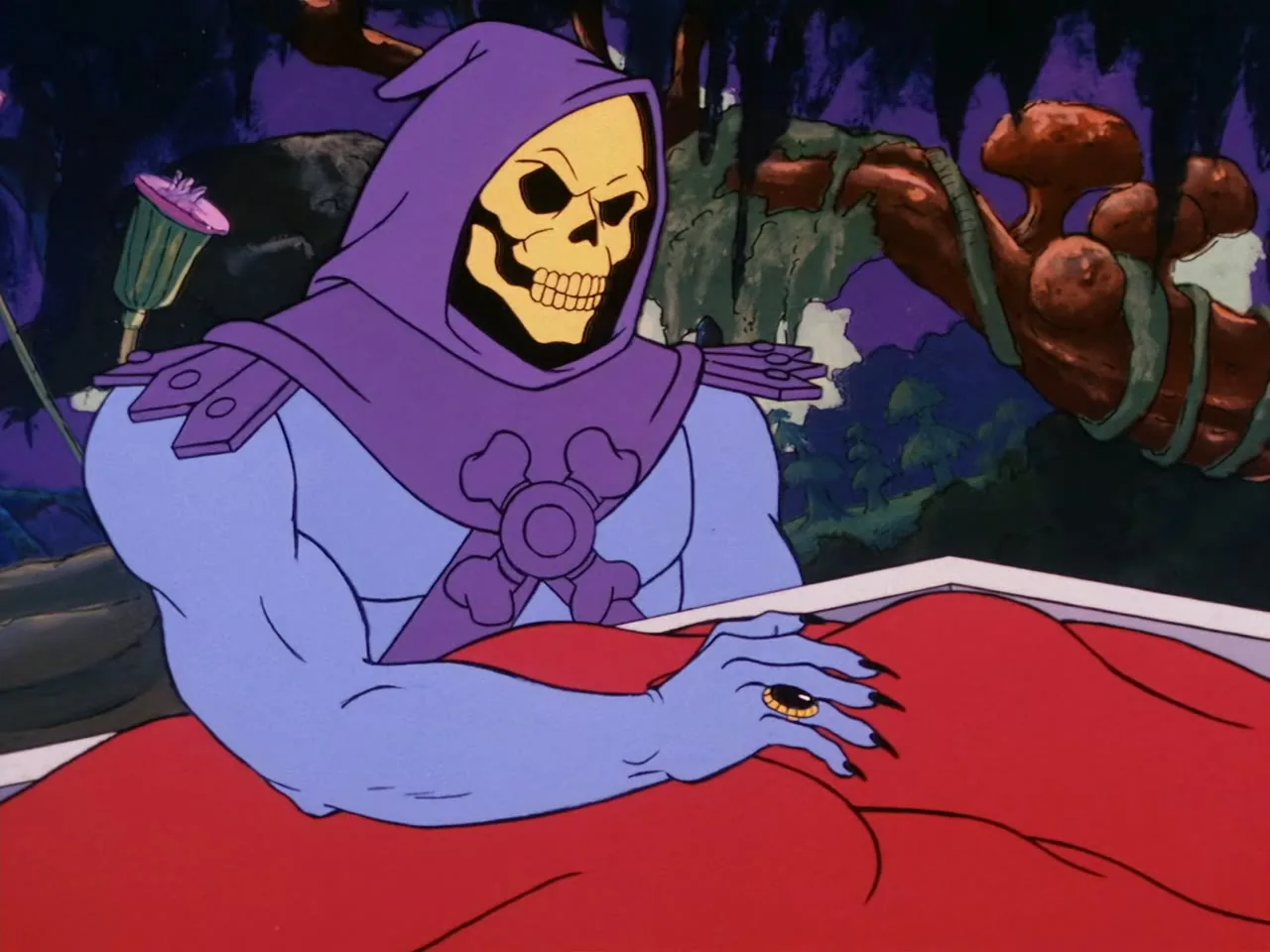
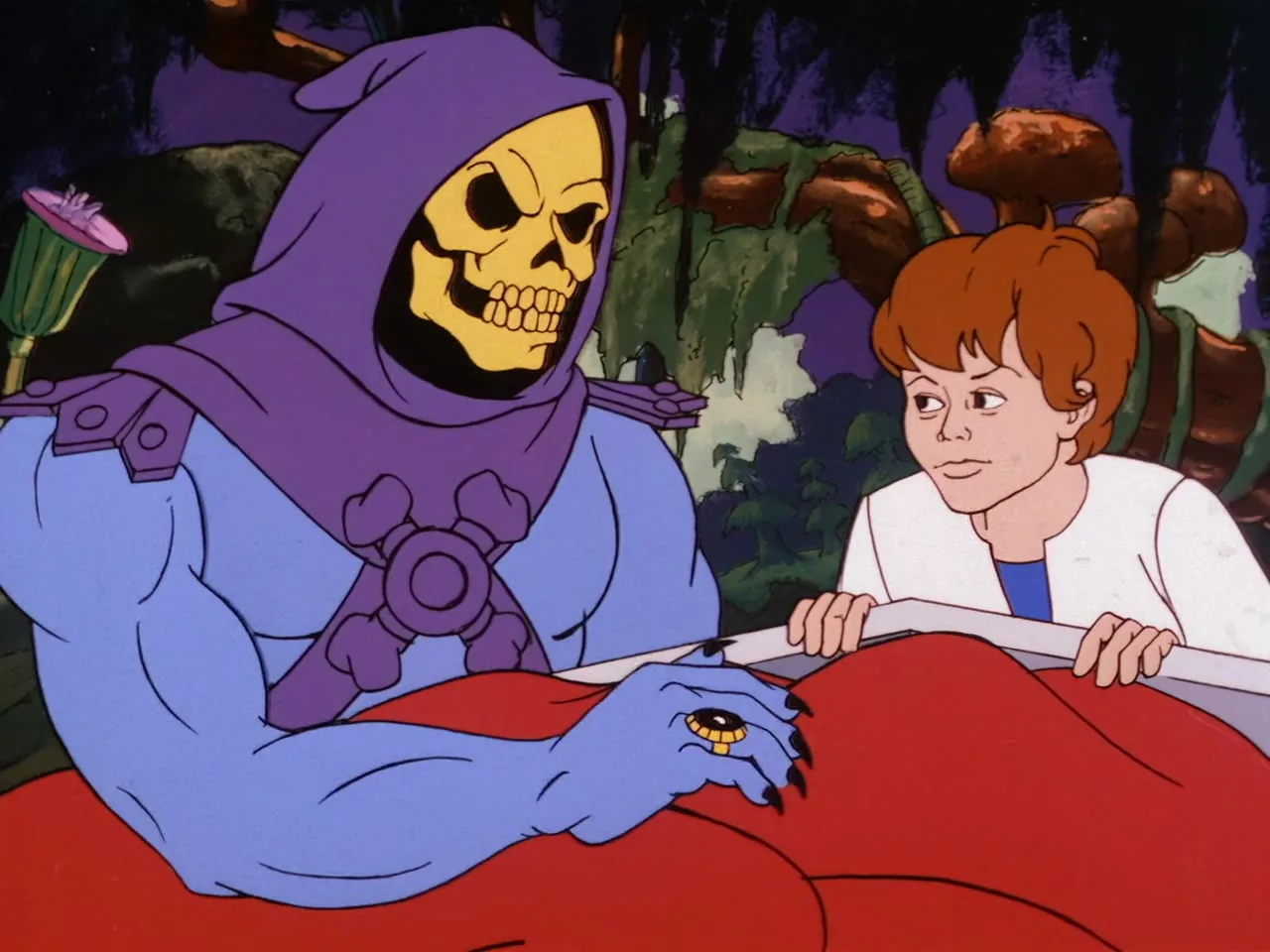
A bolt from Skeletor knocks the Wind Raider out of the sky and leaves He-Man badly weakened in a swamp, unable to defend himself when a boy named Drak and his grandfather find him. Skeletor has put a reward on the stranger's head, and the pair must decide whether to nurse him back to health at a hidden healing tree or hand him over for the money. By the time He-Man recovers enough to settle things with Skeletor directly, Drak has already learned that the friendship he gained was worth more than any reward he gave up.
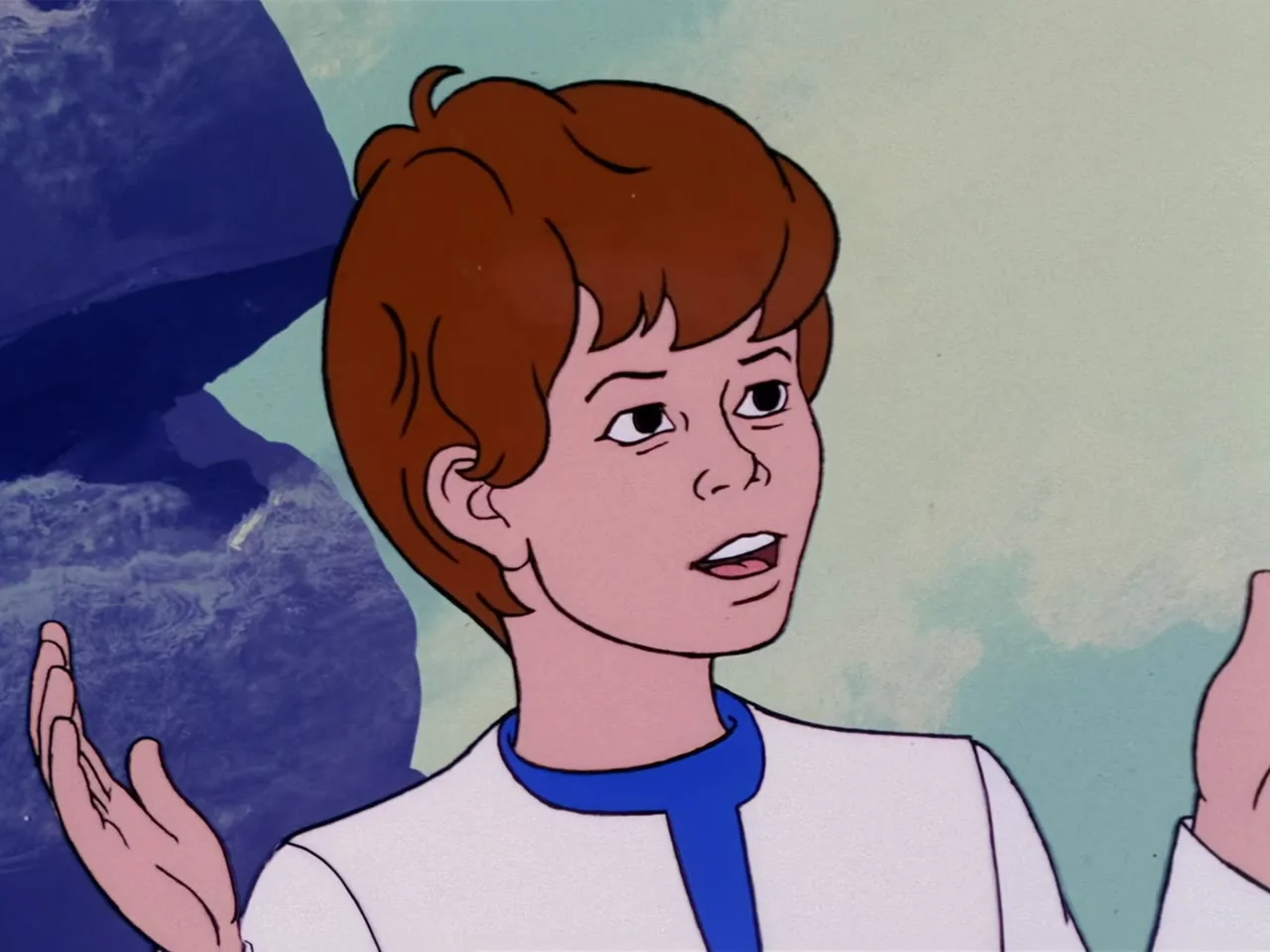
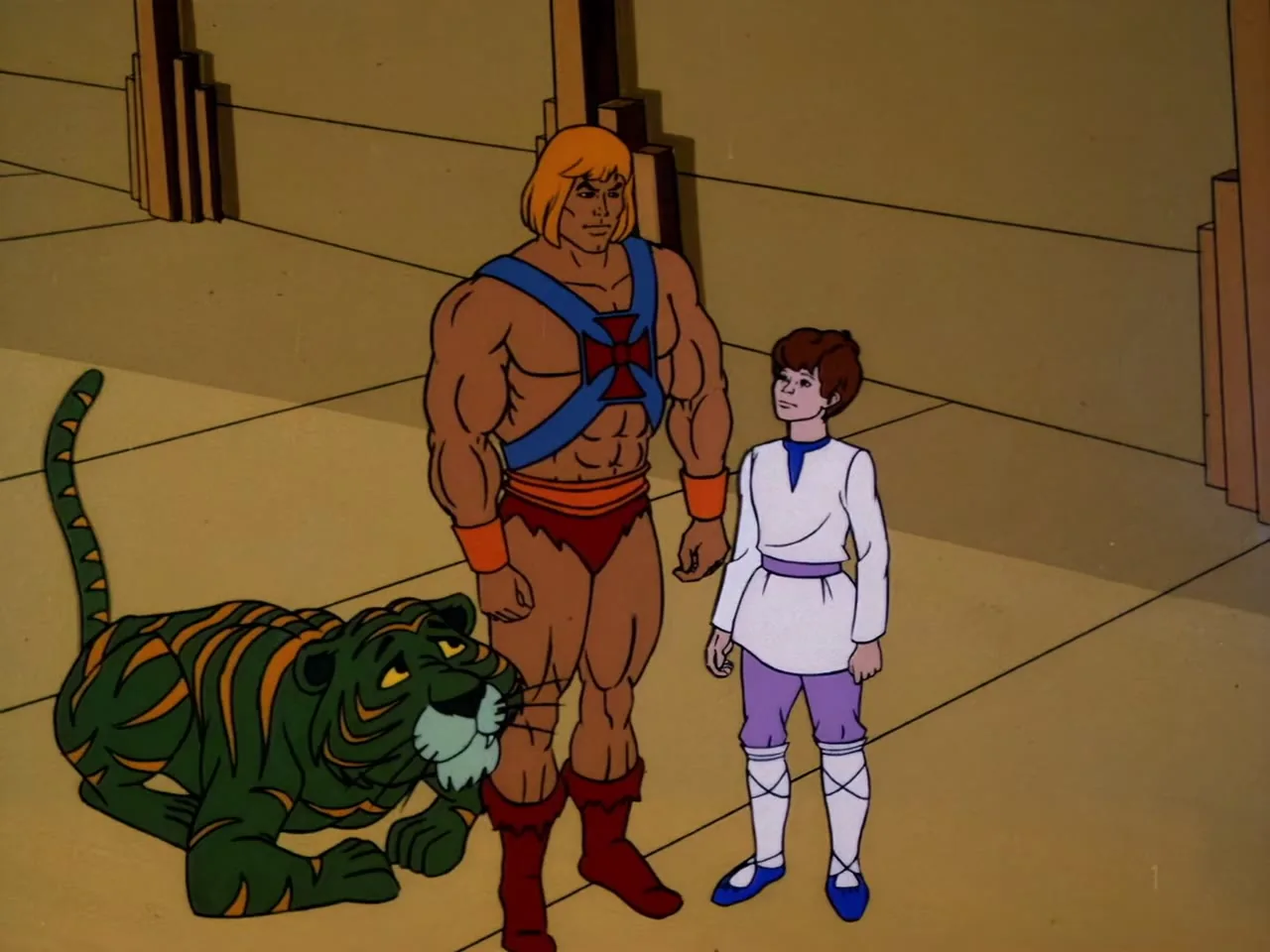
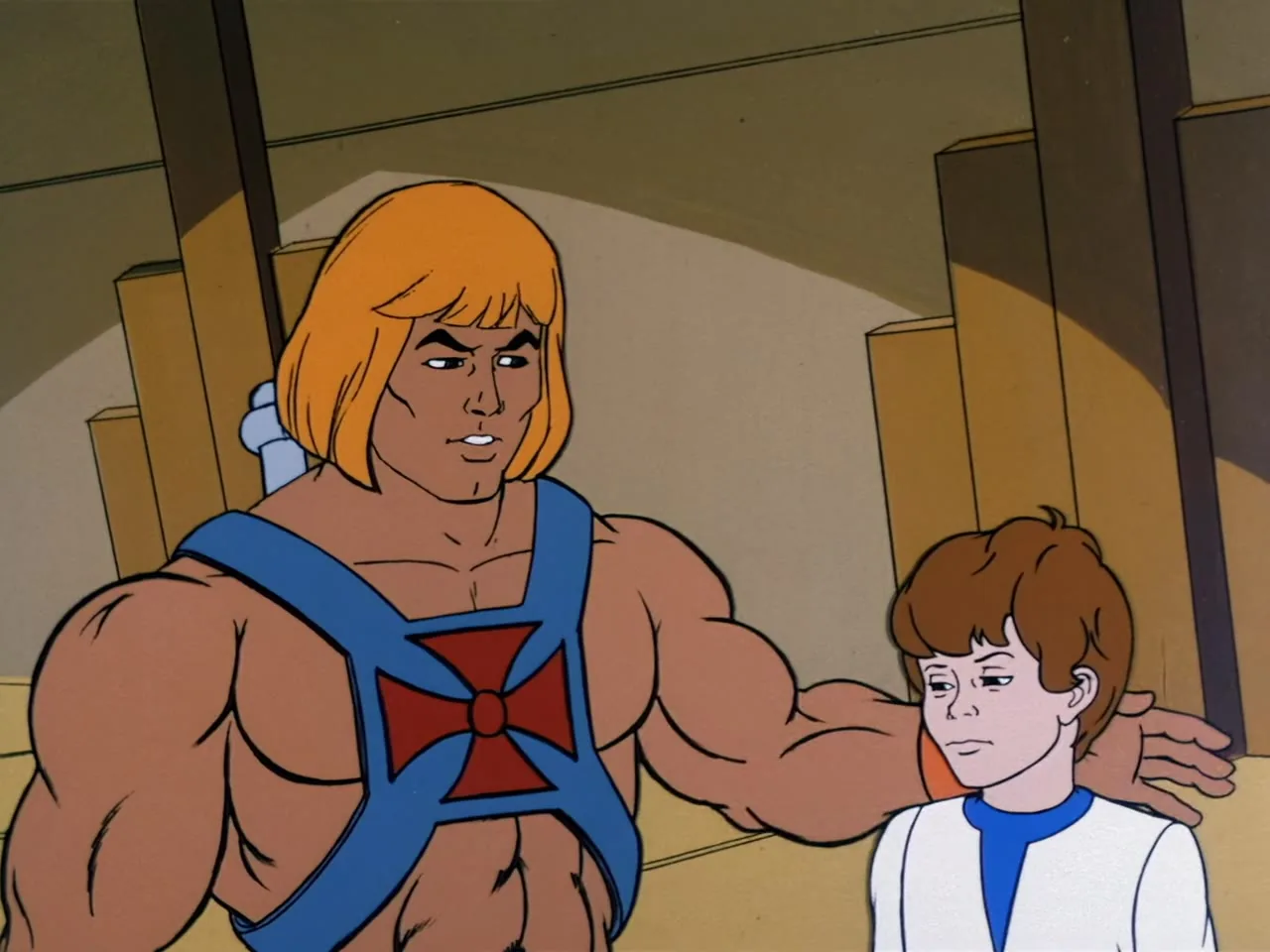
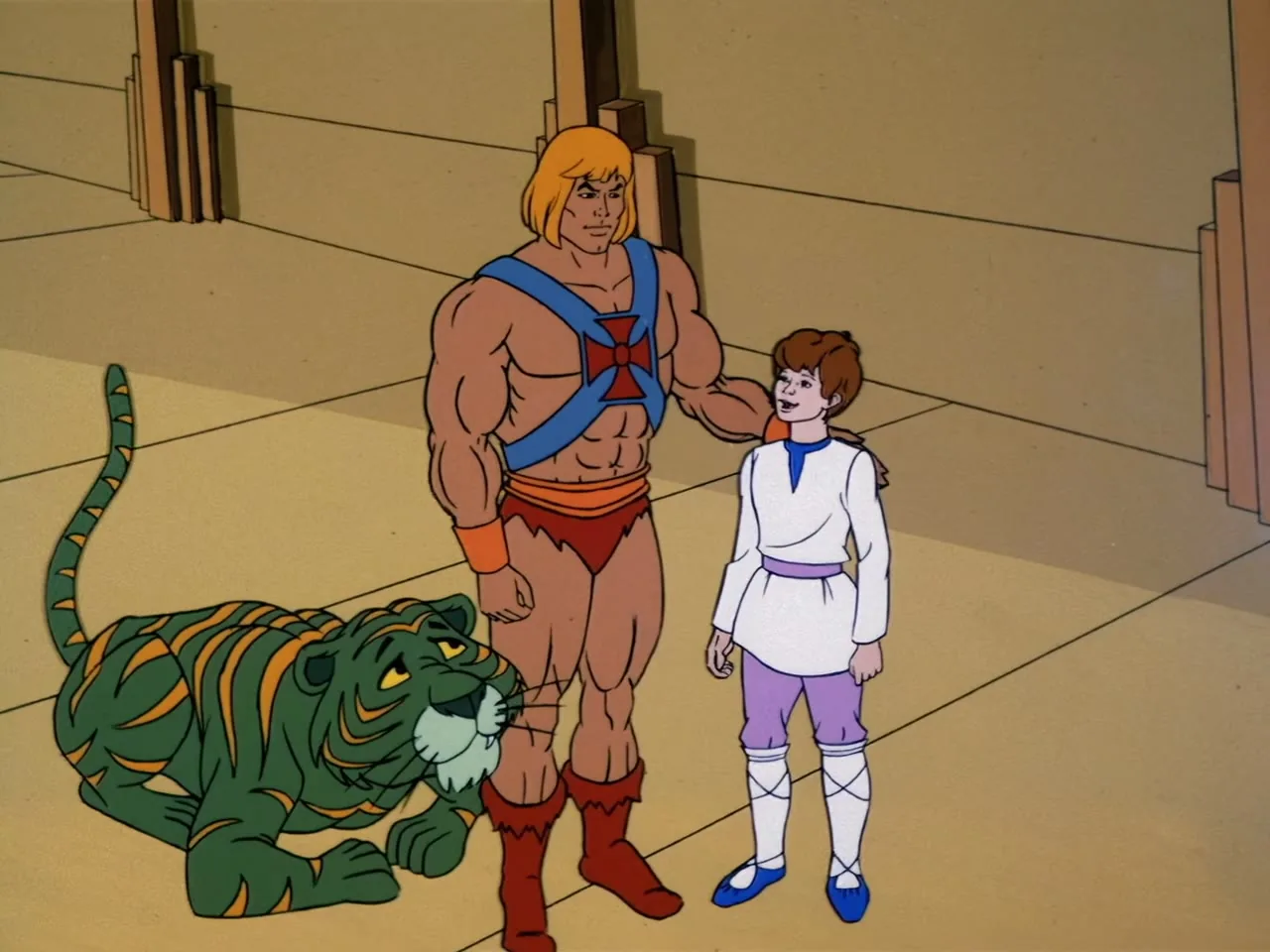
Drak: "I shudder to think that I almost betrayed you, He-Man, in favor of Skeletor." He-Man: "Well, but you made the right decision, that's what counts." Drak: "The thought of all those riches was awfully tempting. On second thought, I'd rather have your friendship, He-Man, Cringer... In fact, knowing you has made me the richest boy in the world." Cringer: "And we're much richer for knowing you. (turns to audience) Until later."
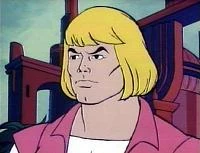
John Erwin as He-Man/Prince Adam and Whiplash
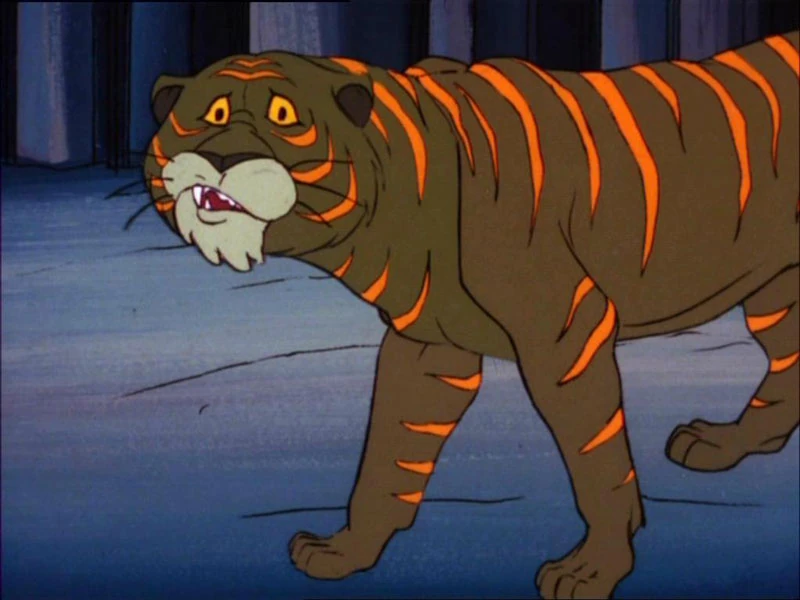
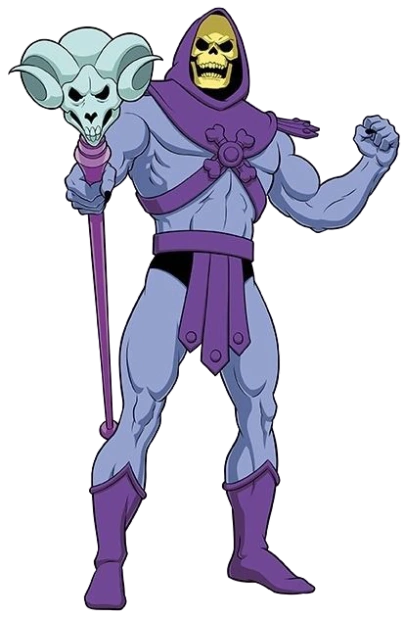
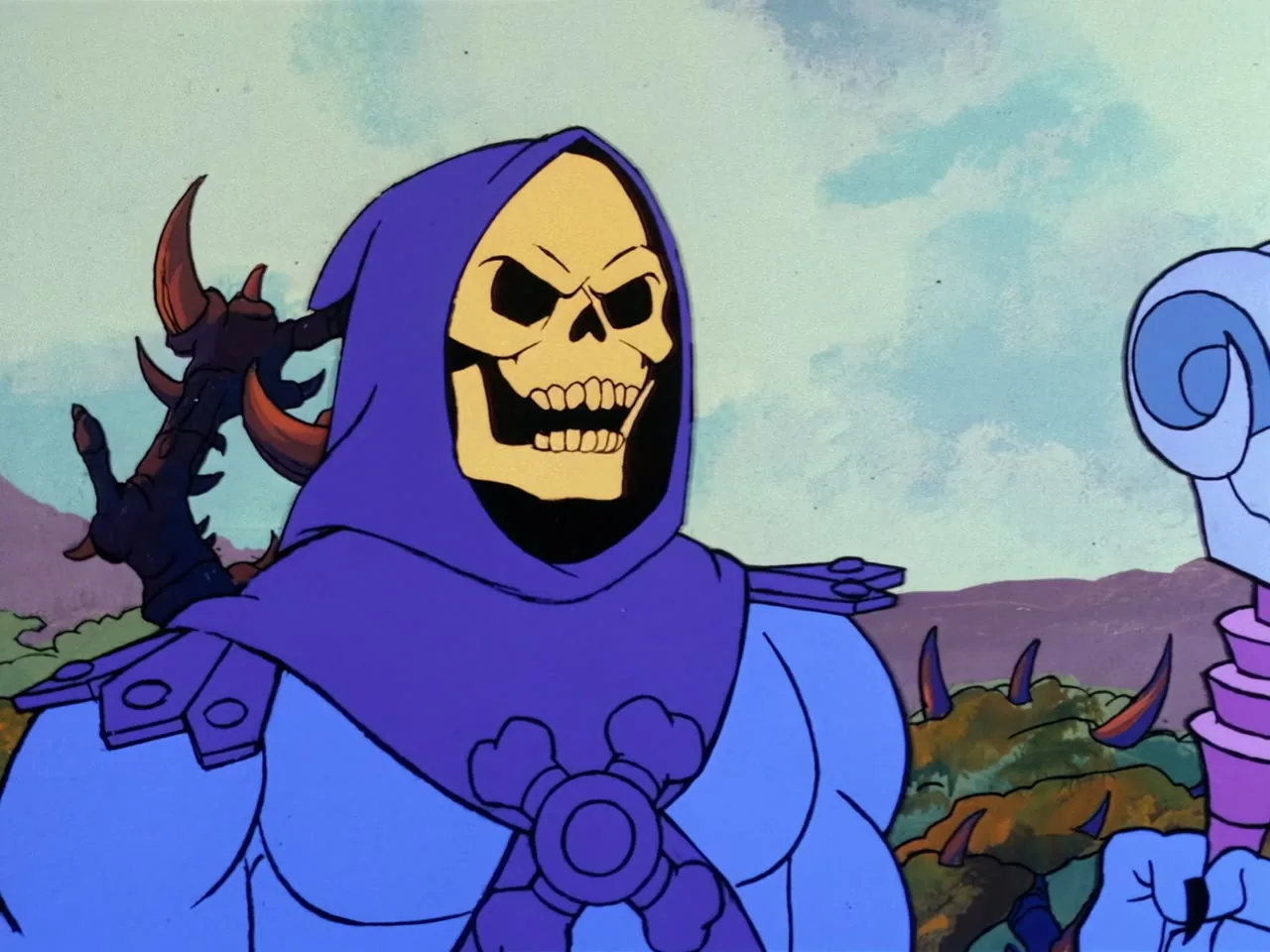
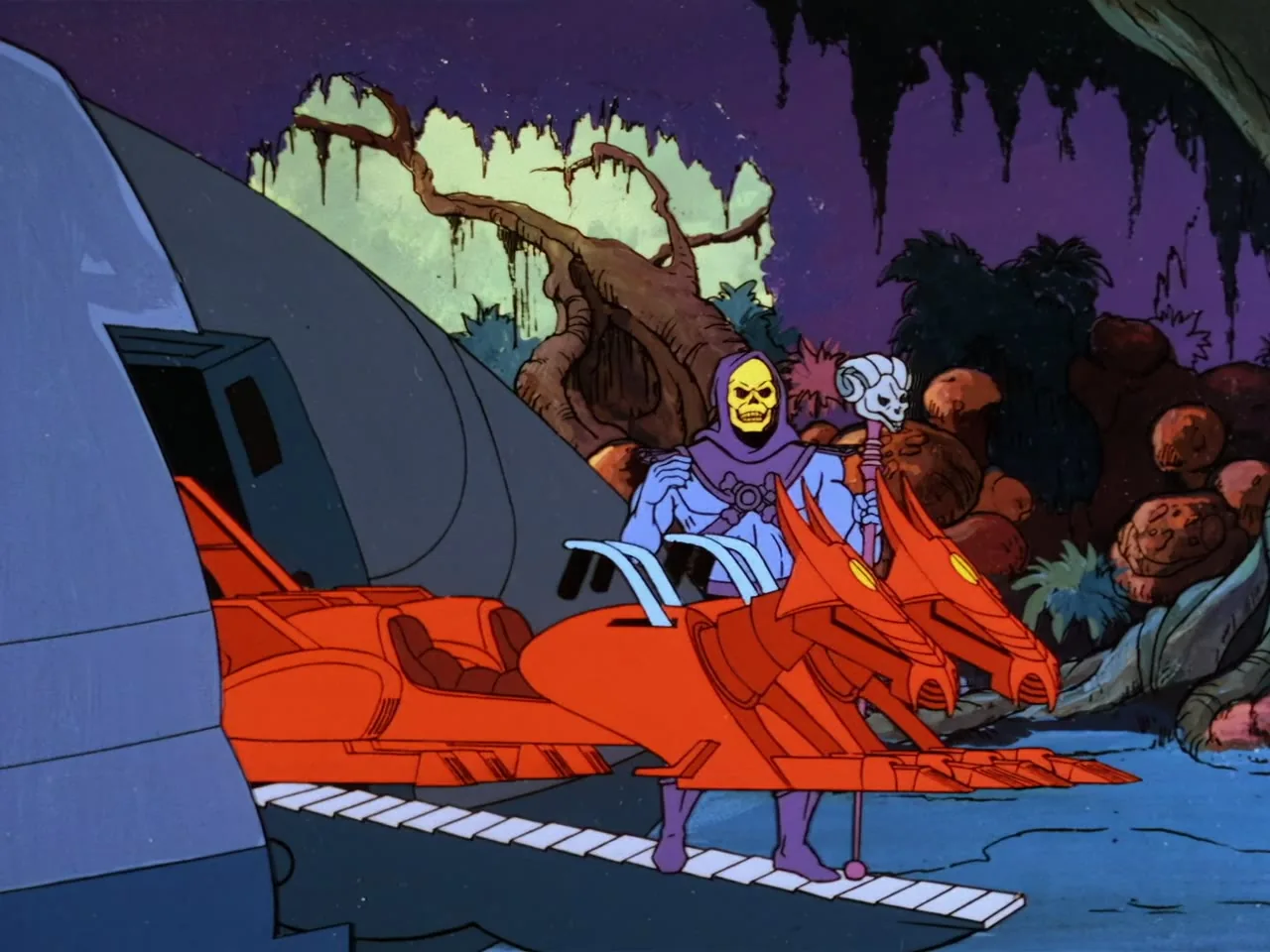
Alan Oppenheimer as Skeletor, Cringer and Grandfather
Linda Gary as Teela, Evil-Lyn and the Sorceress
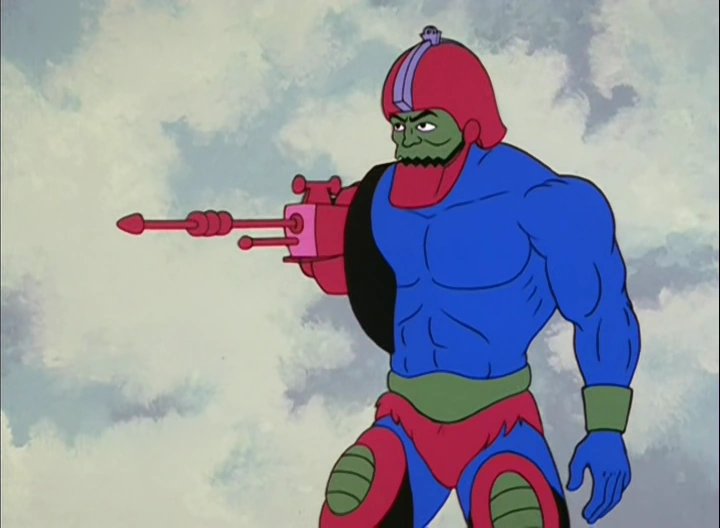
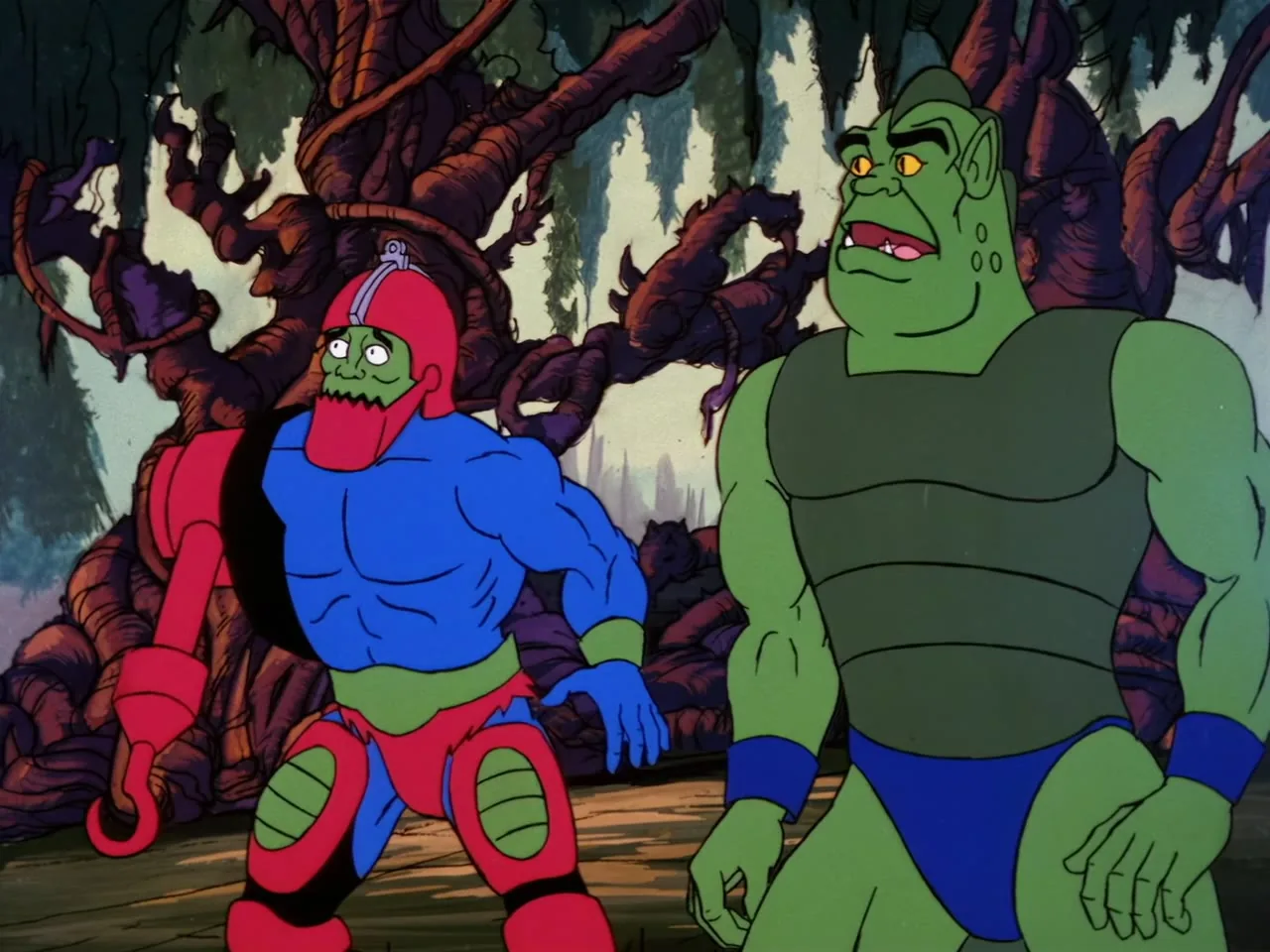
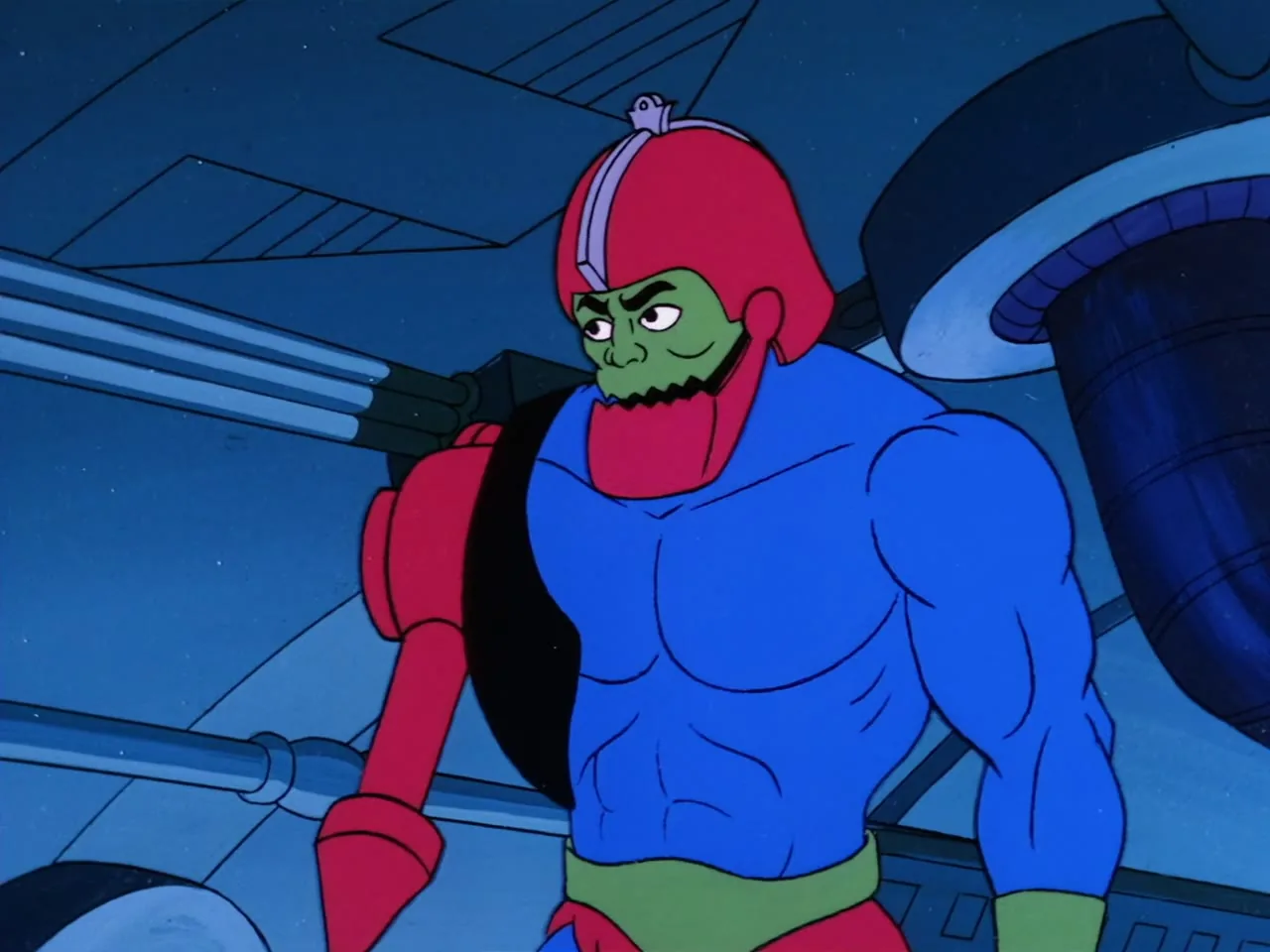
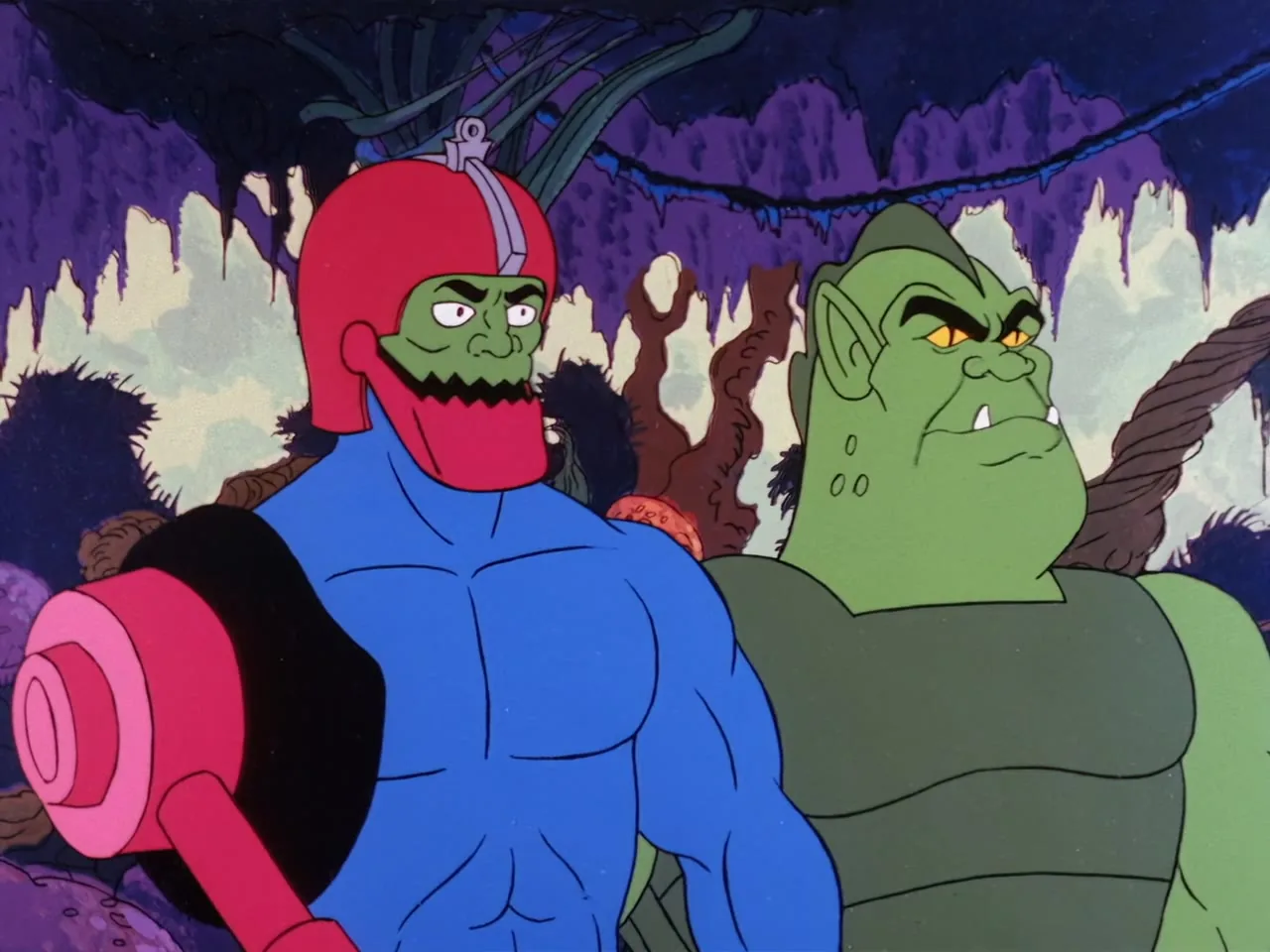
Lou Scheimer (credited as Erik Gunden) as Trap Jaw
Erika Scheimer as Drak
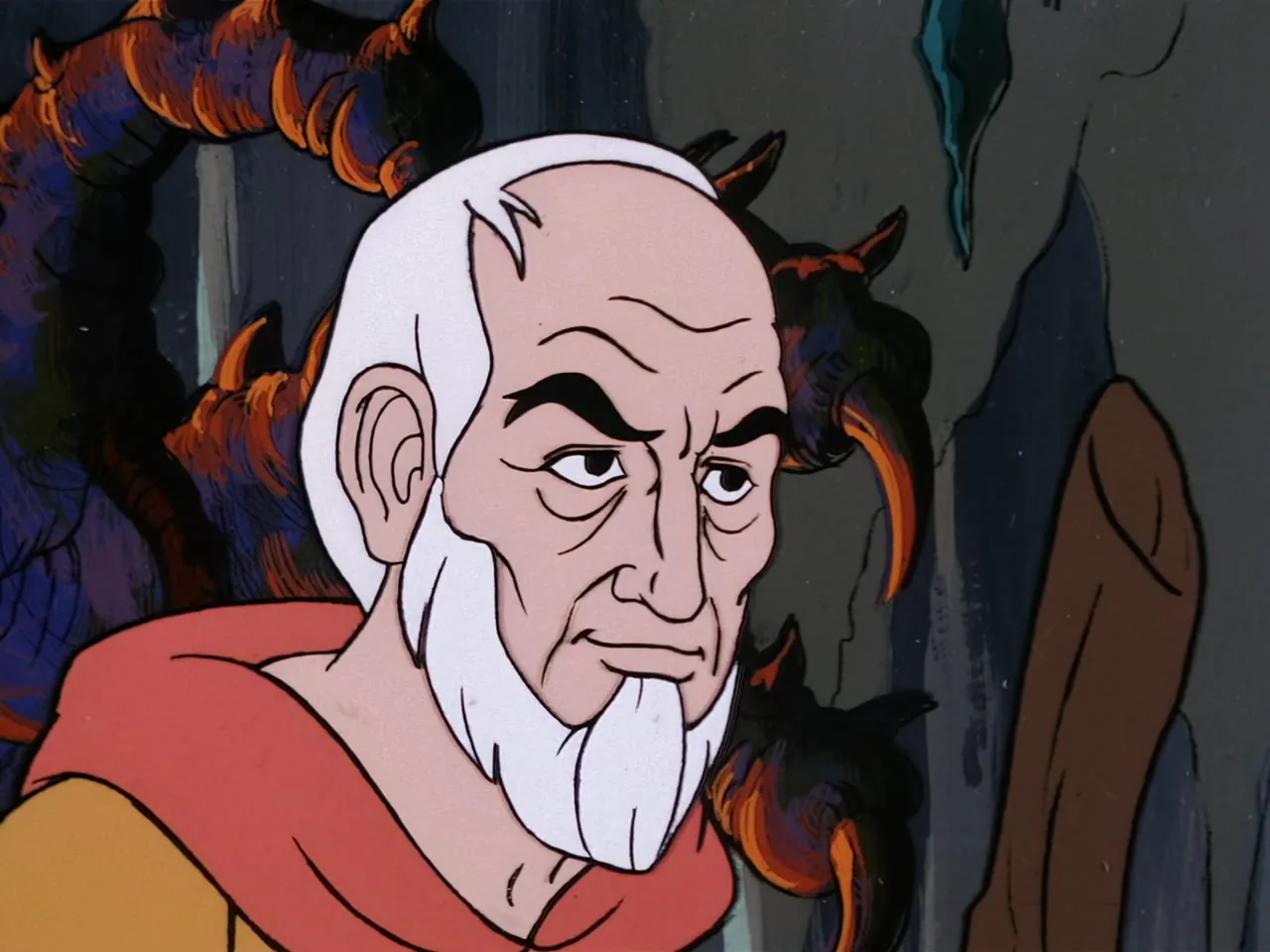
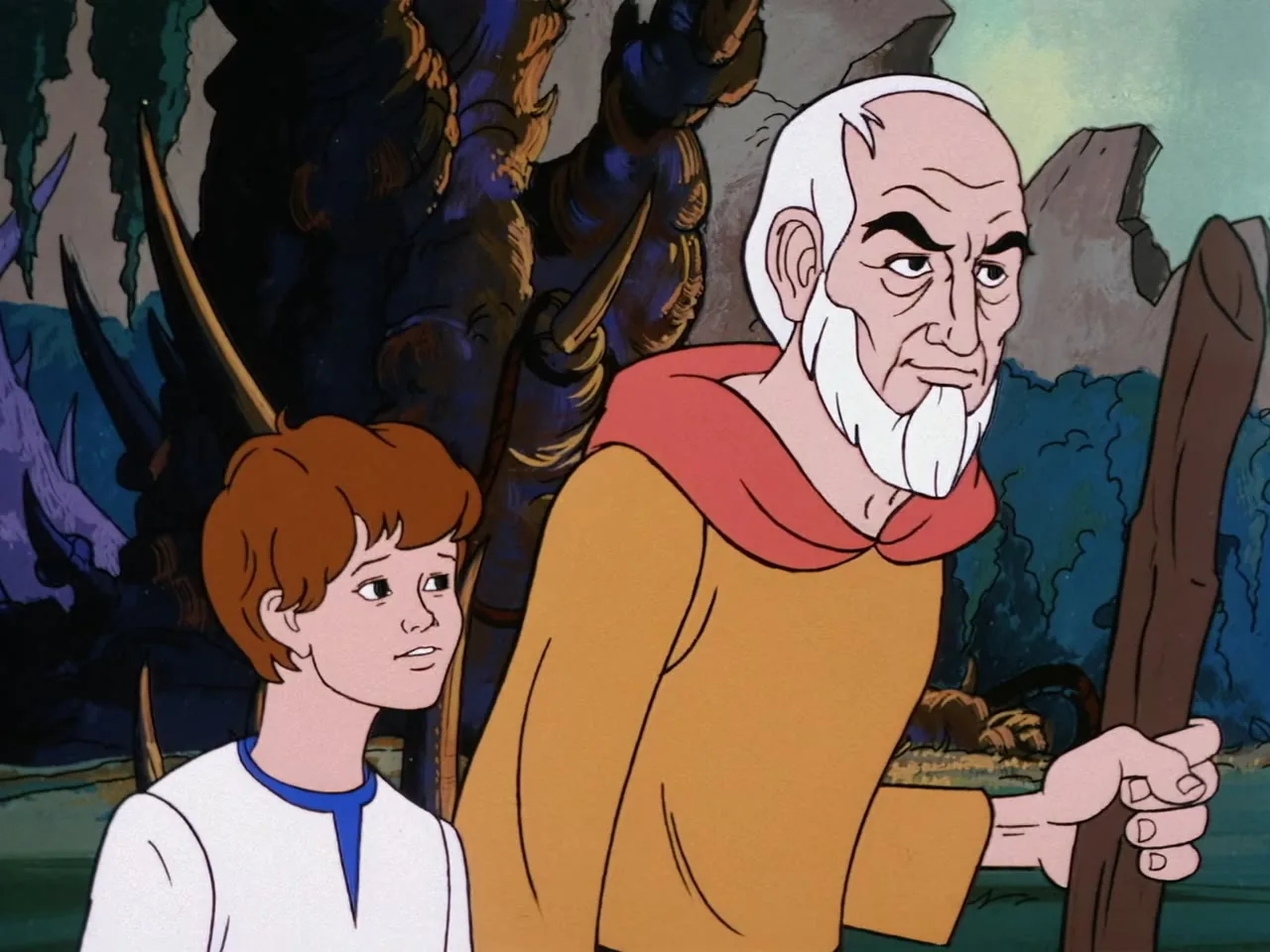
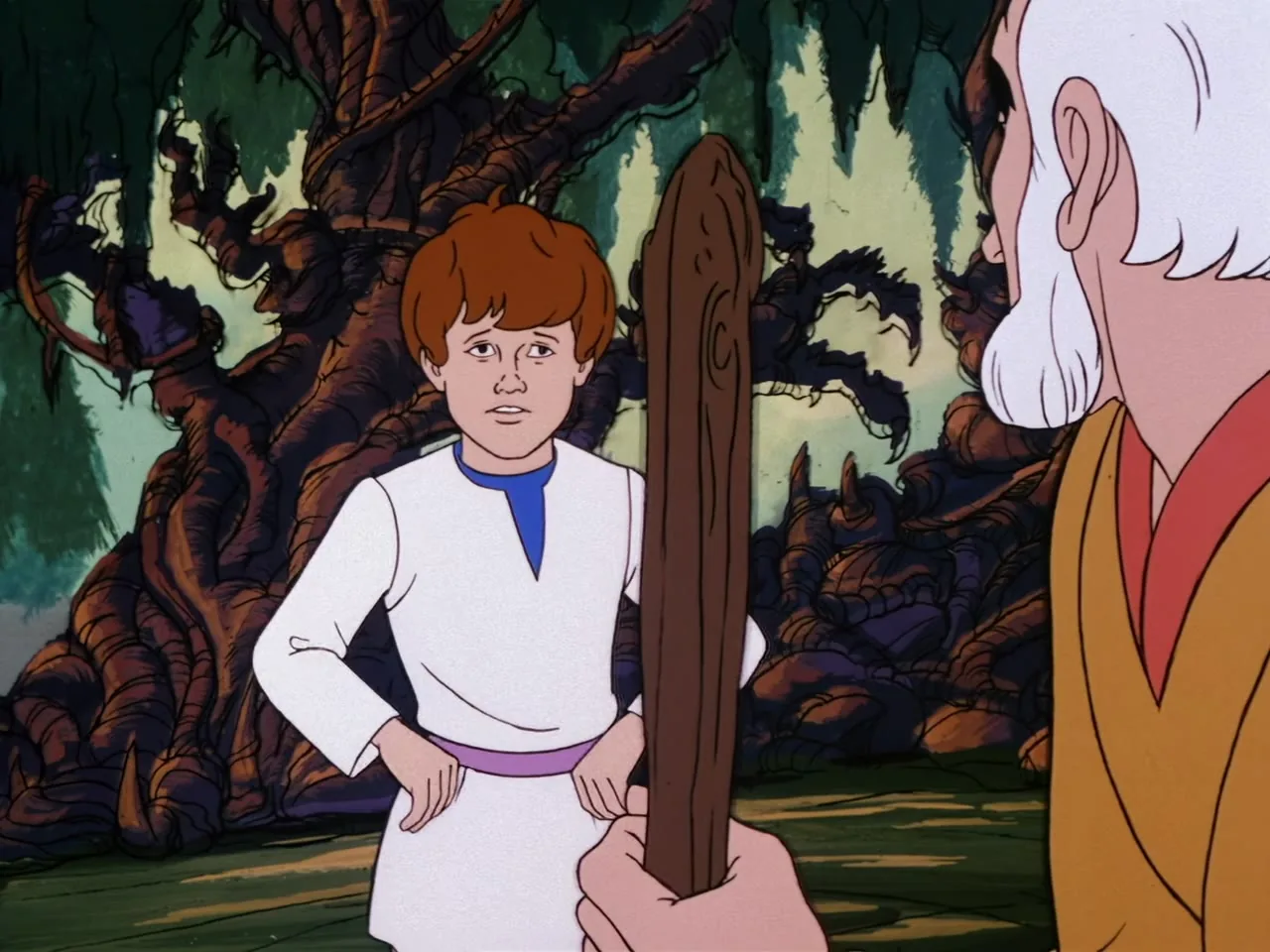
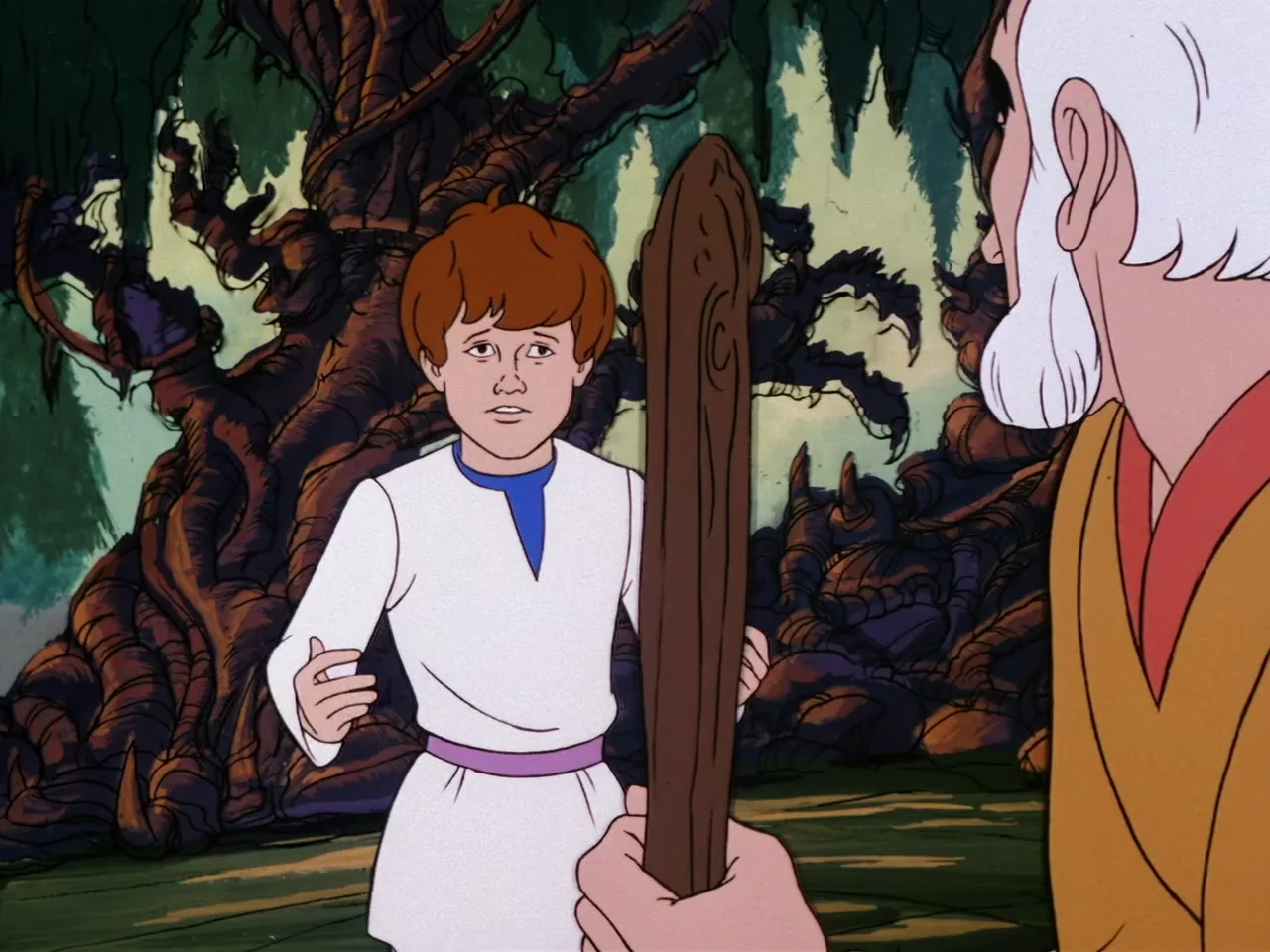
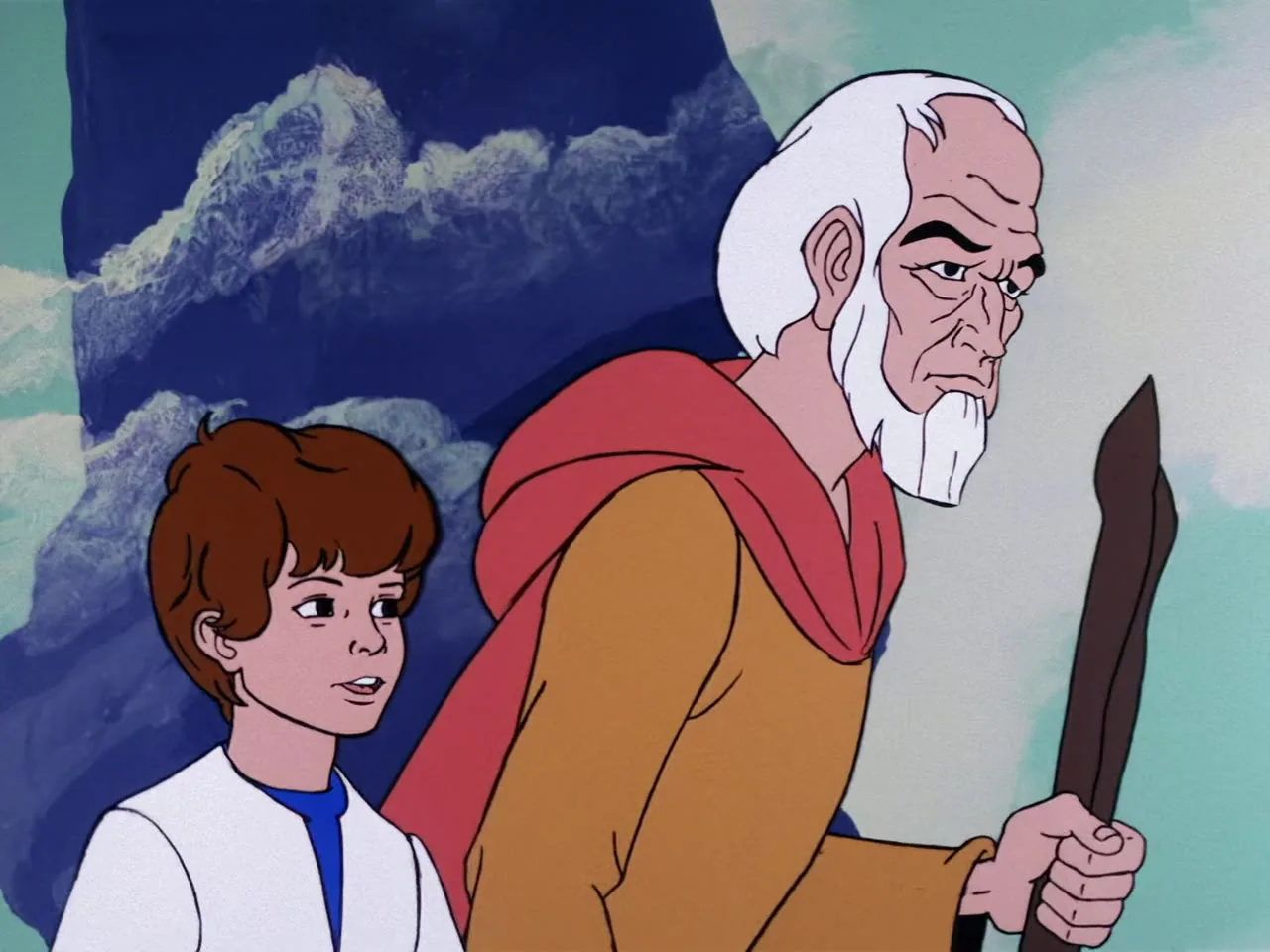
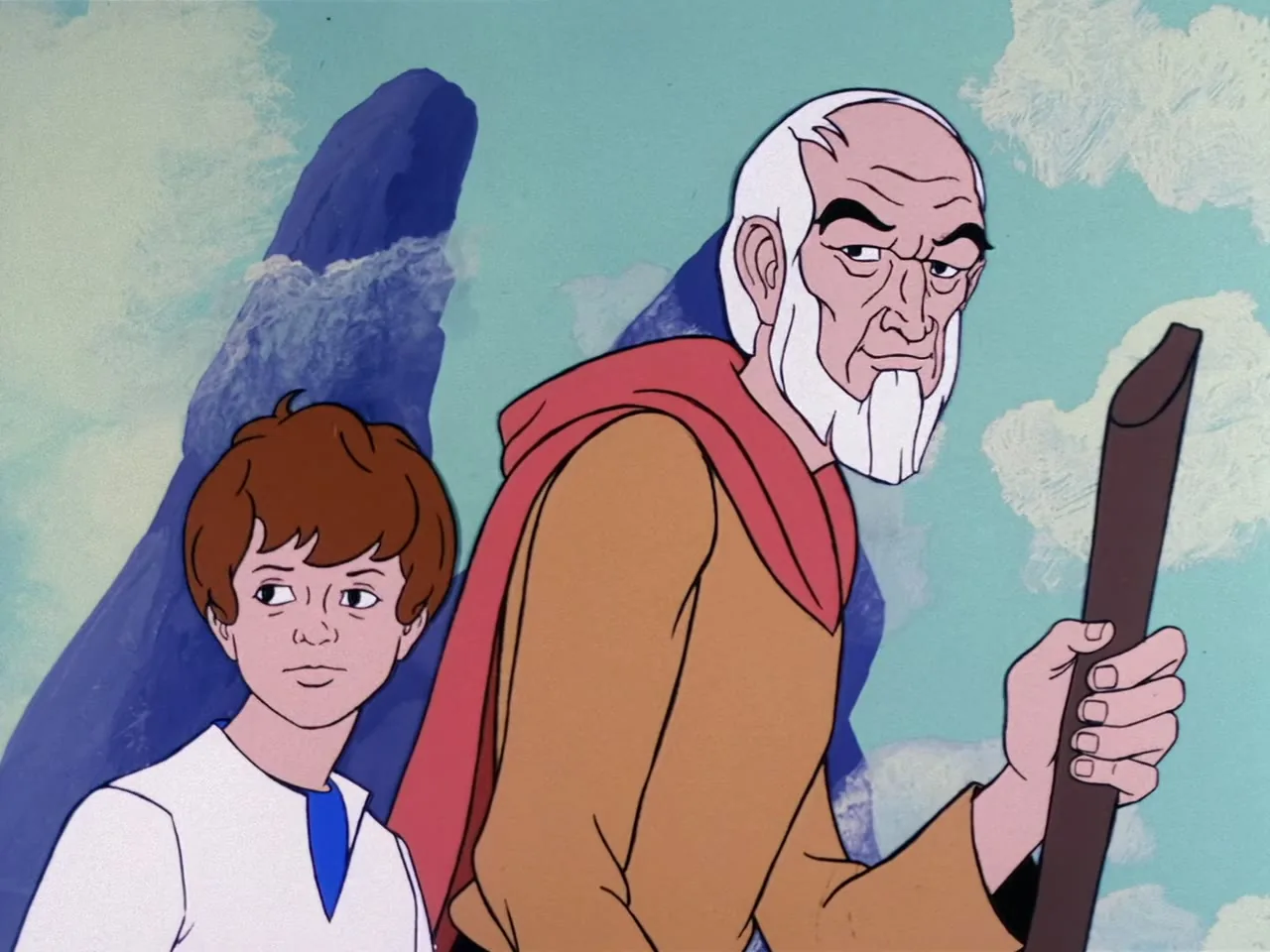
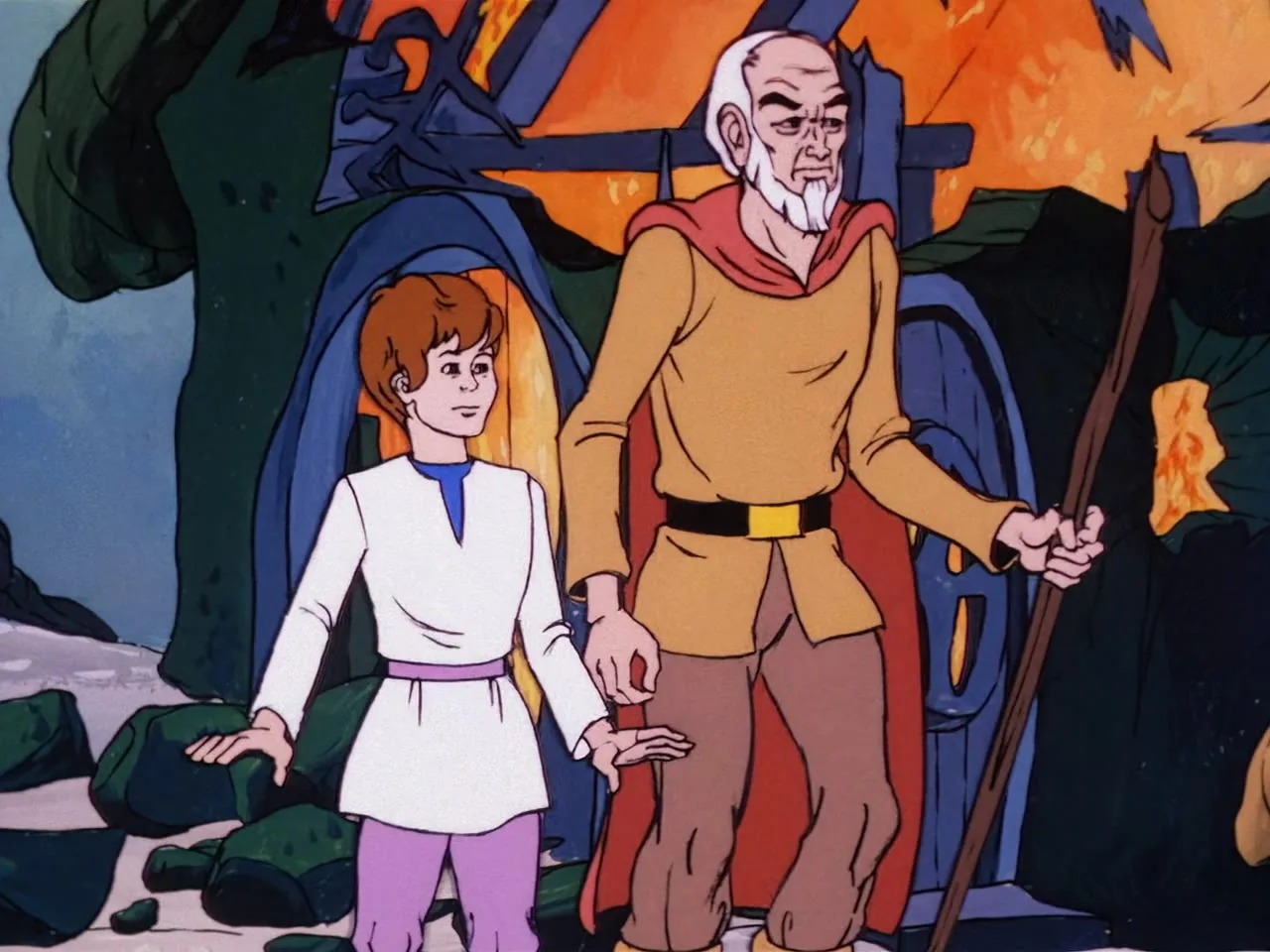
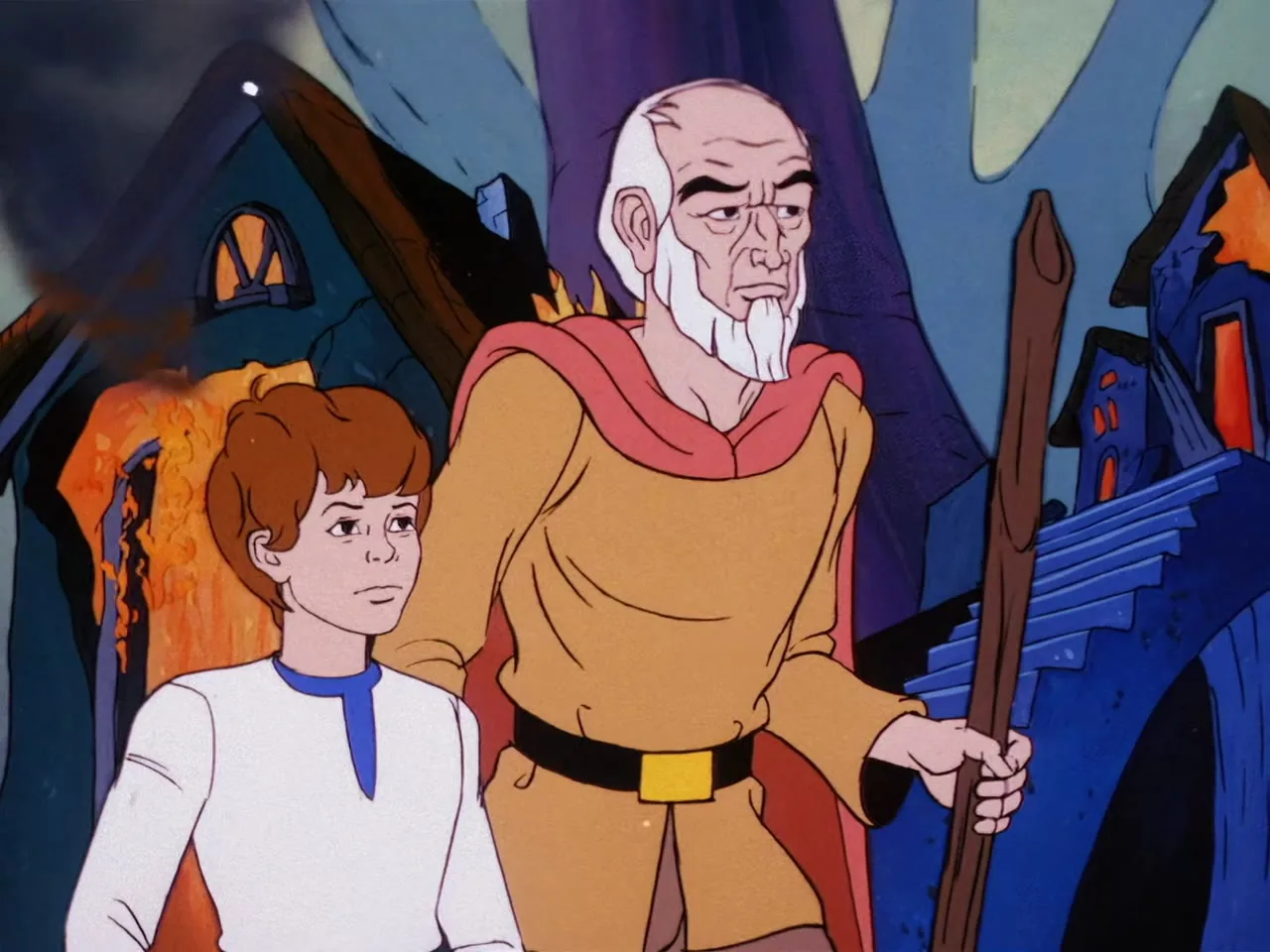
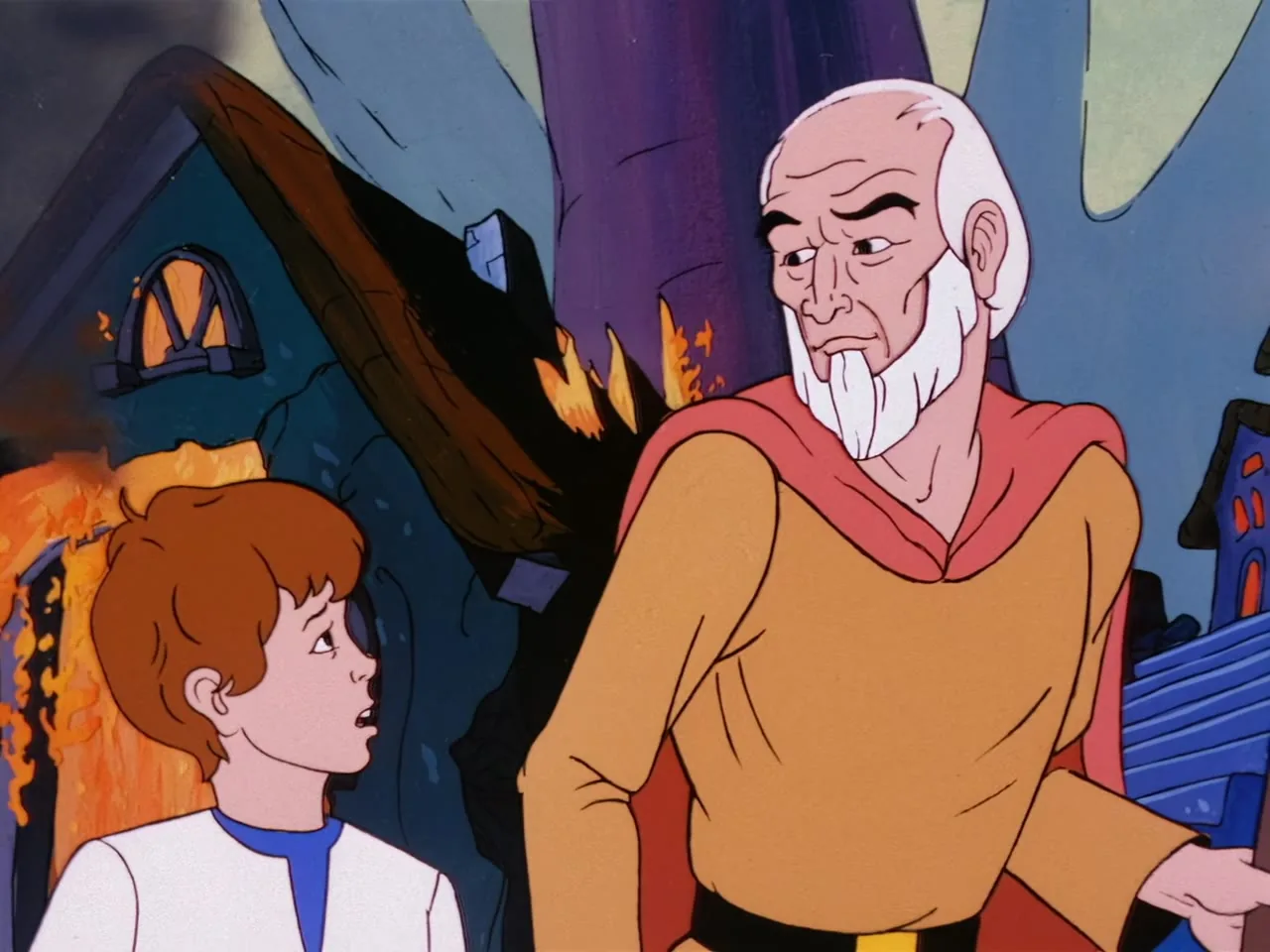
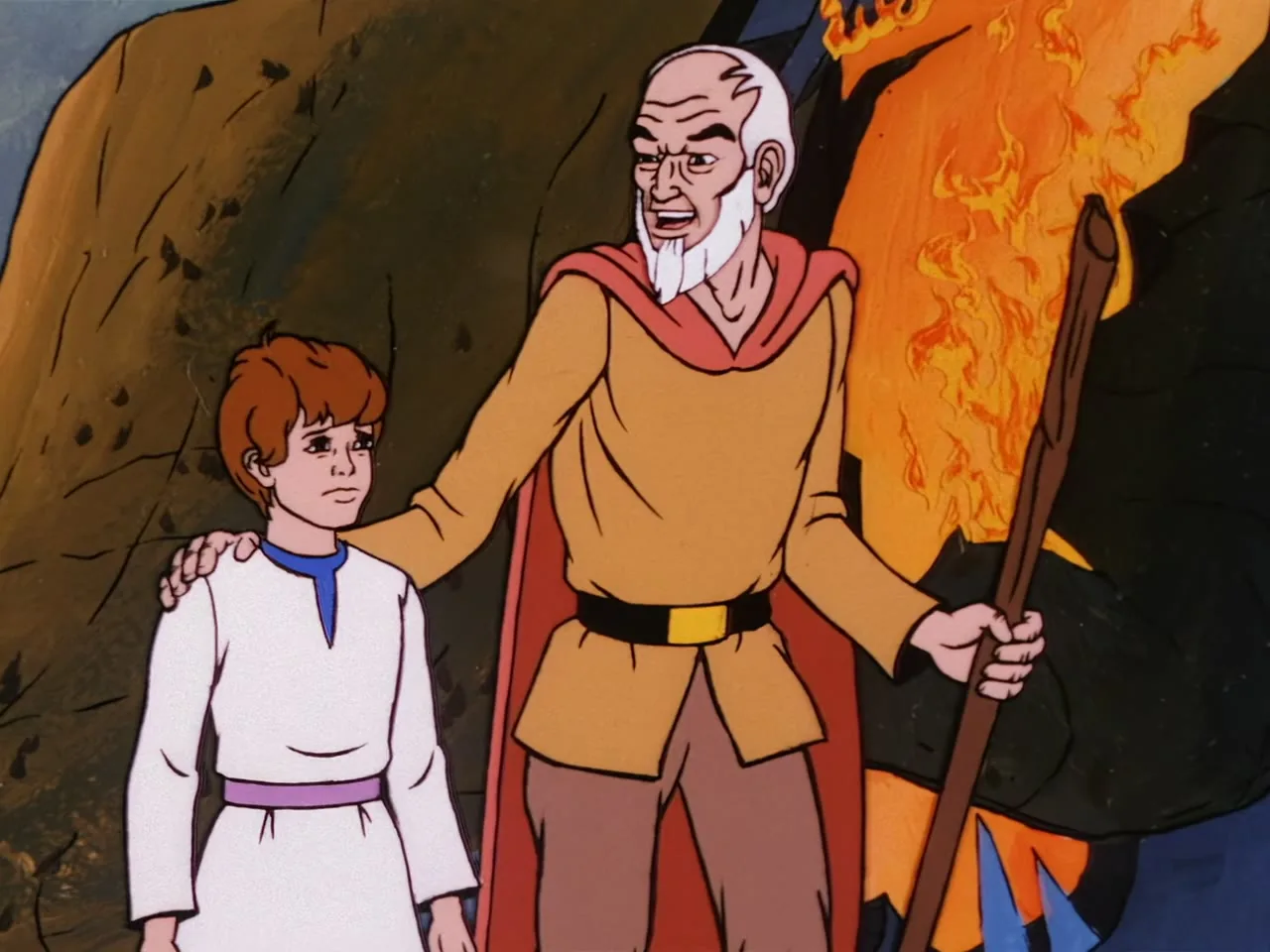
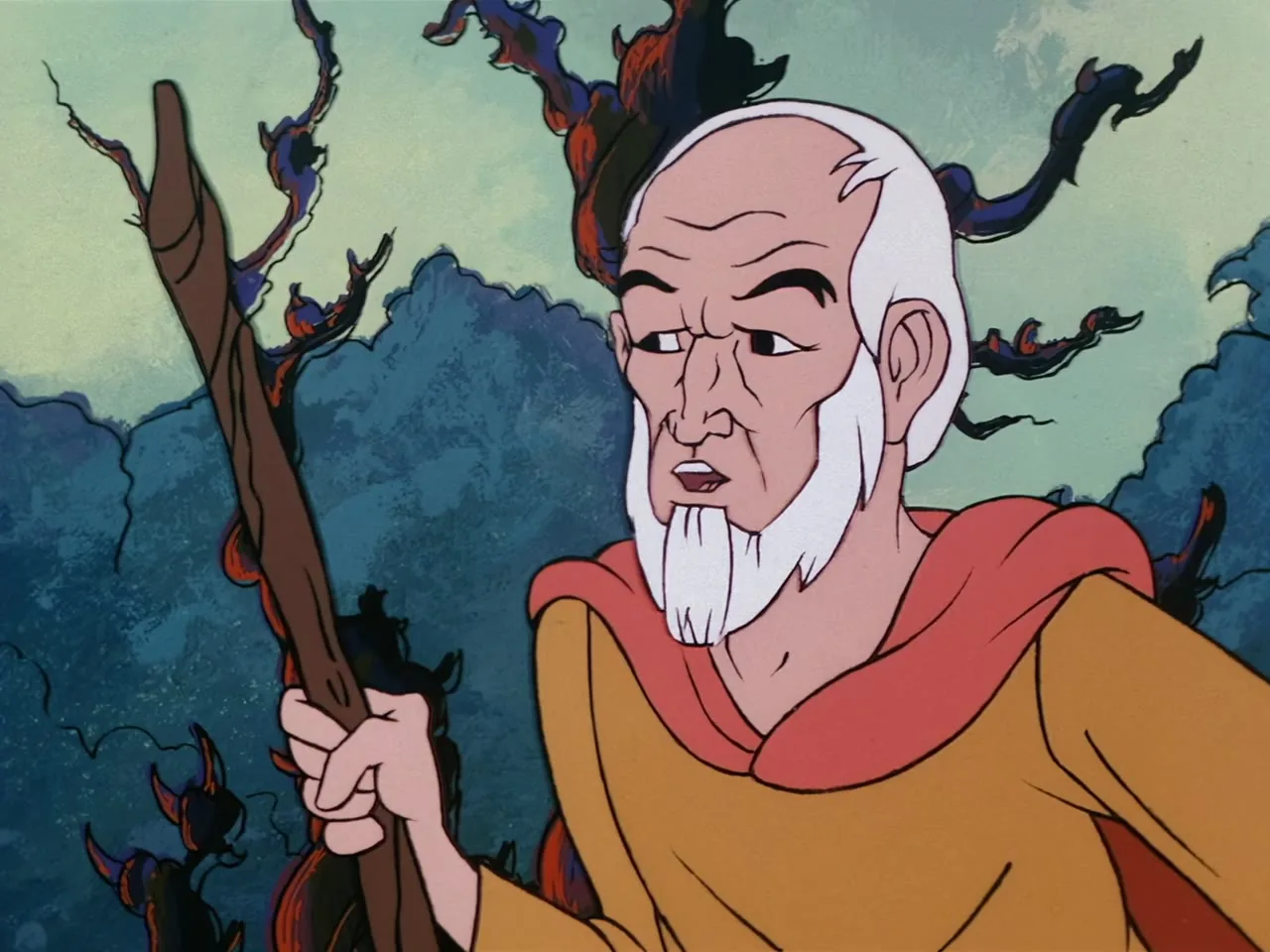
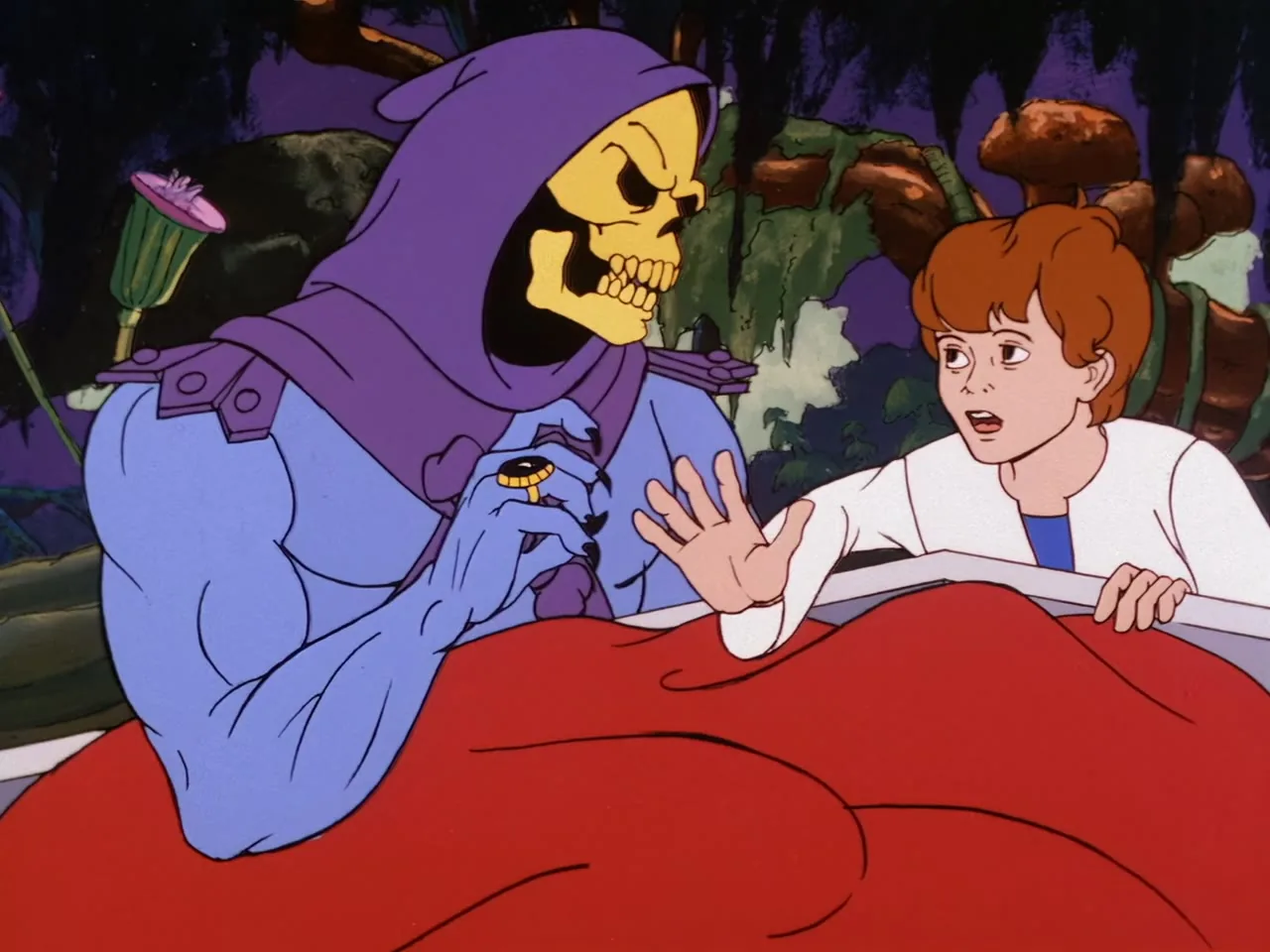
Drak: "Well, for one thing, I could buy you a new walking stick of gold." Grandfather: "Ha! Nonsense. I'm perfectly happy with the one I've got... No, Drak, we would have done evil. Nothing good can come out of evil."
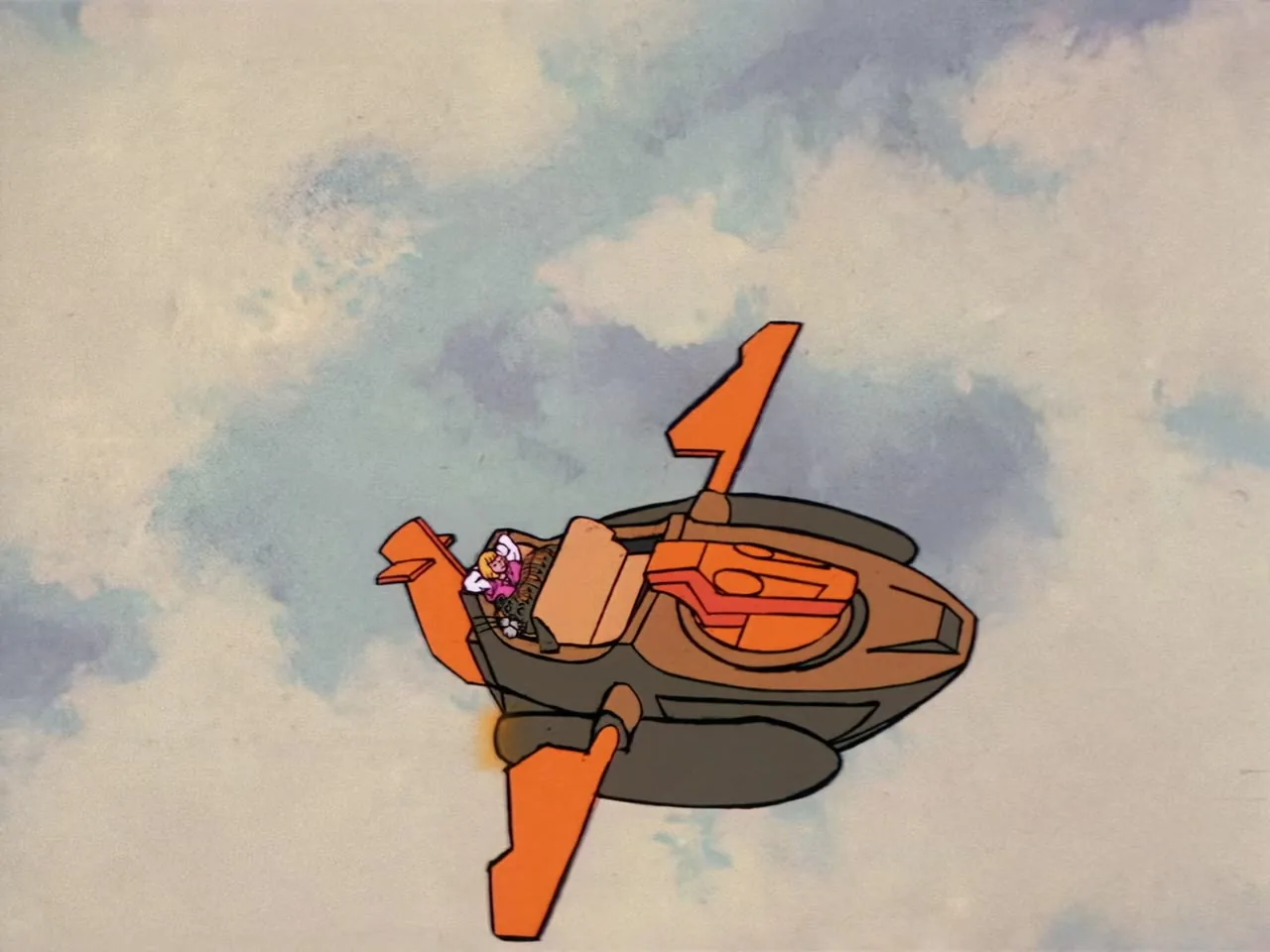
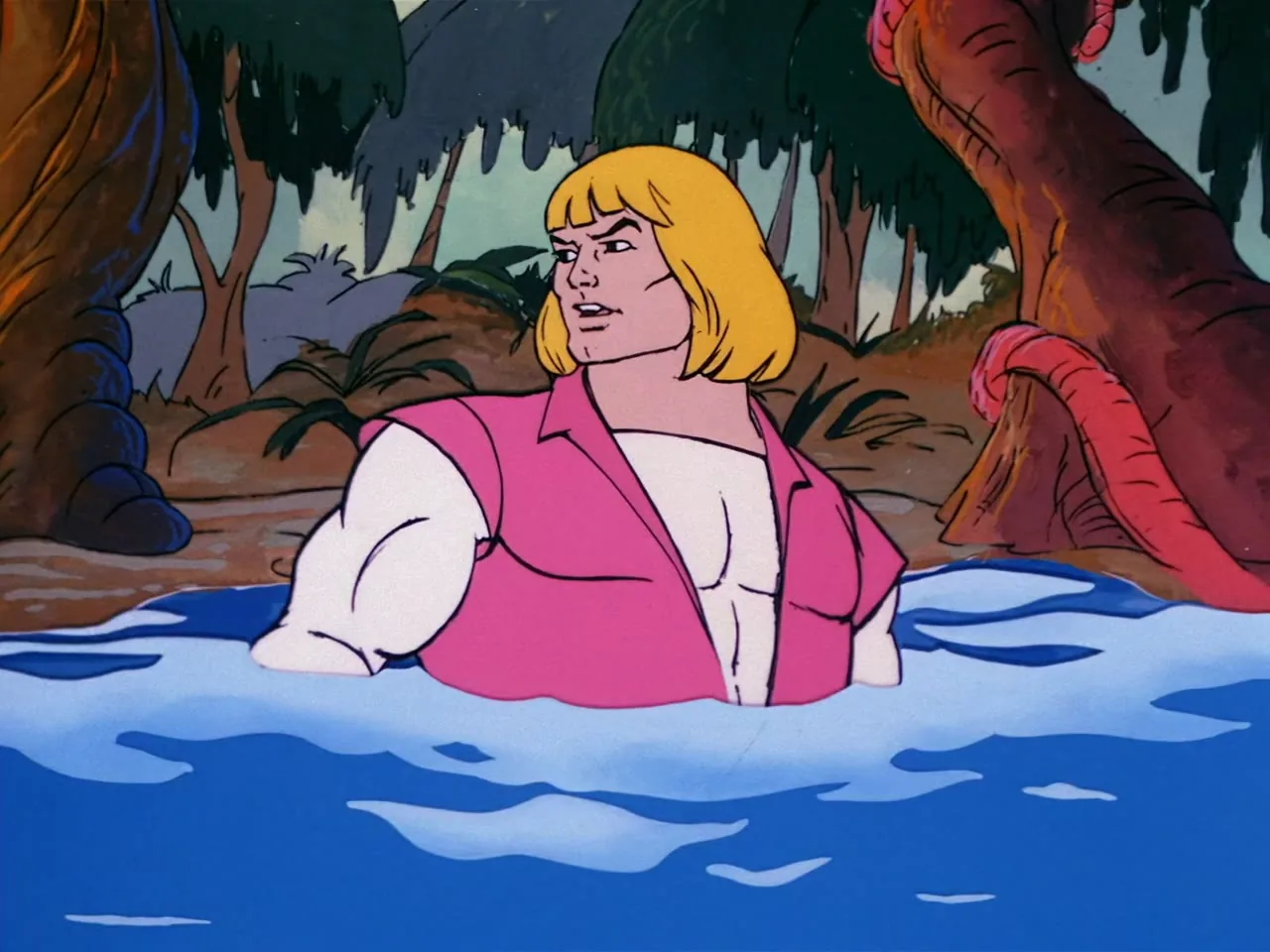
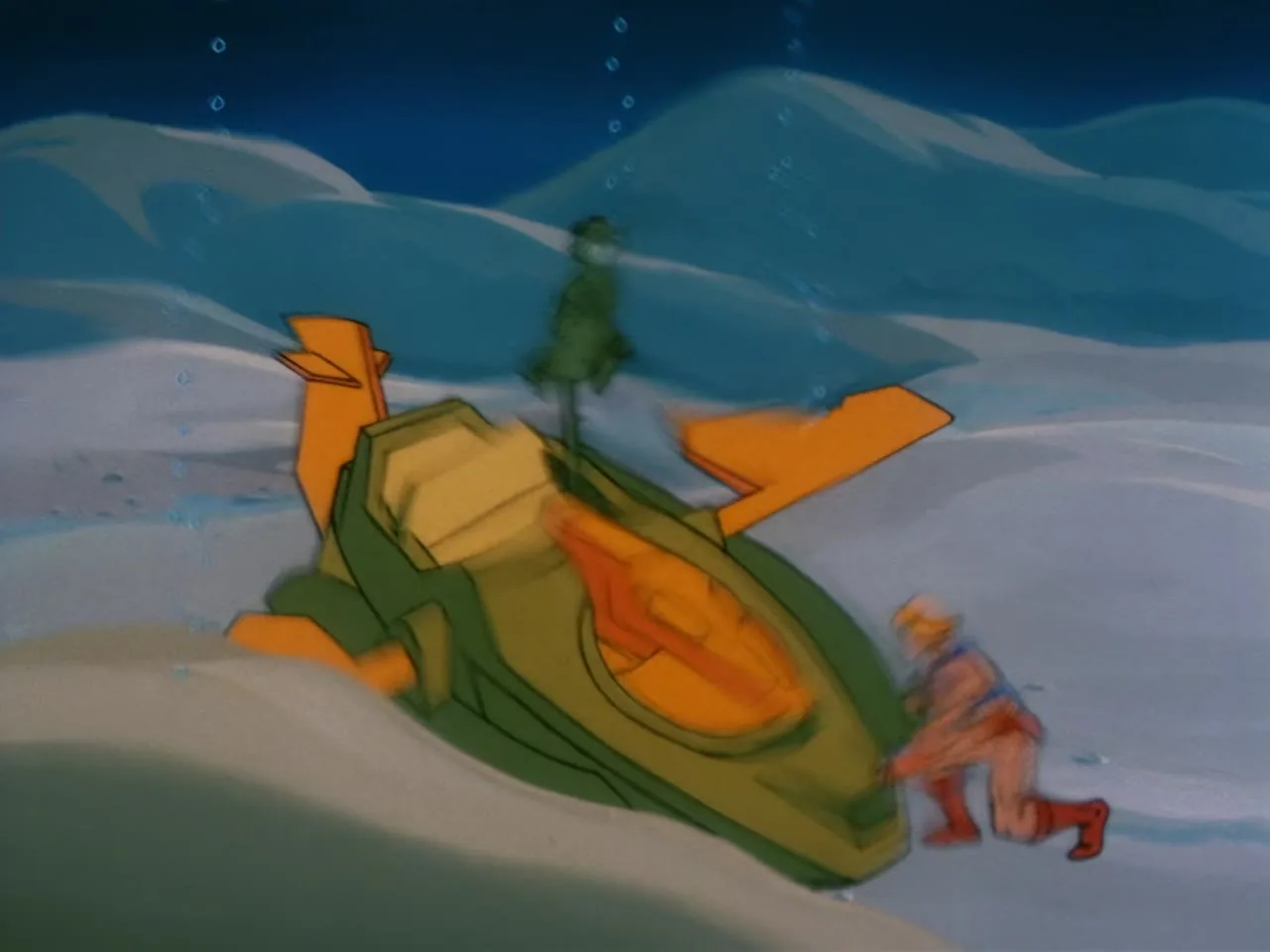
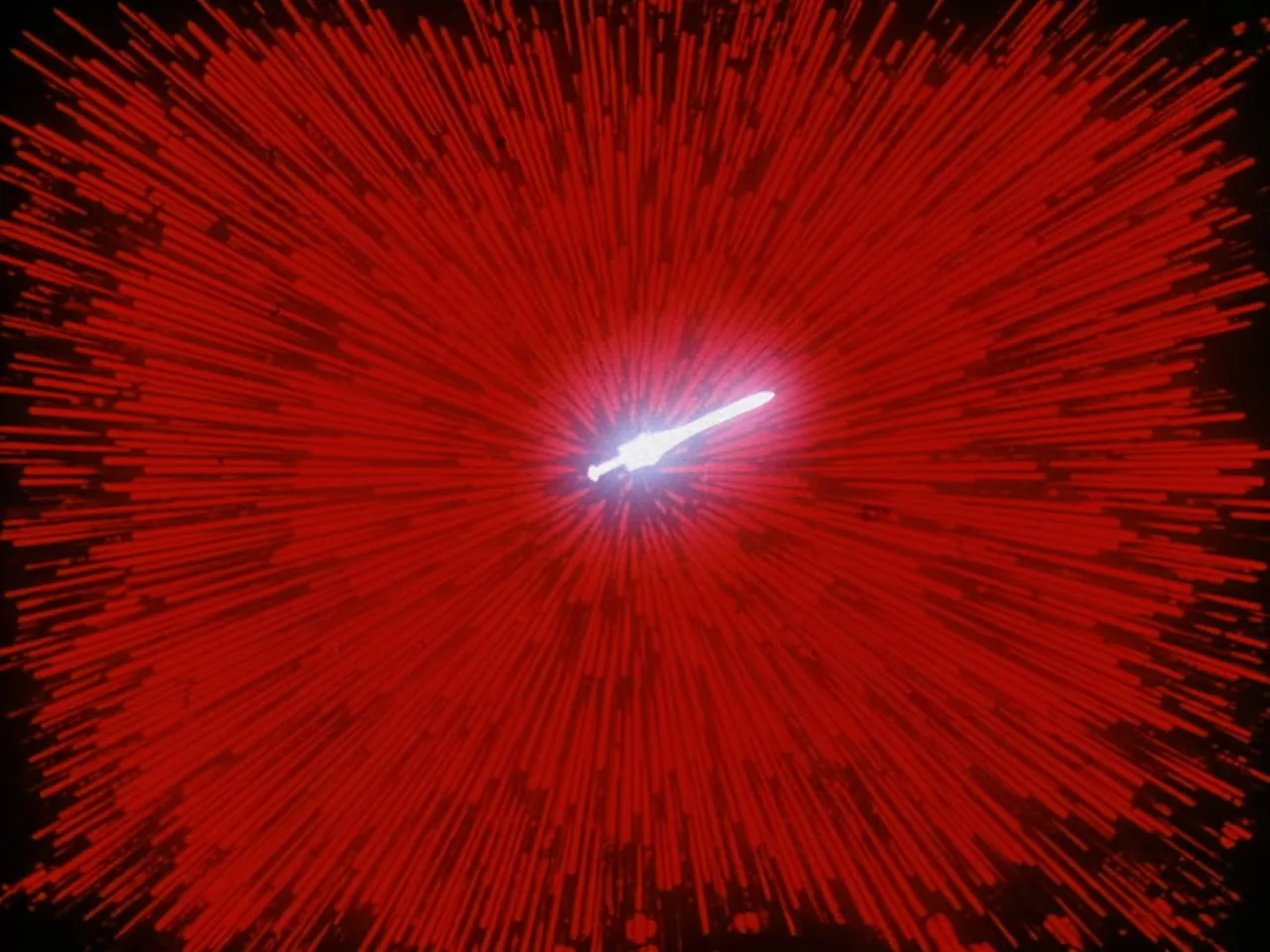
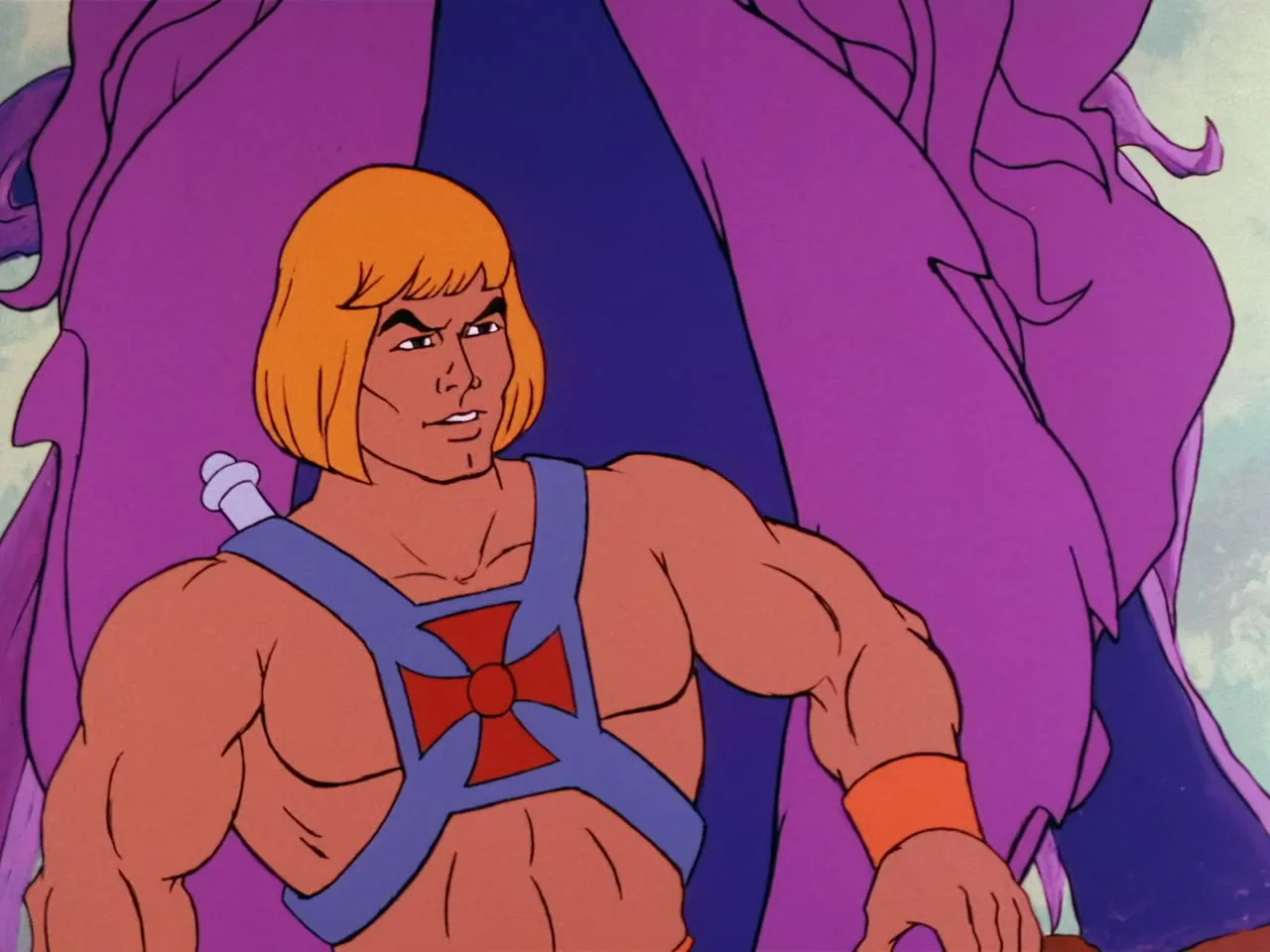
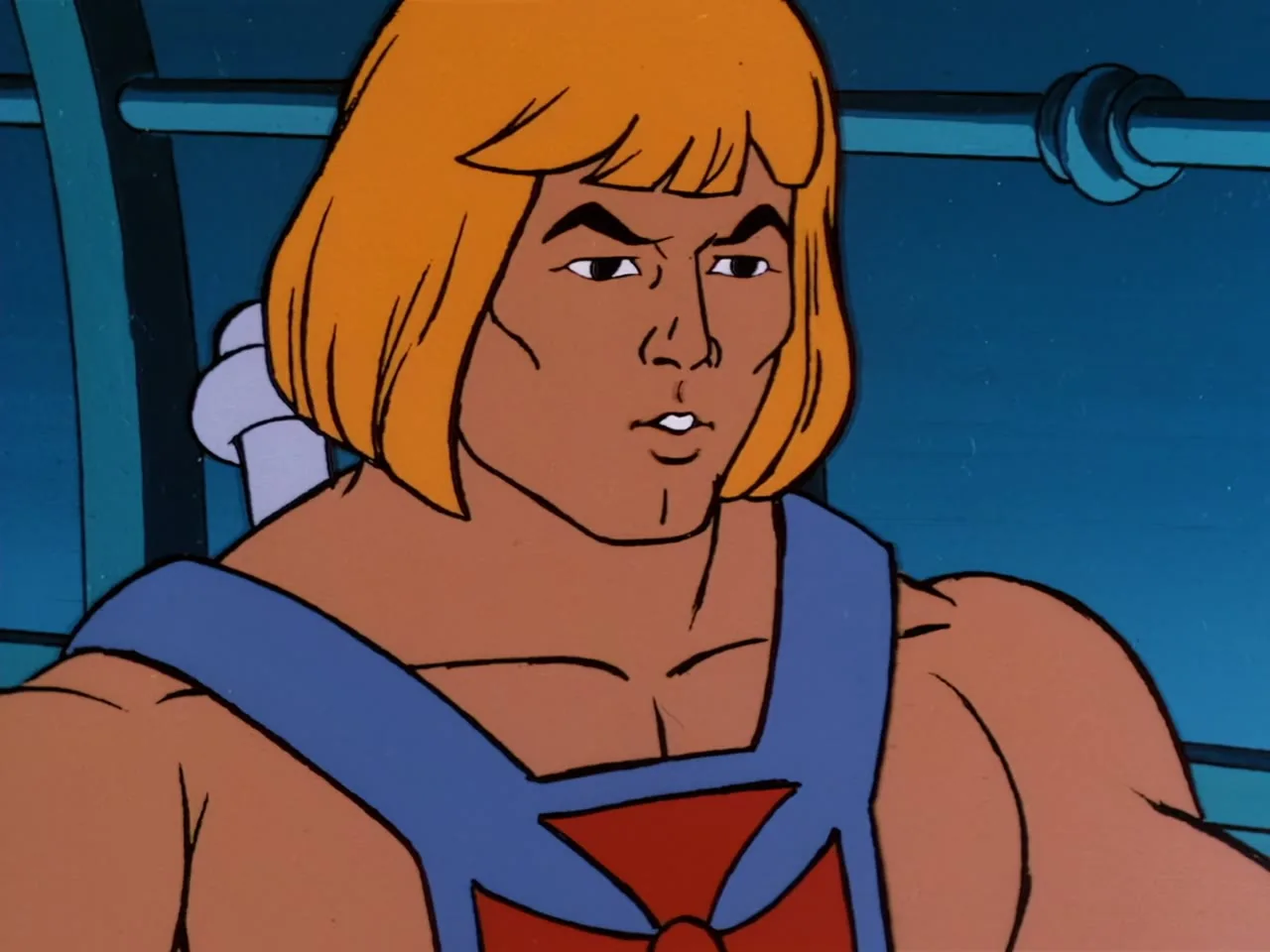
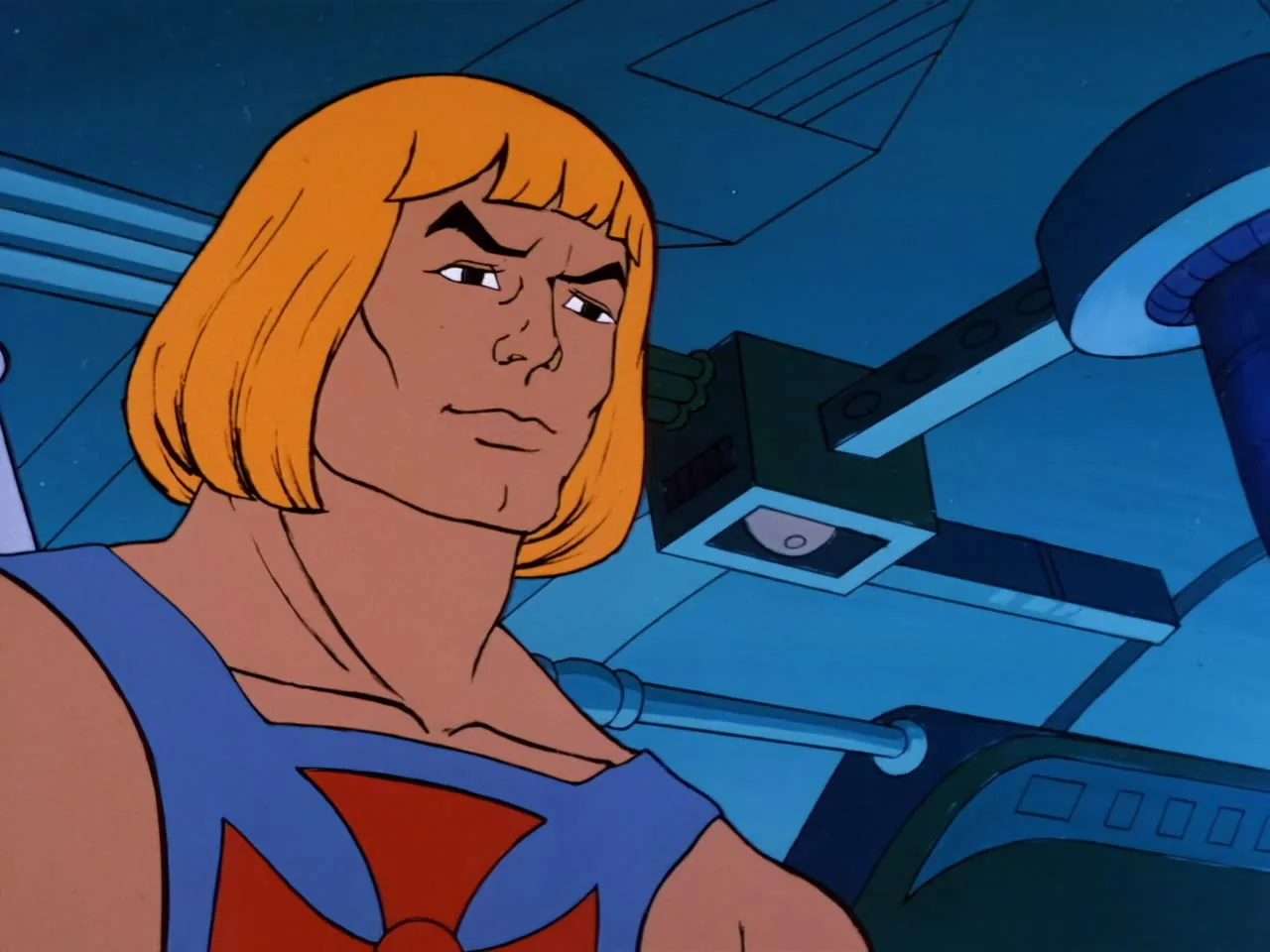
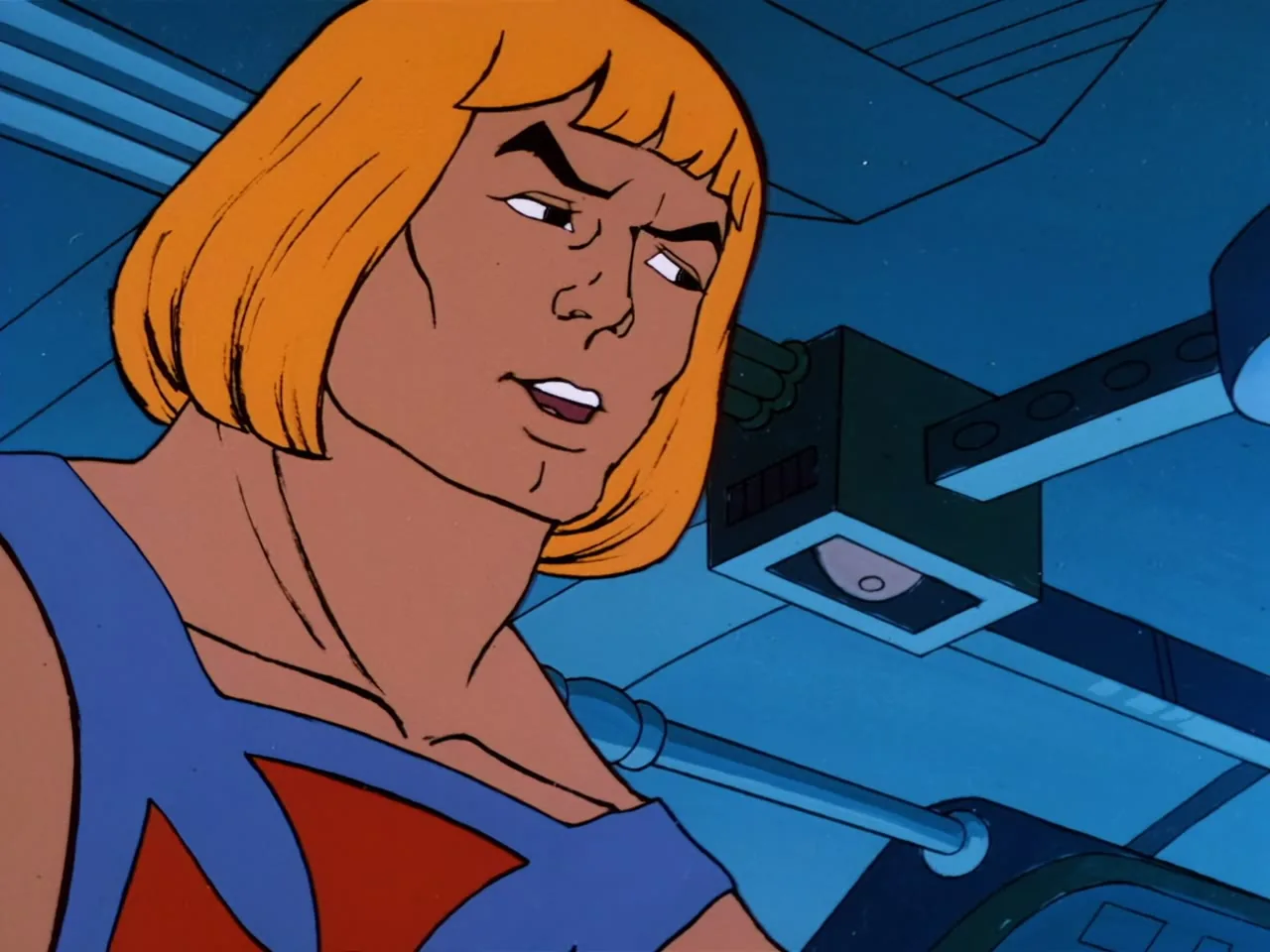
"Hunt for He-Man" spends its first half doing something the series rarely allows itself: it strips He-Man of his strength and leaves him, for most of the runtime, as cargo. The Wind Raider goes down under one of Skeletor's lightning bolts before the title card even finishes, and from the crash onward the episode is not about what He-Man does, but about who decides what happens to him while he can't do anything at all.
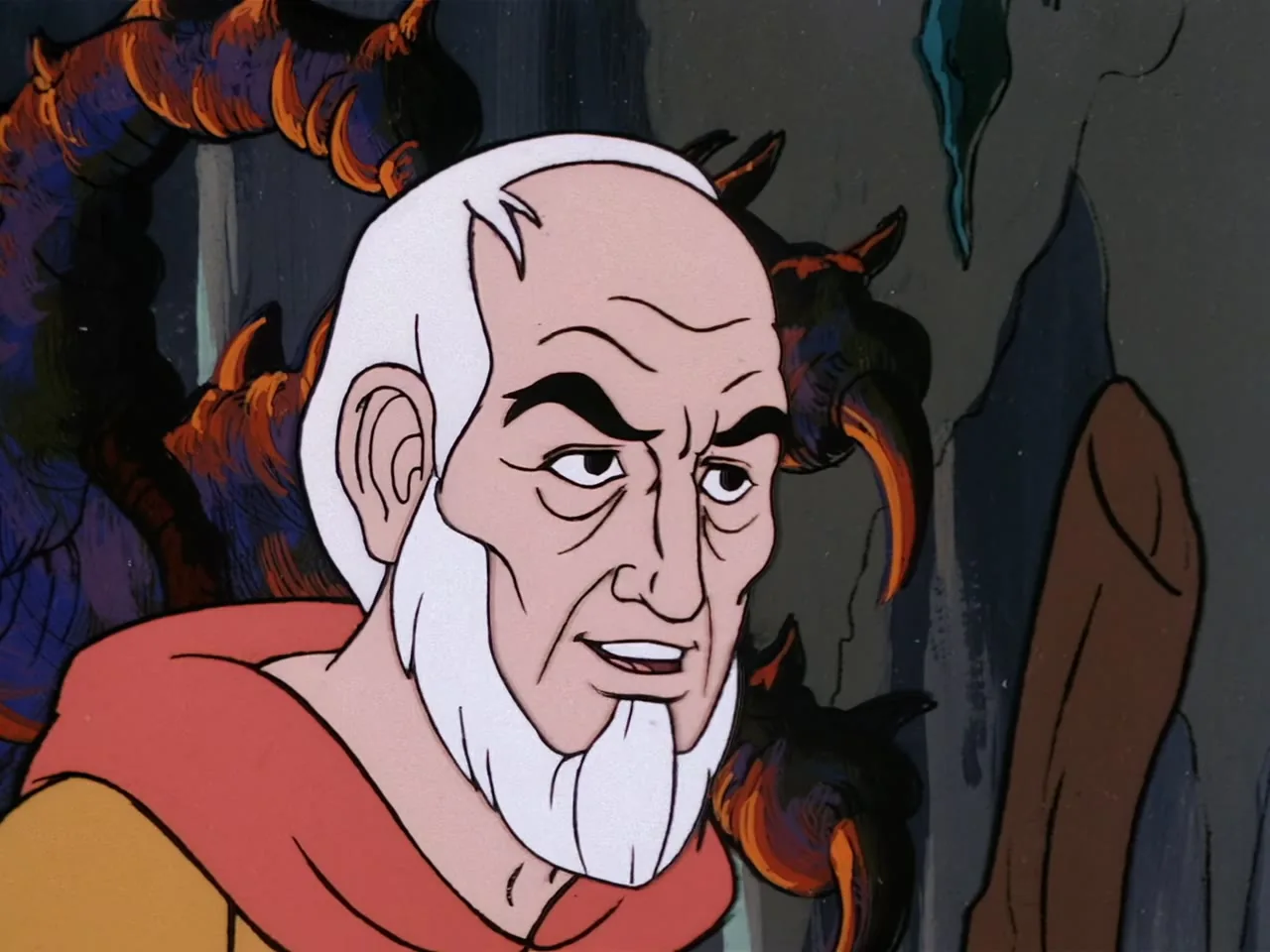
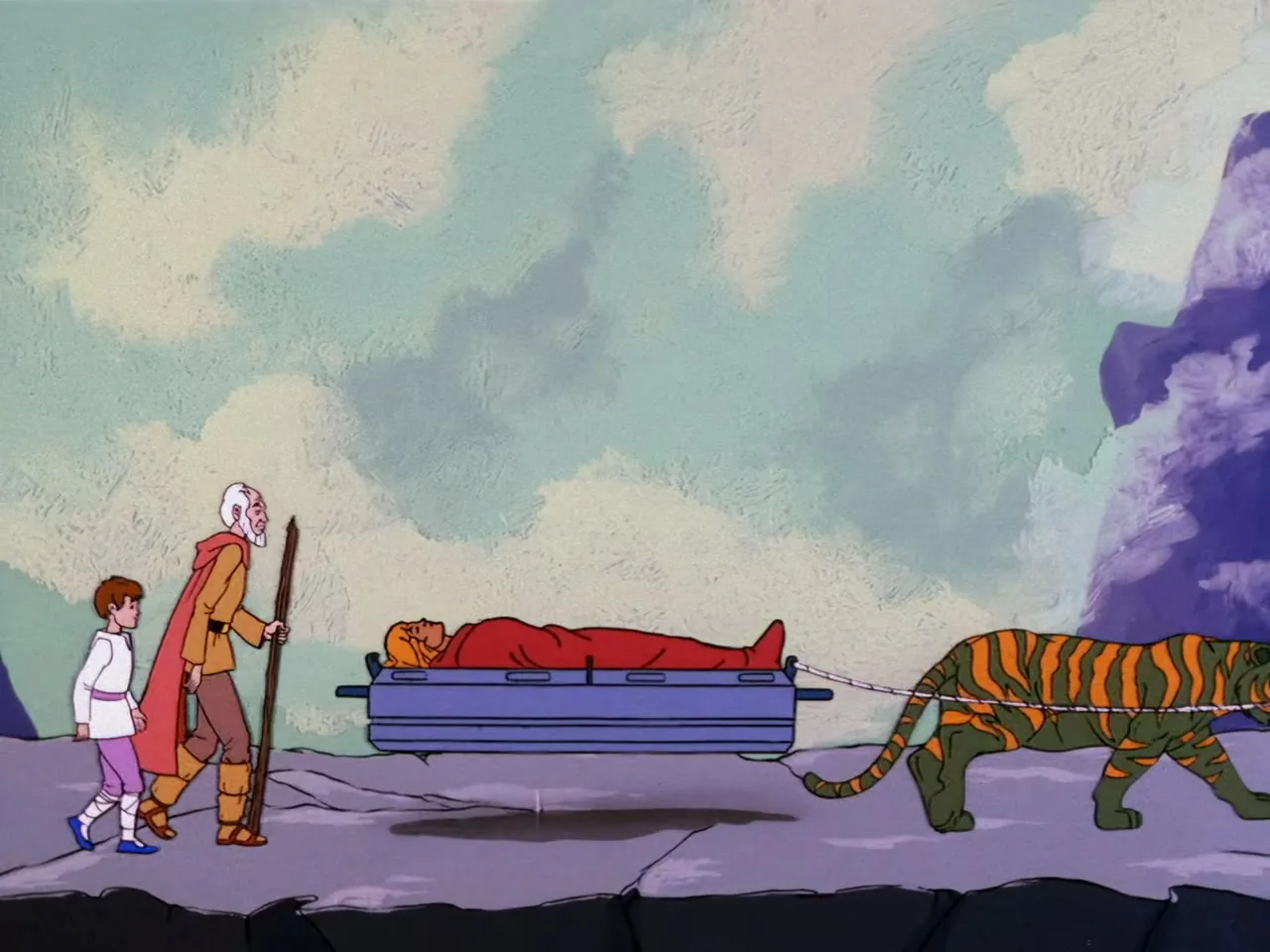
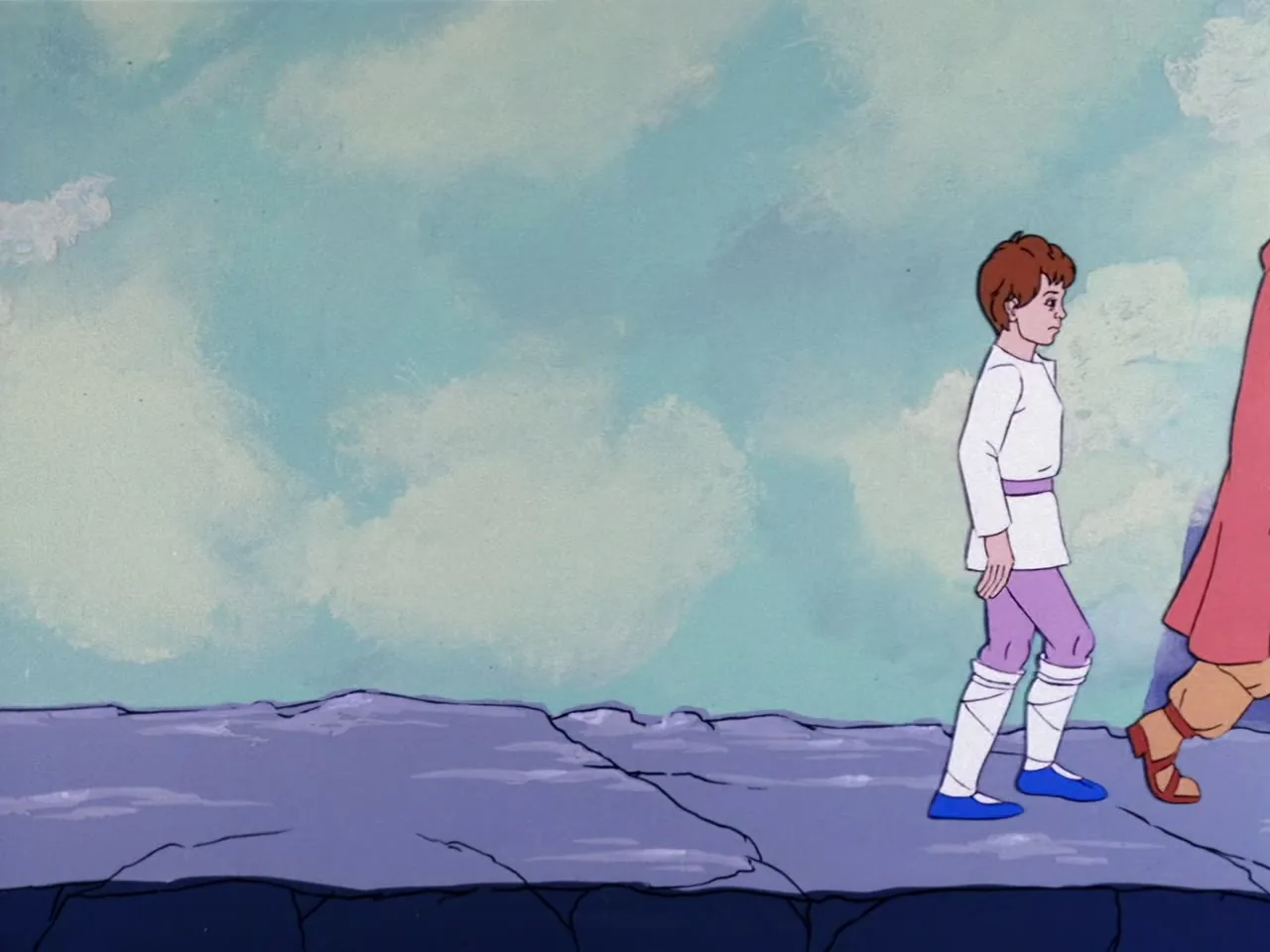
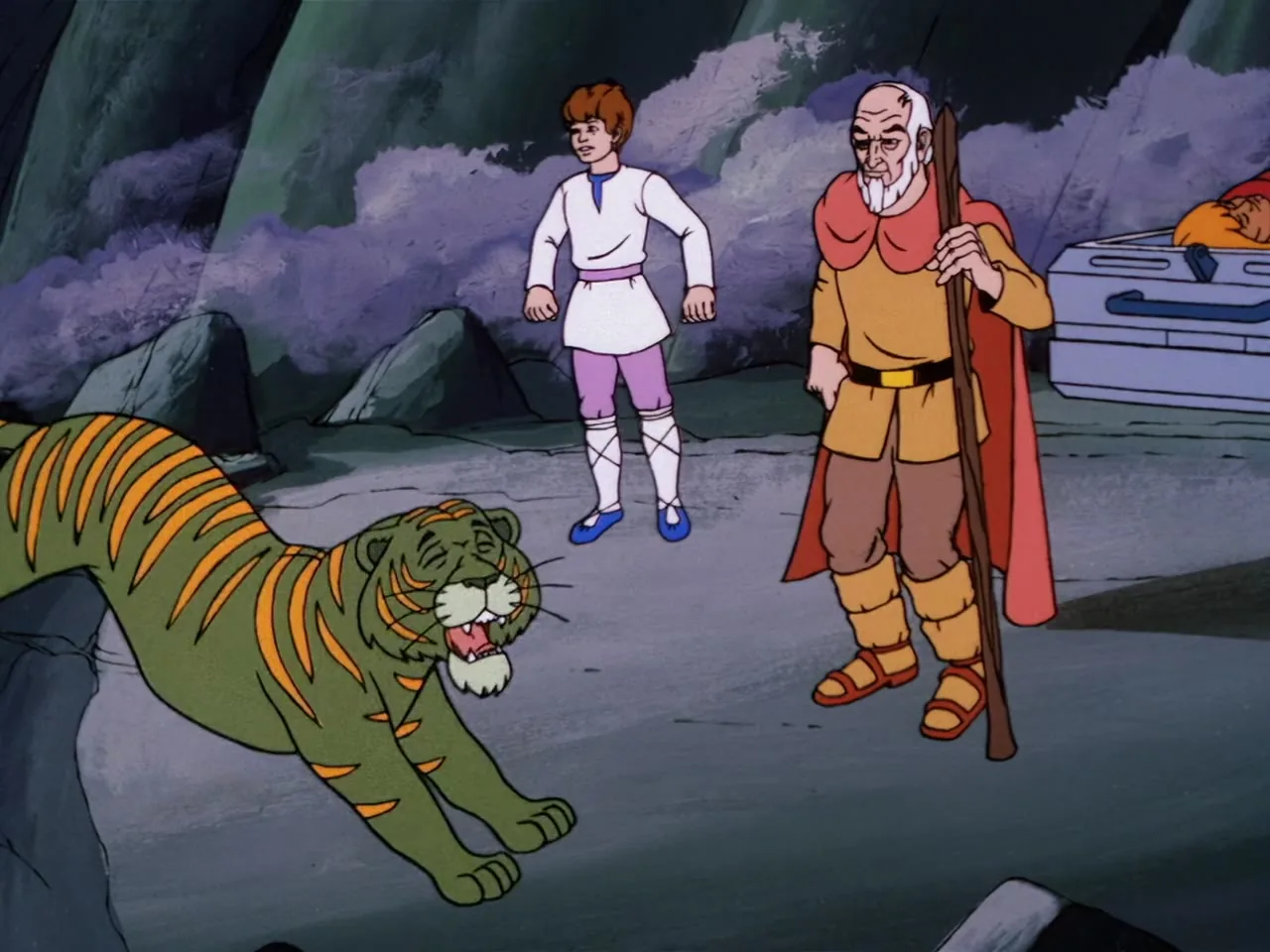
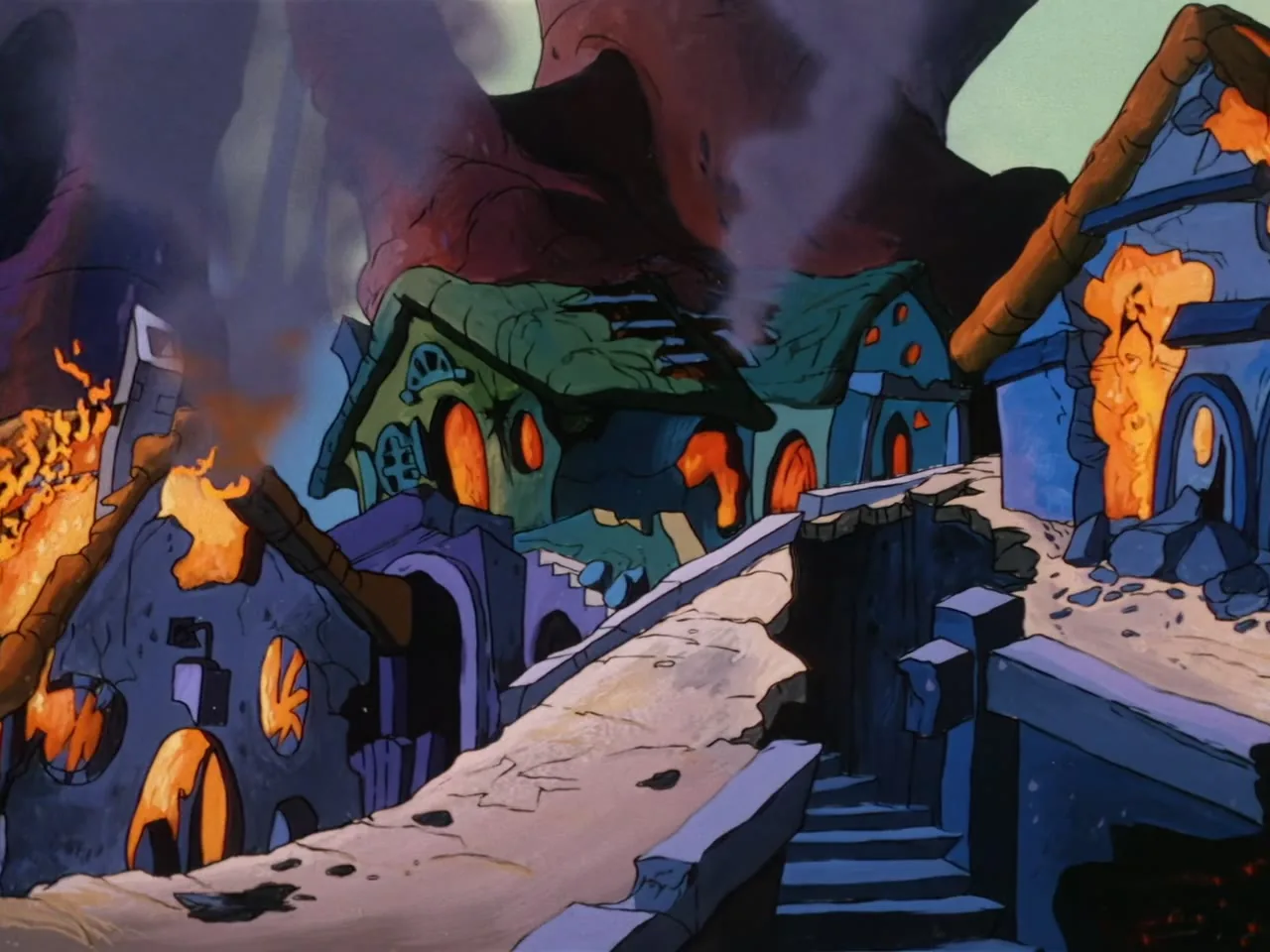
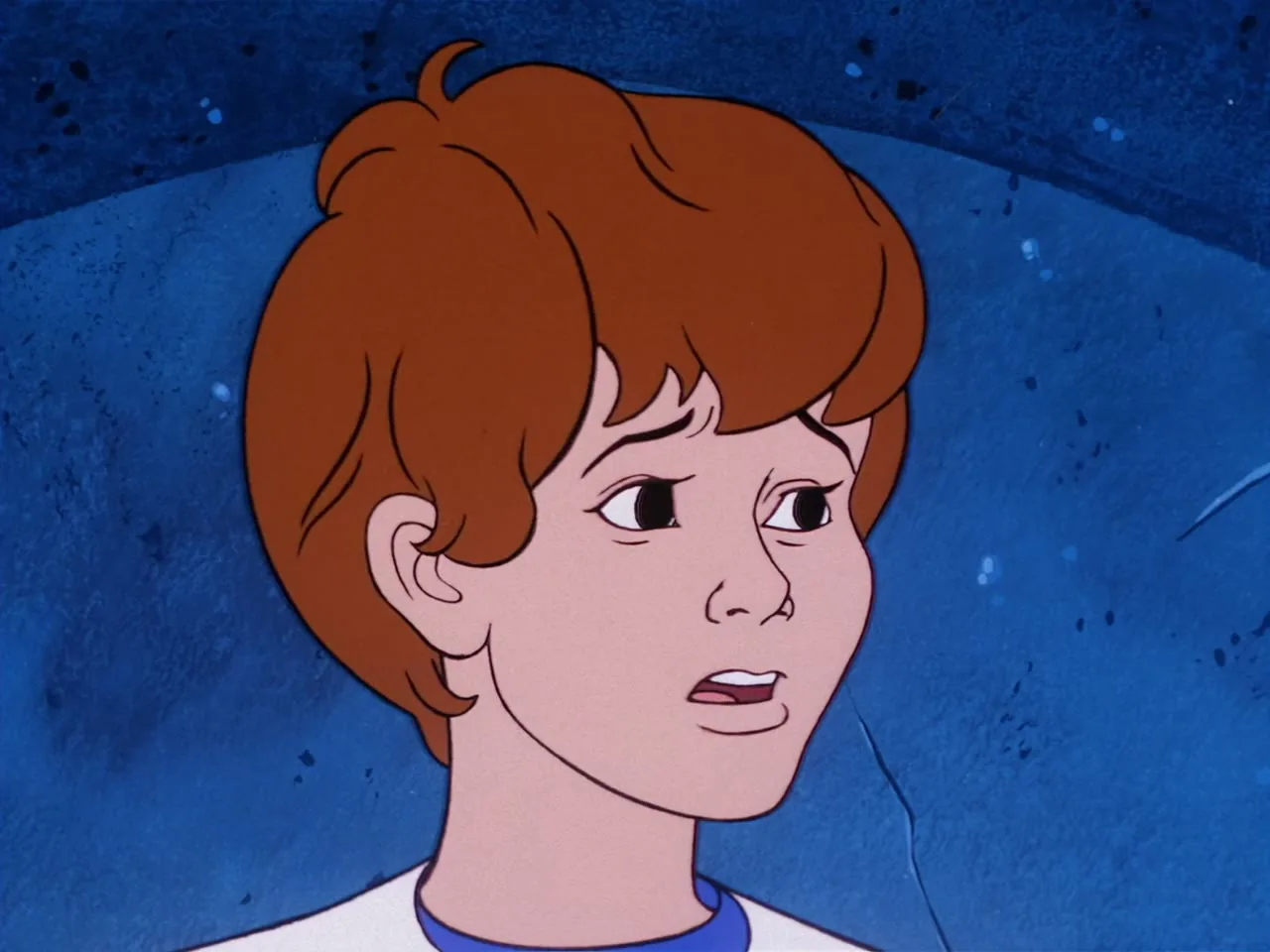
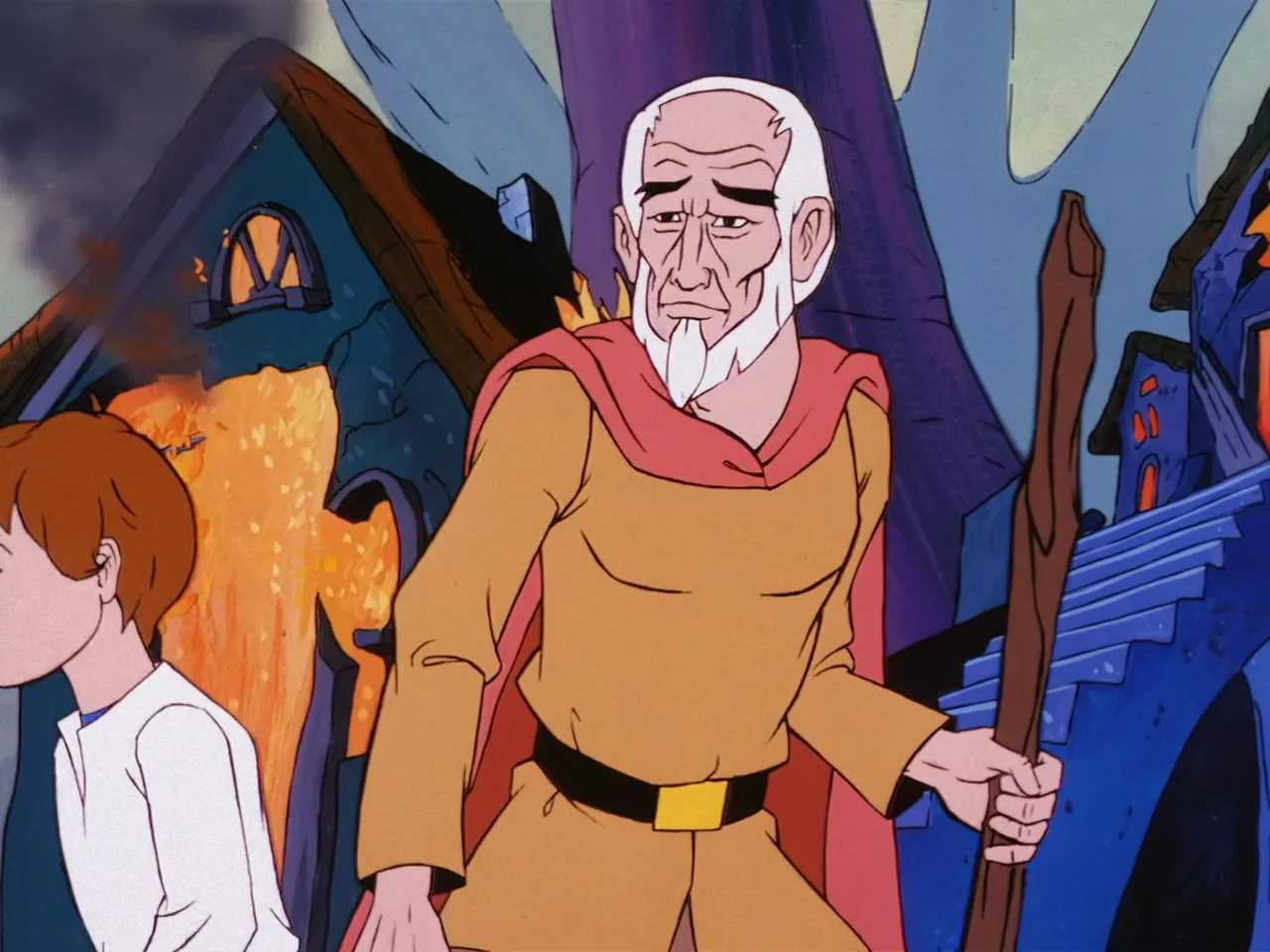
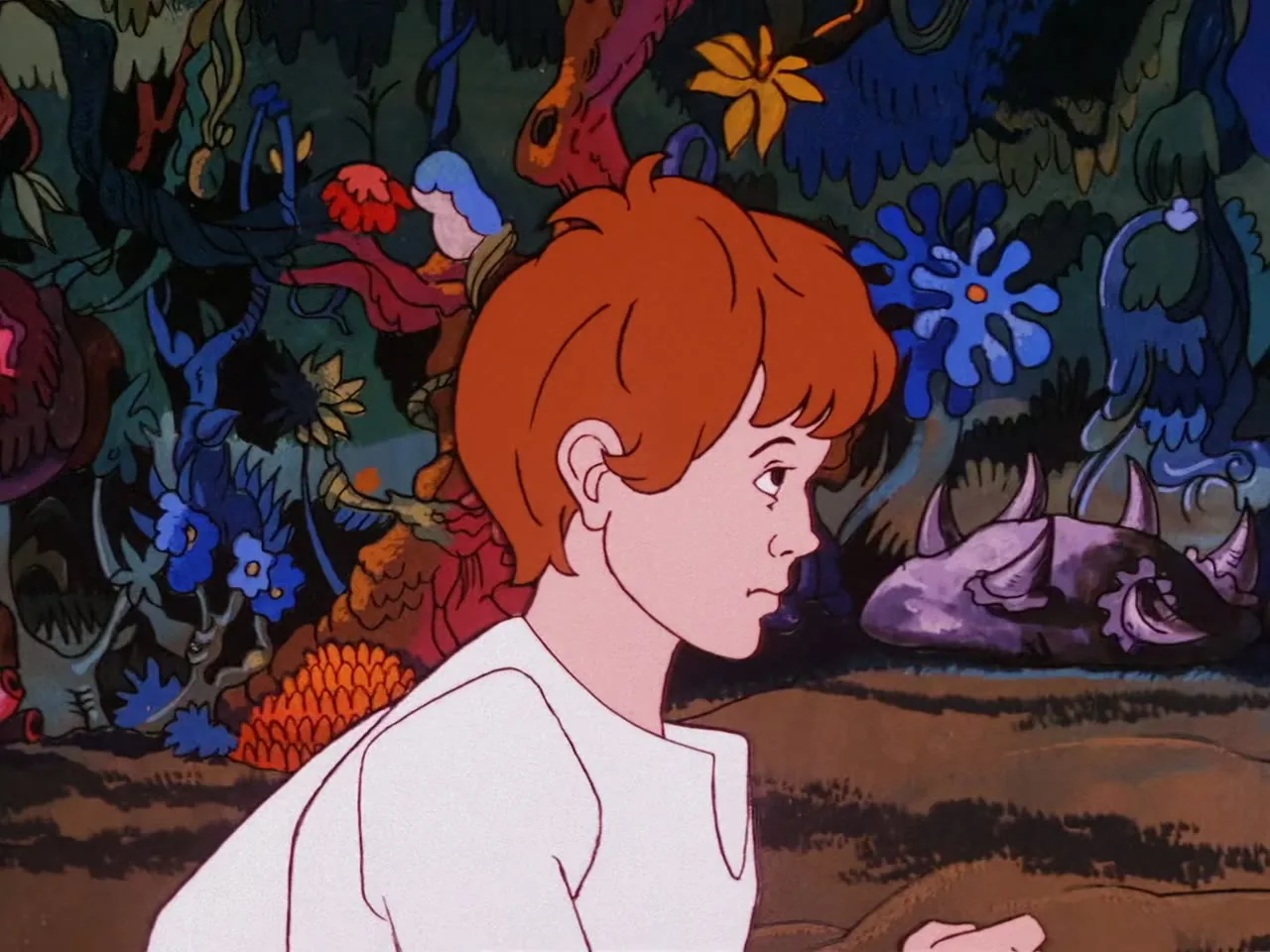
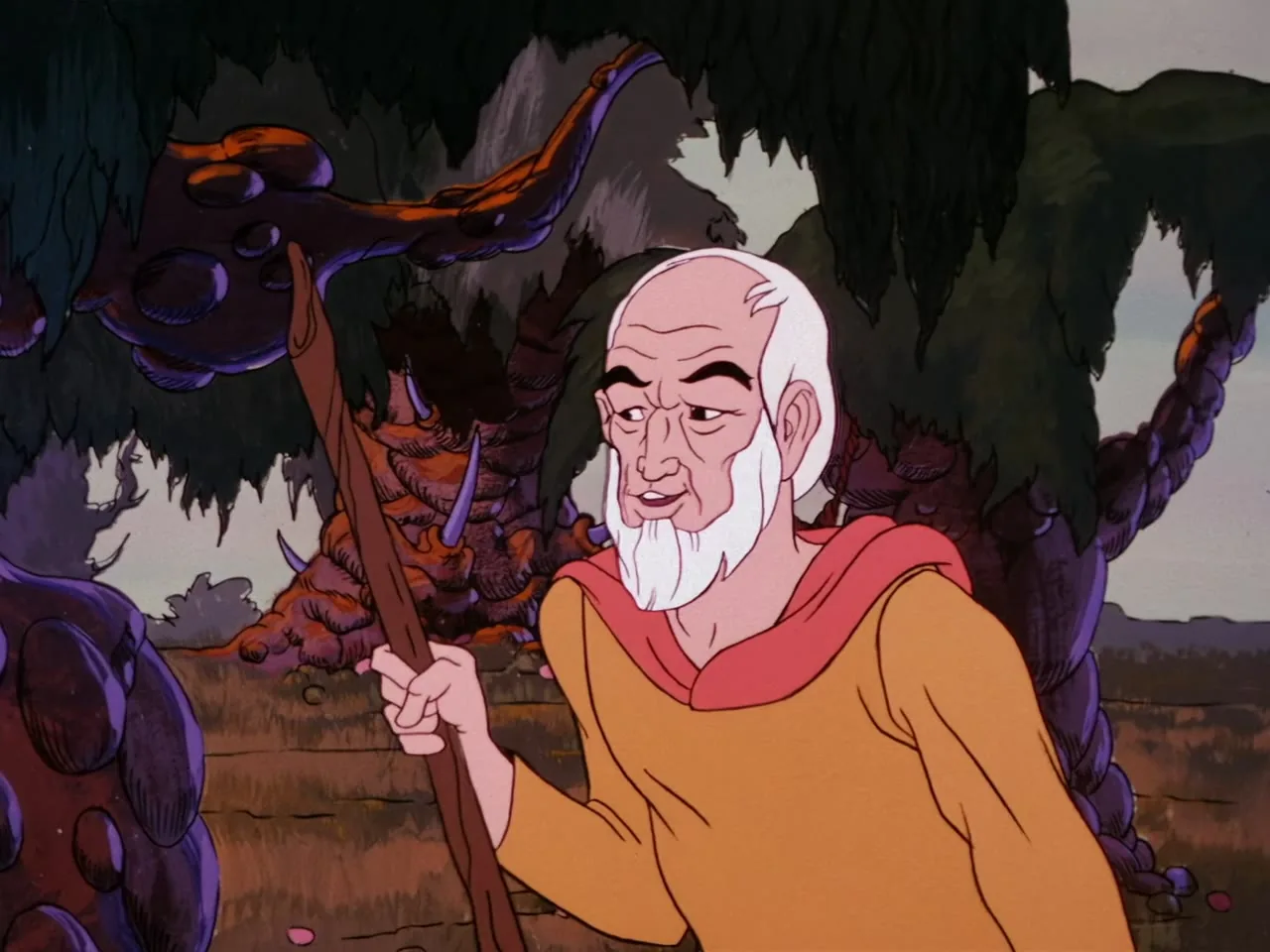
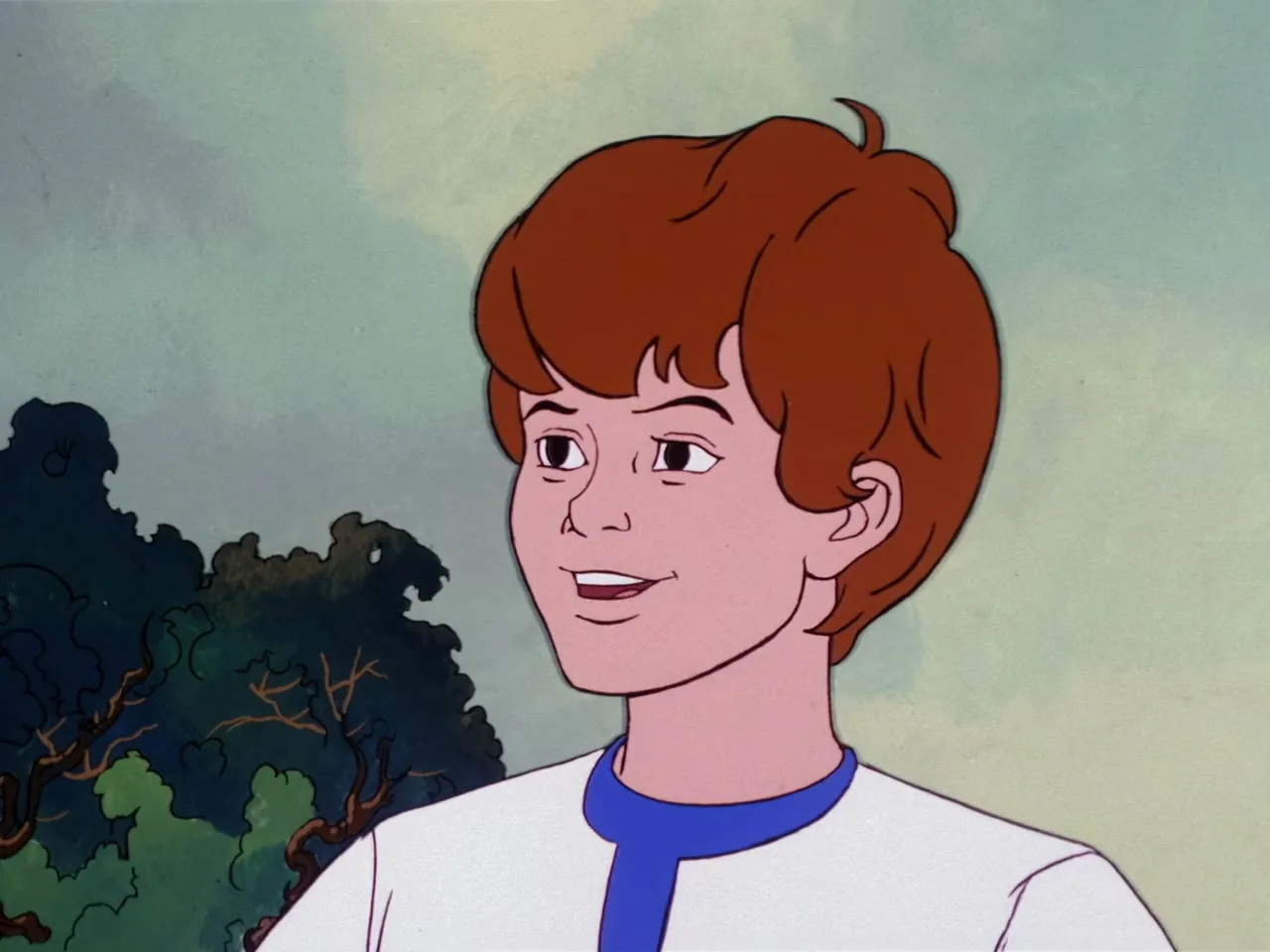
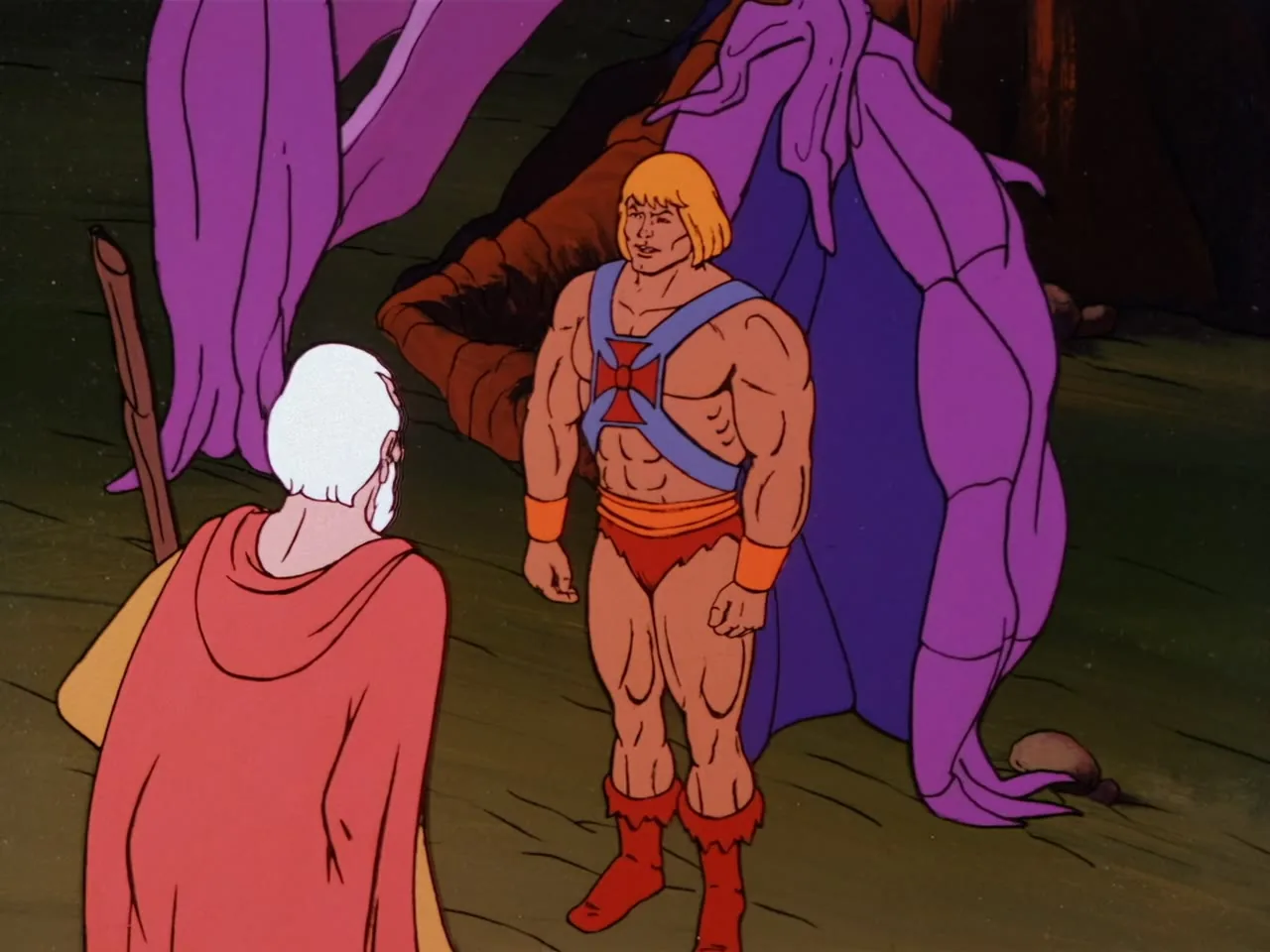
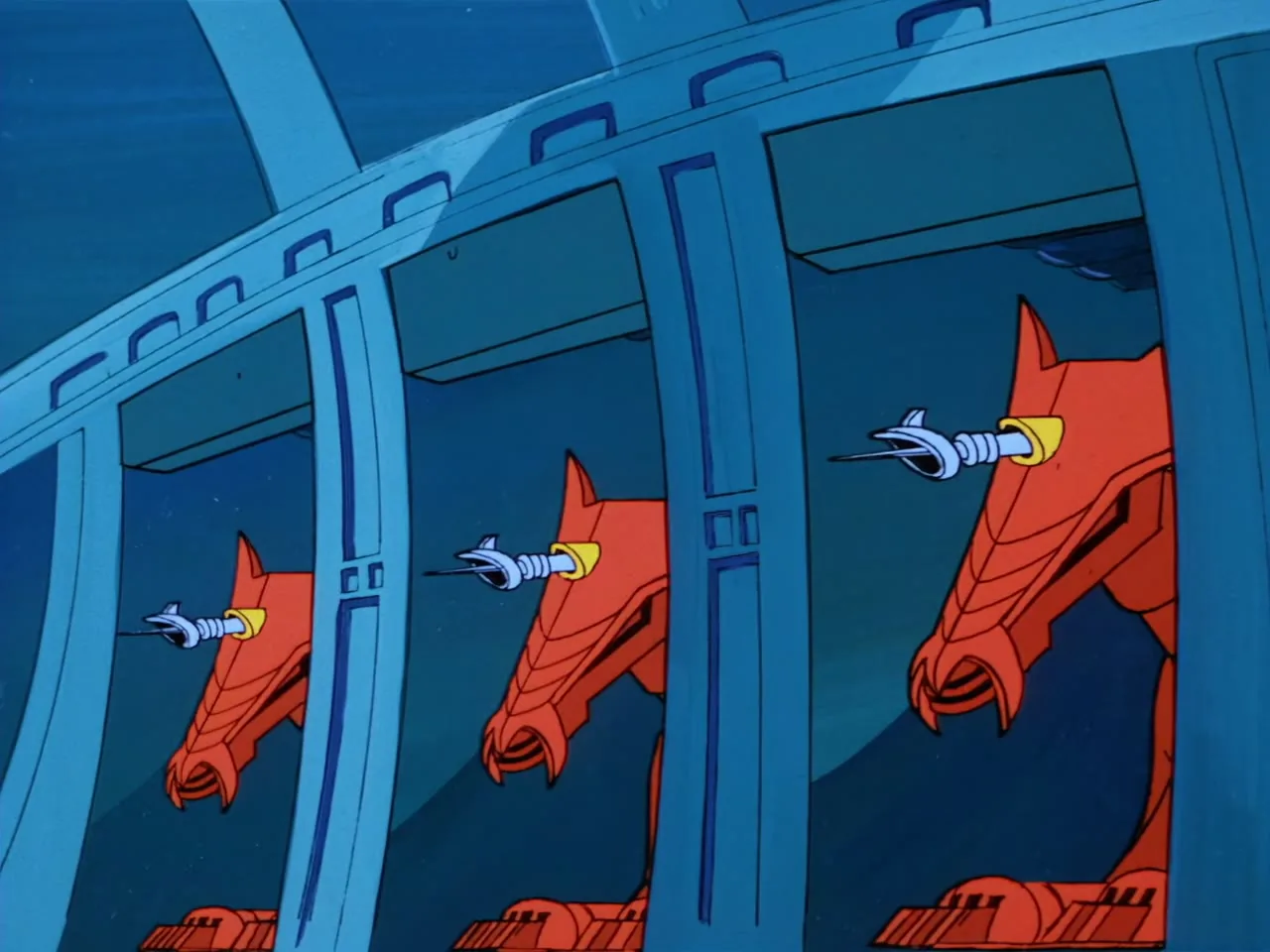
That decision falls to Drak and his grandfather, a boy and an old man living alone at the edge of the swamp. The episode names its real subject plainly: a child weighing a stranger's life against the reward Skeletor is offering for it. Drak raises the idea twice, once as an abstraction, that Skeletor "would give us power and money," and once in a child's own terms, offering to buy his grandfather a walking stick of gold. The grandfather's answer, that nothing good can come out of evil, could sound like a lecture bolted onto the plot. But the script earns it: the two of them are poor, their home gets burned down by Skeletor's Robot Hunters partway through, and the offer of wealth reads as a genuine way out of a hard life, not an abstract evil.
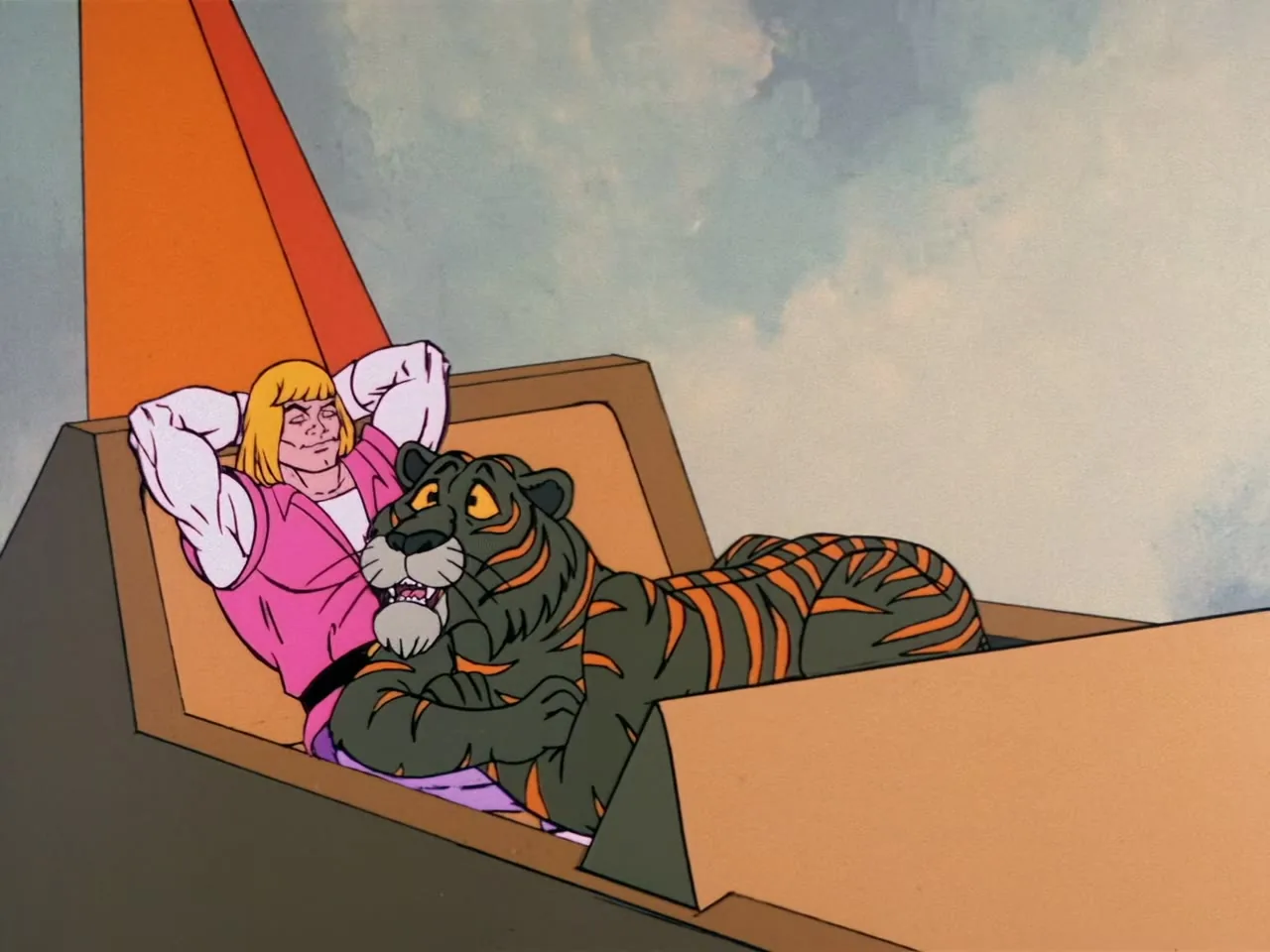
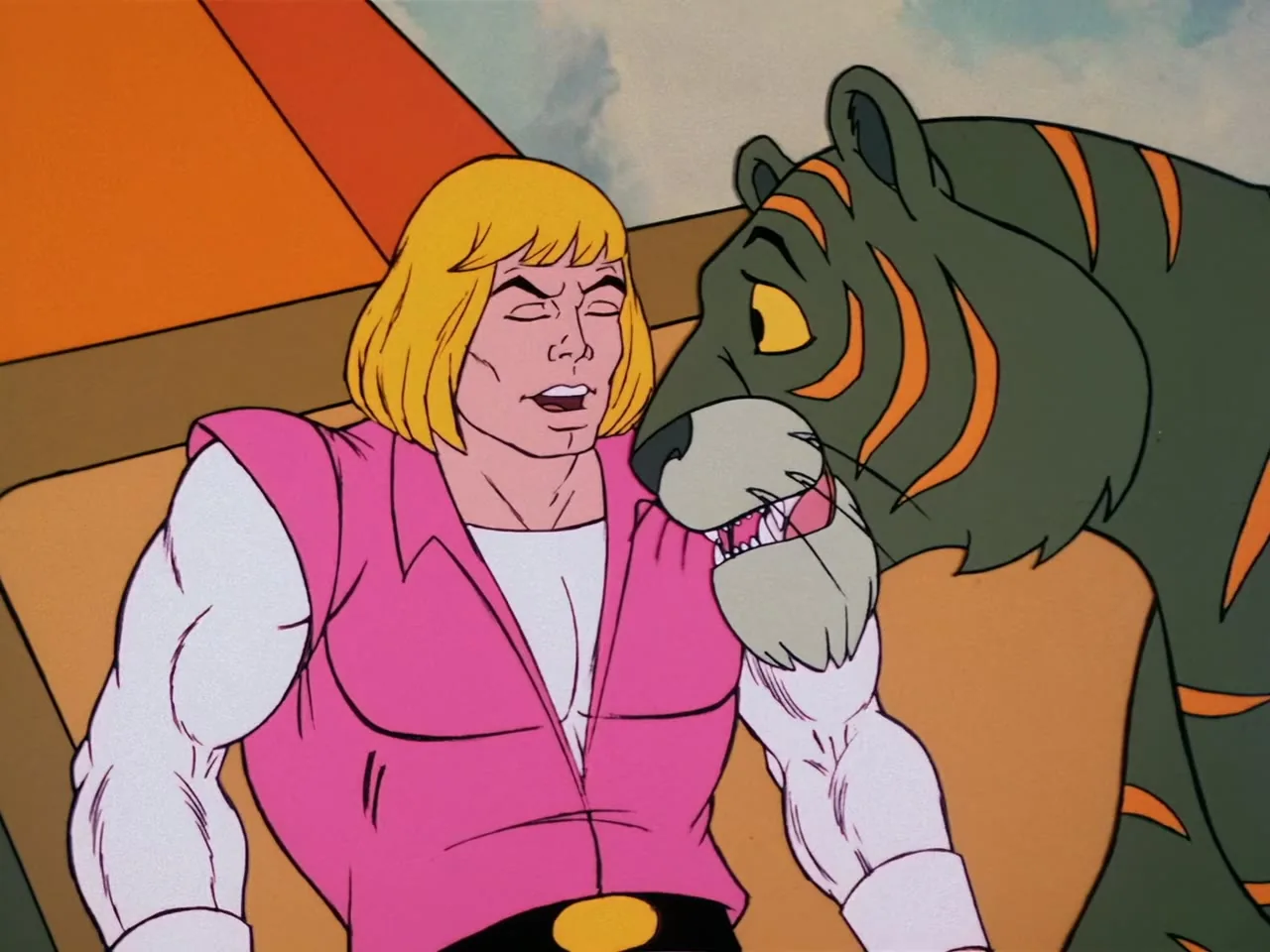
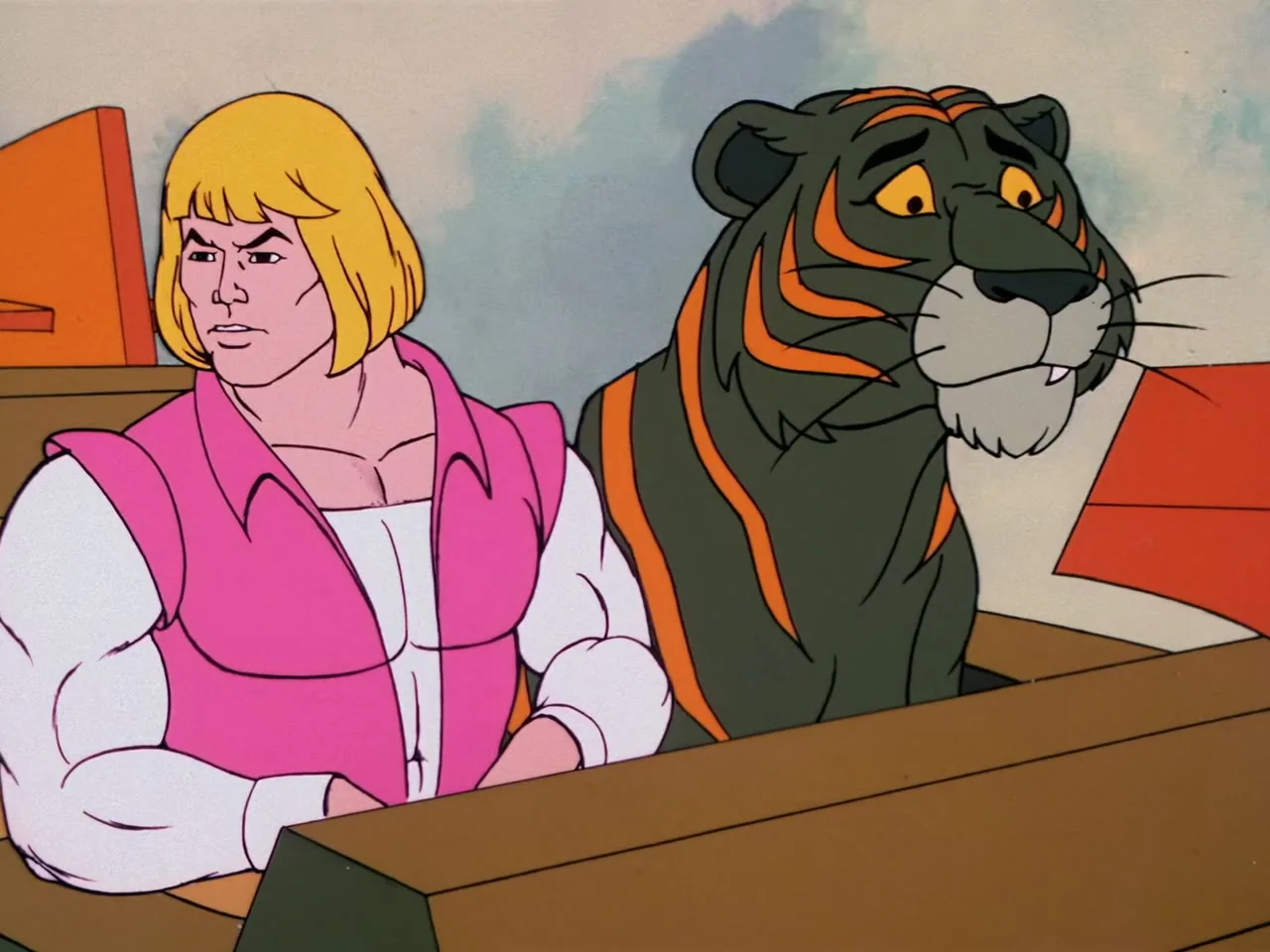
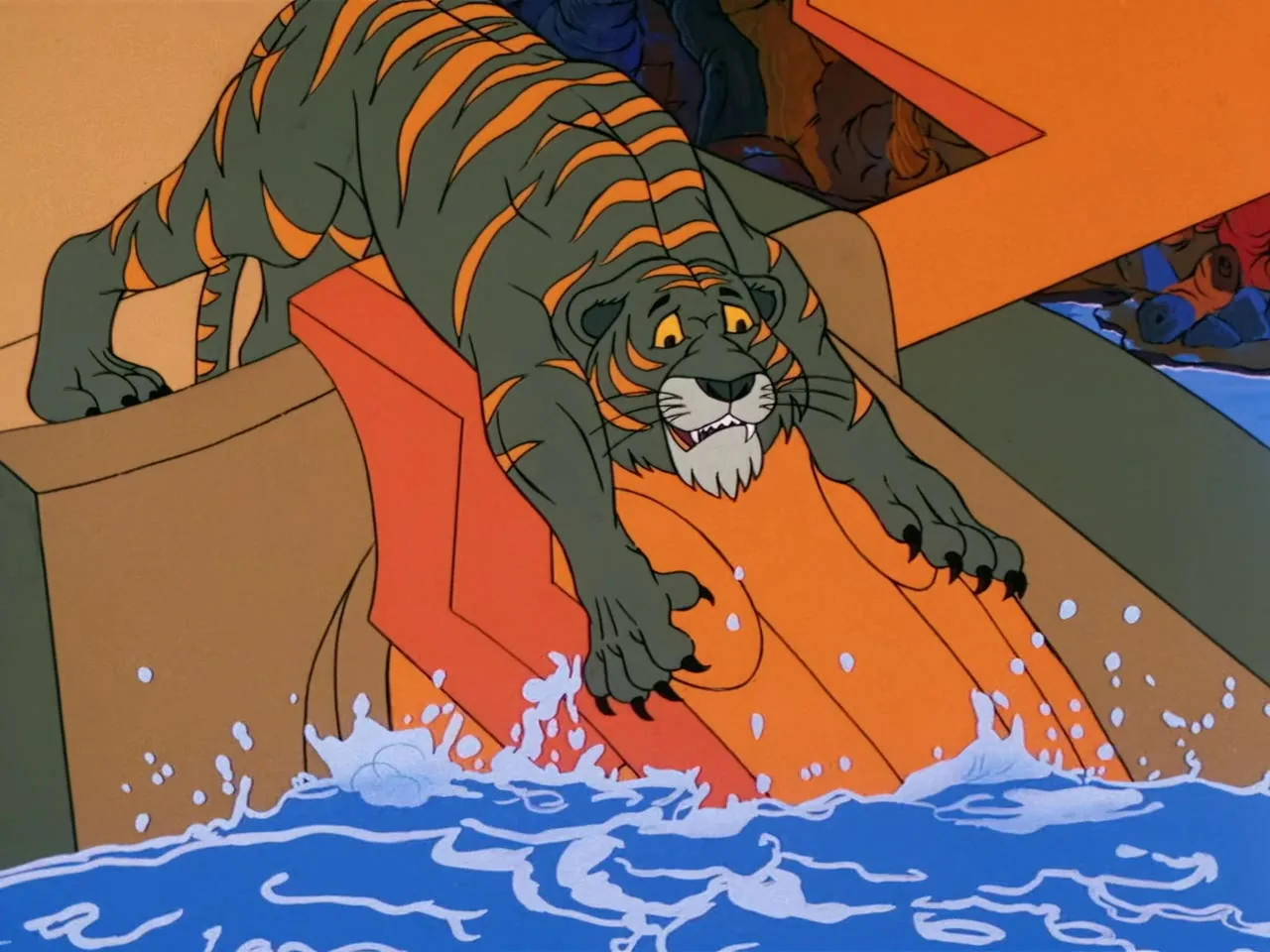
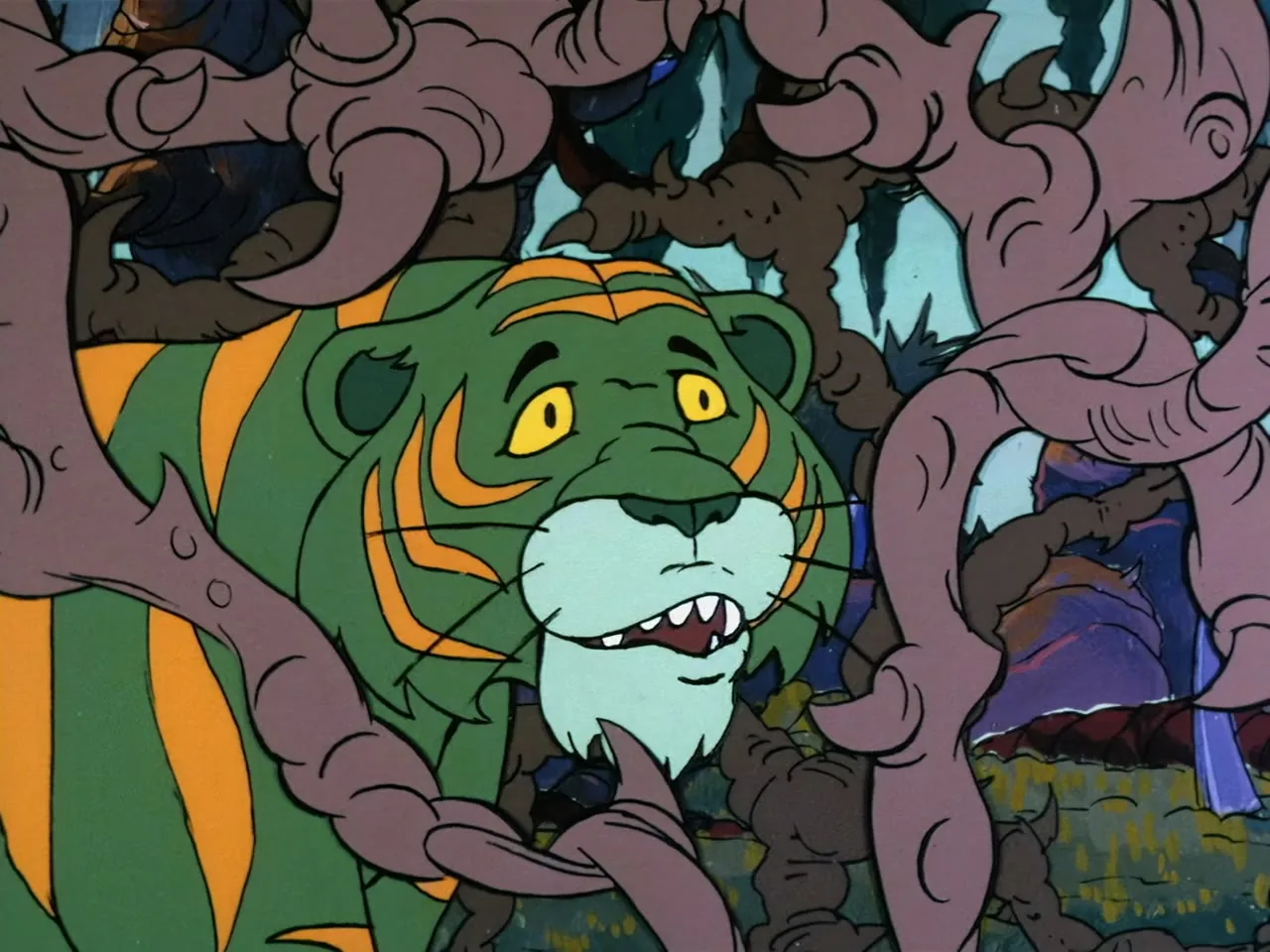
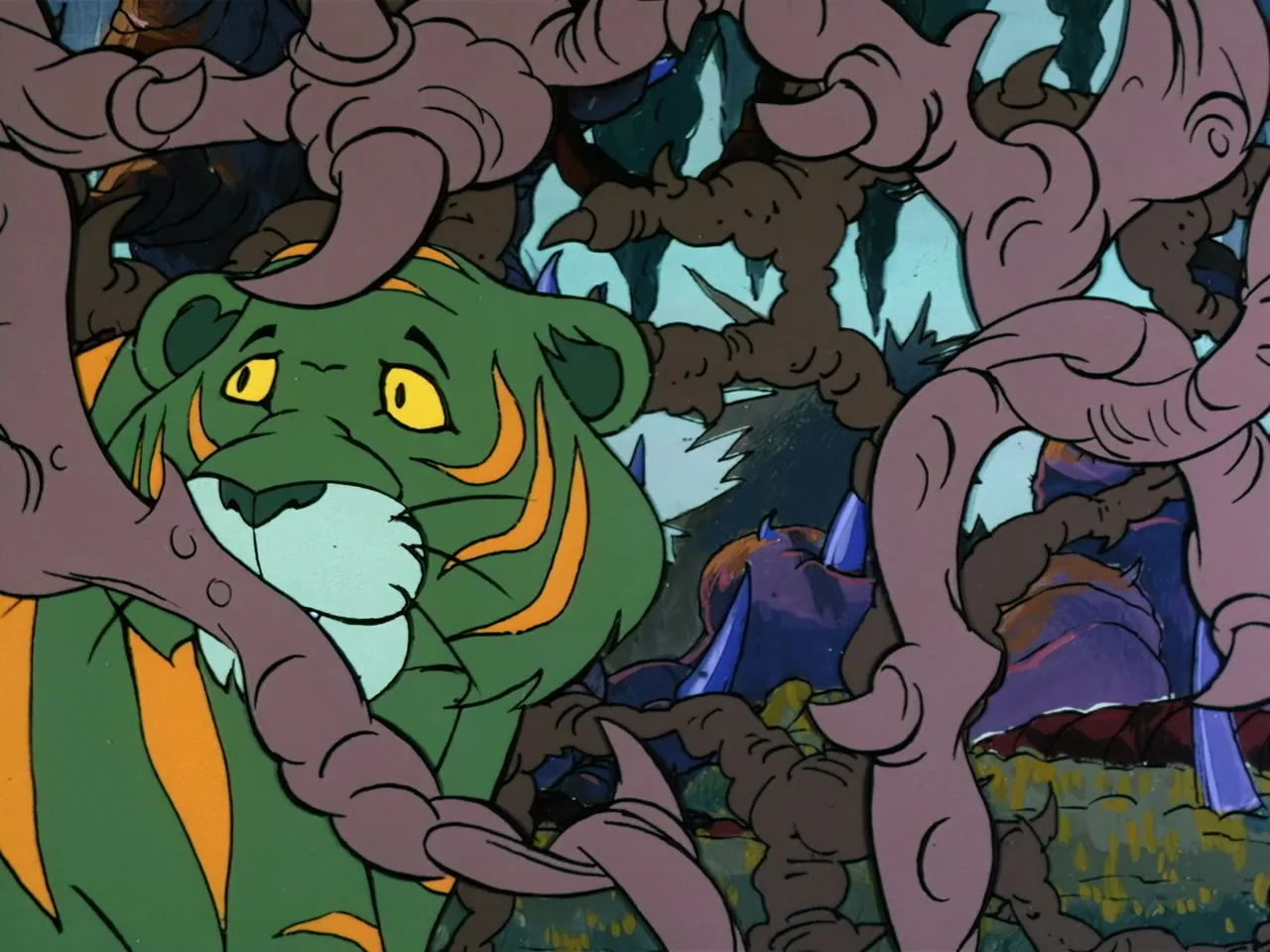
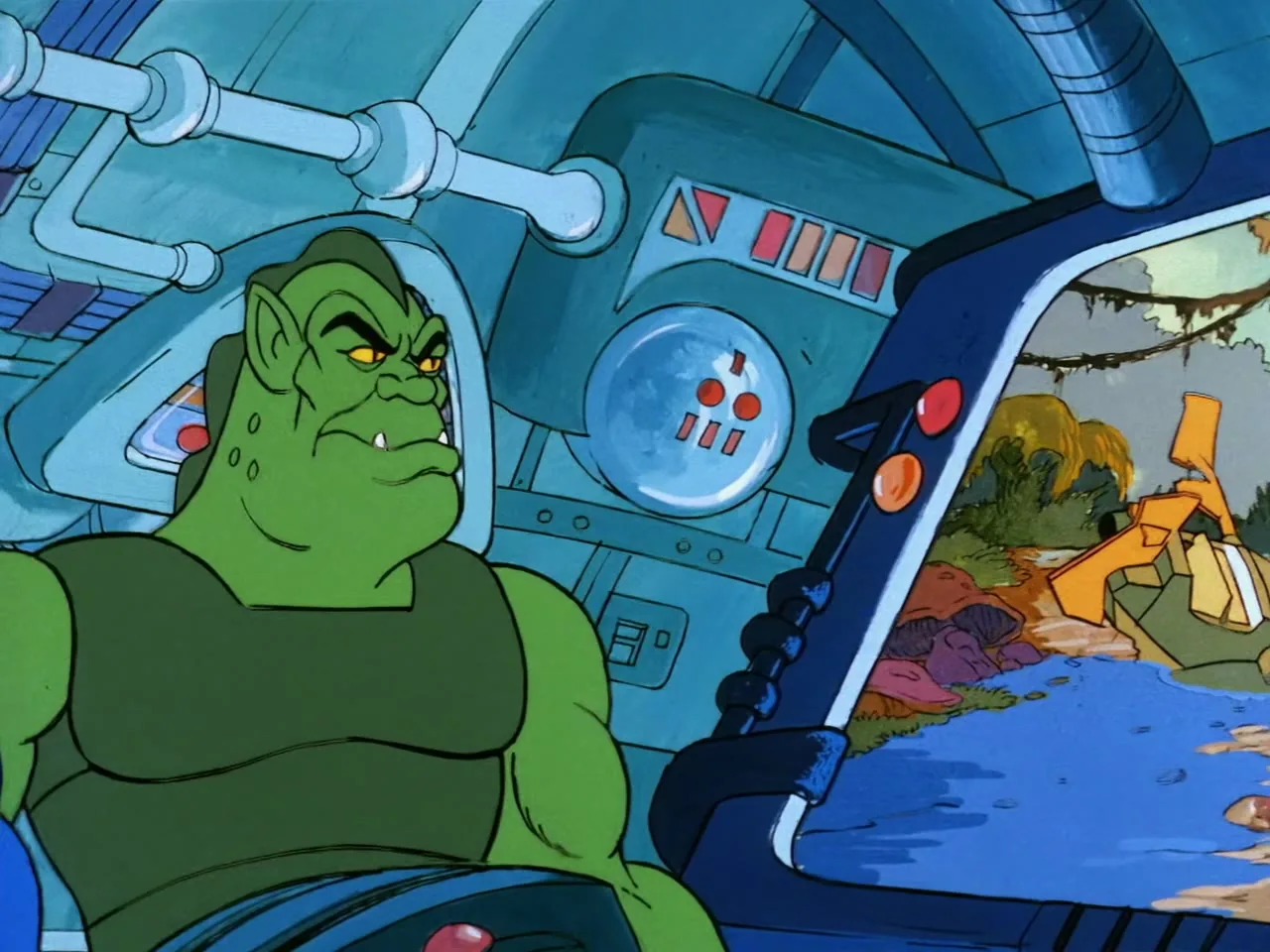
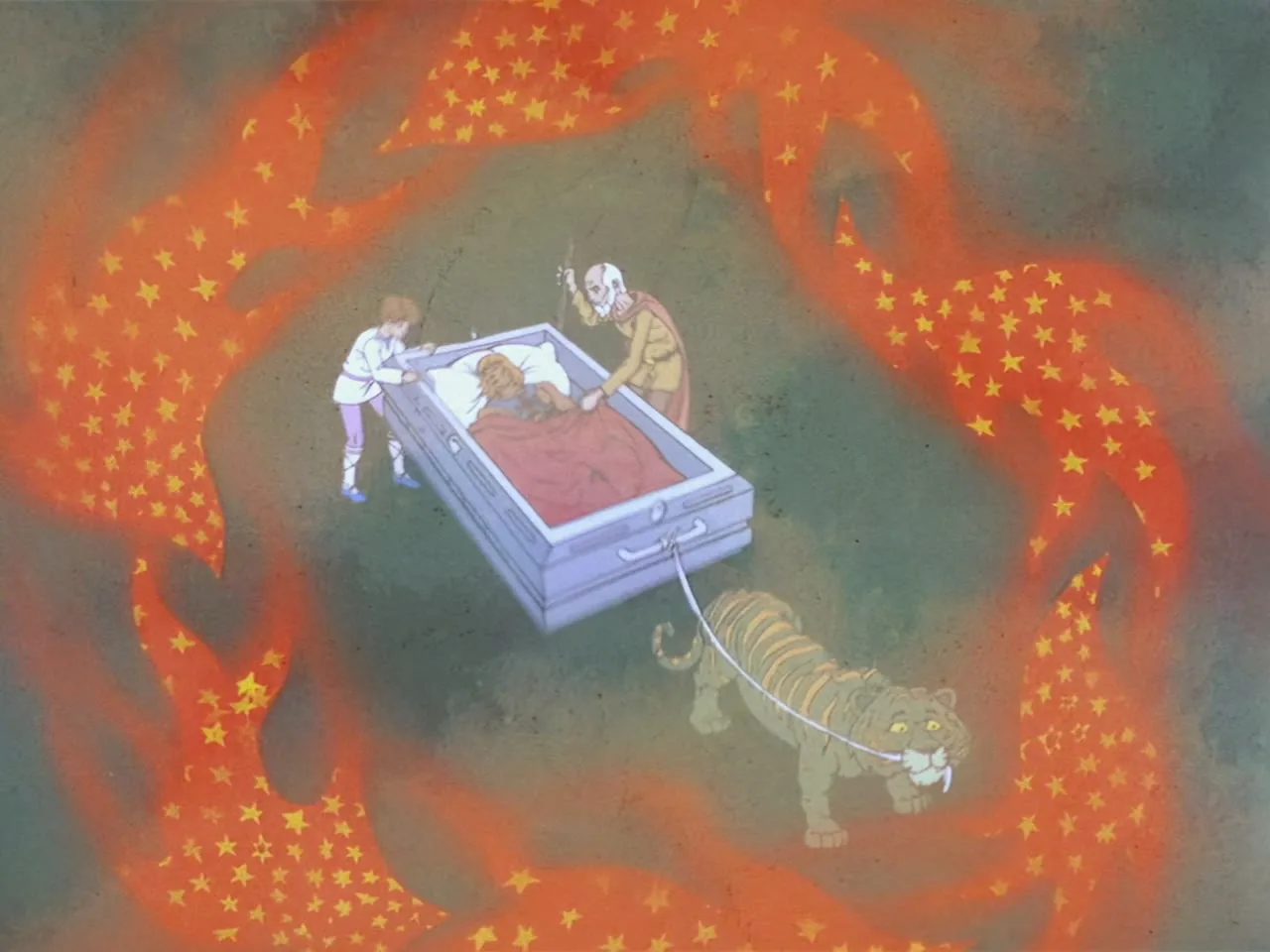
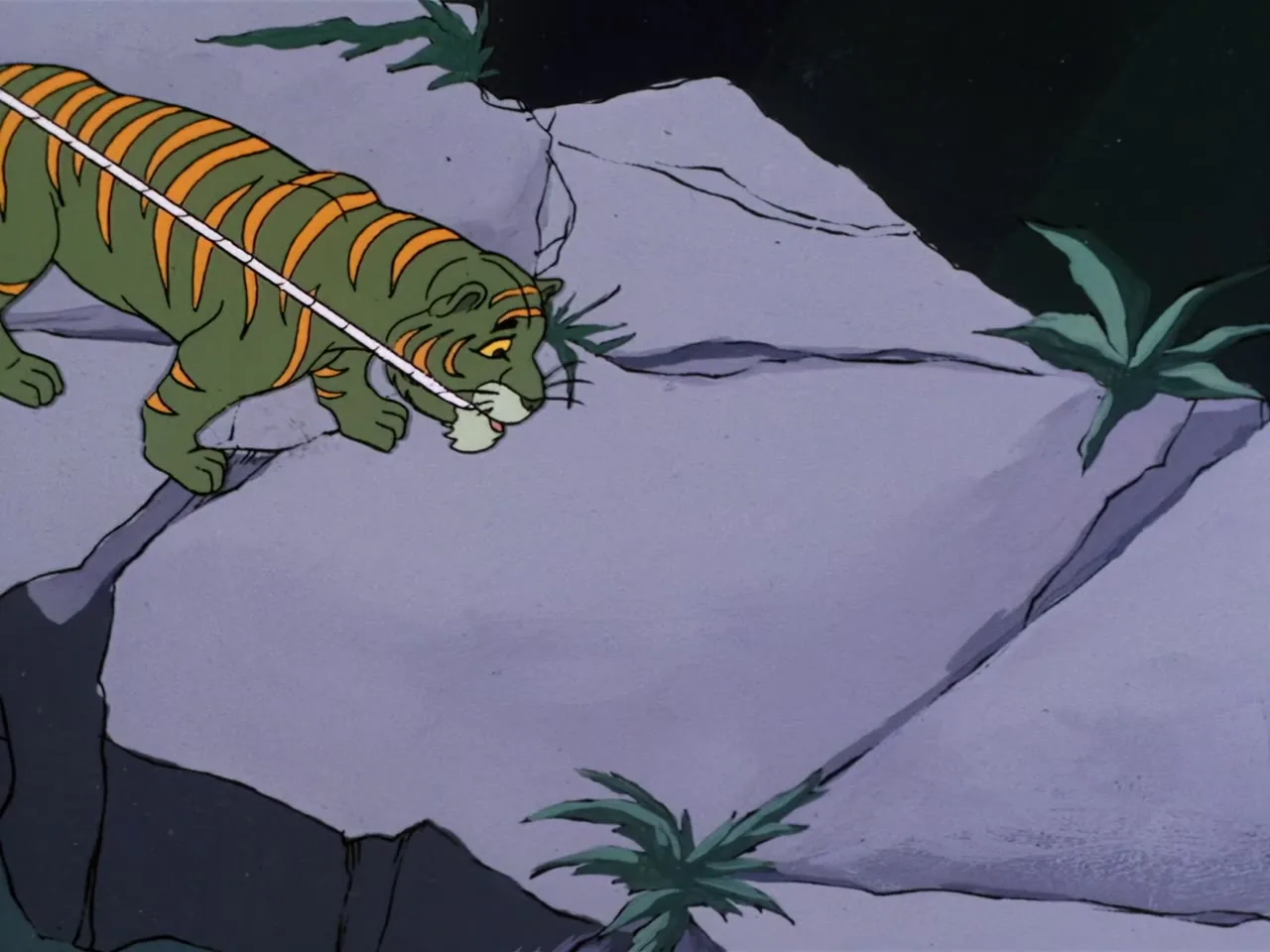
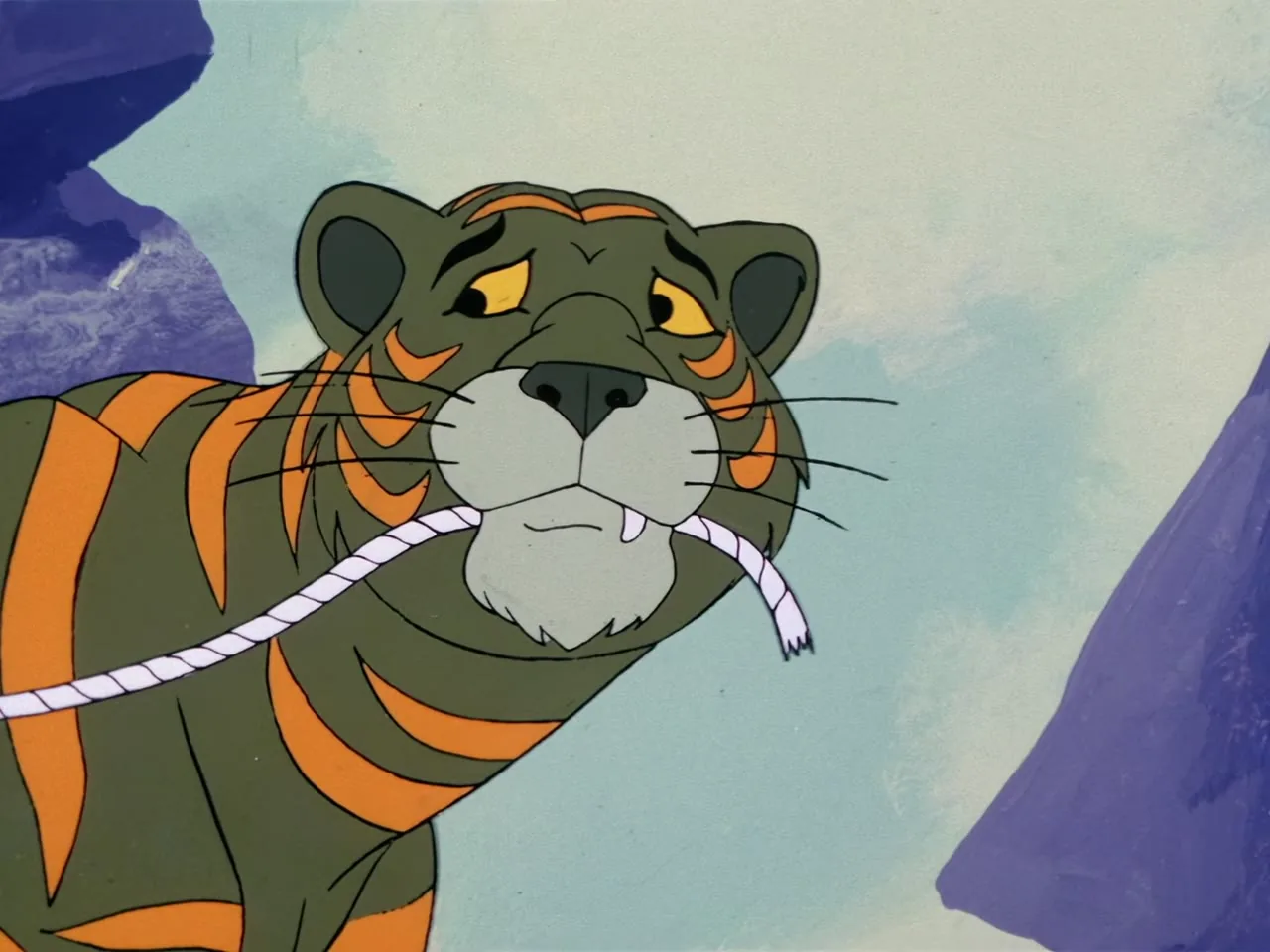
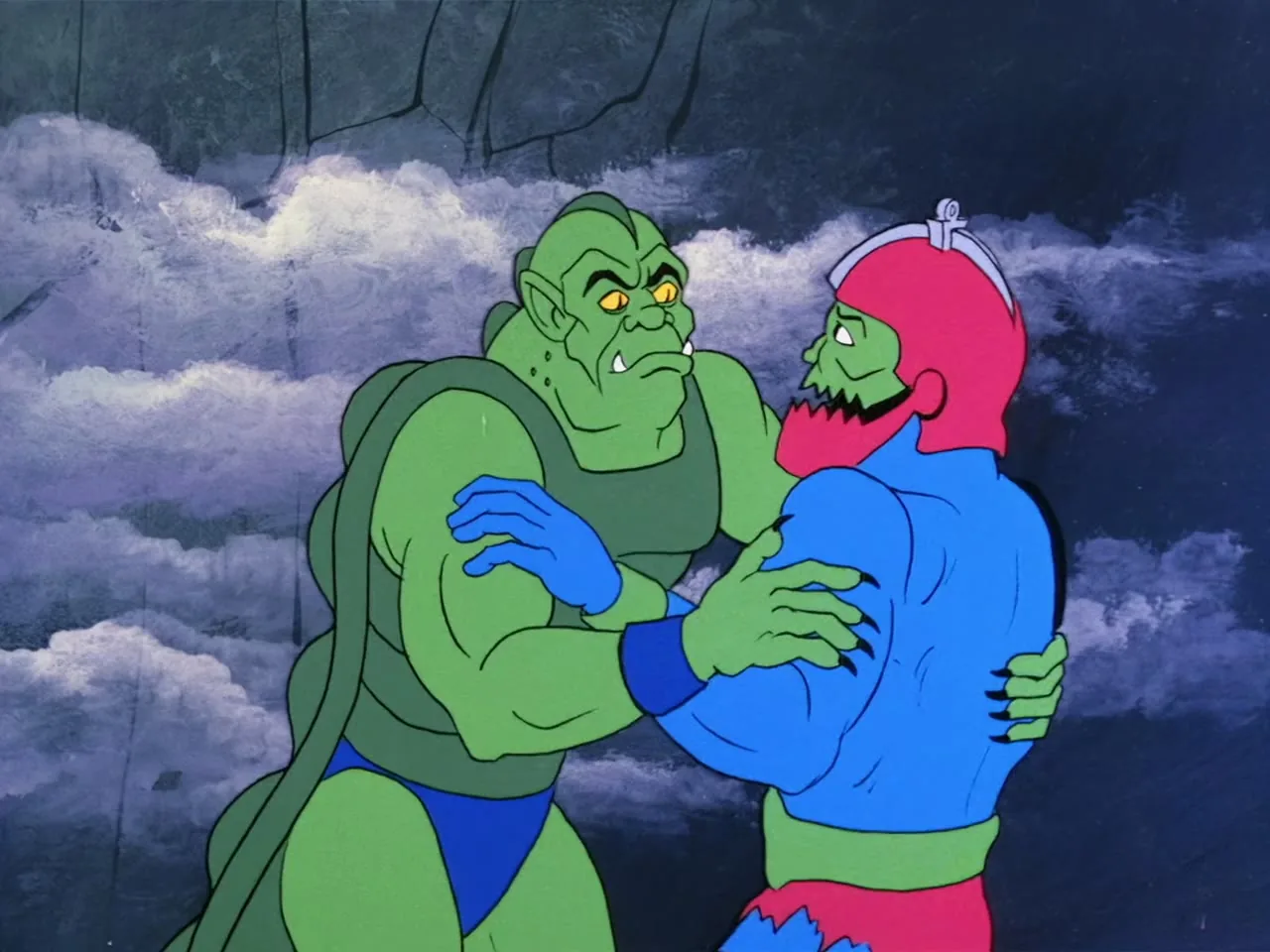
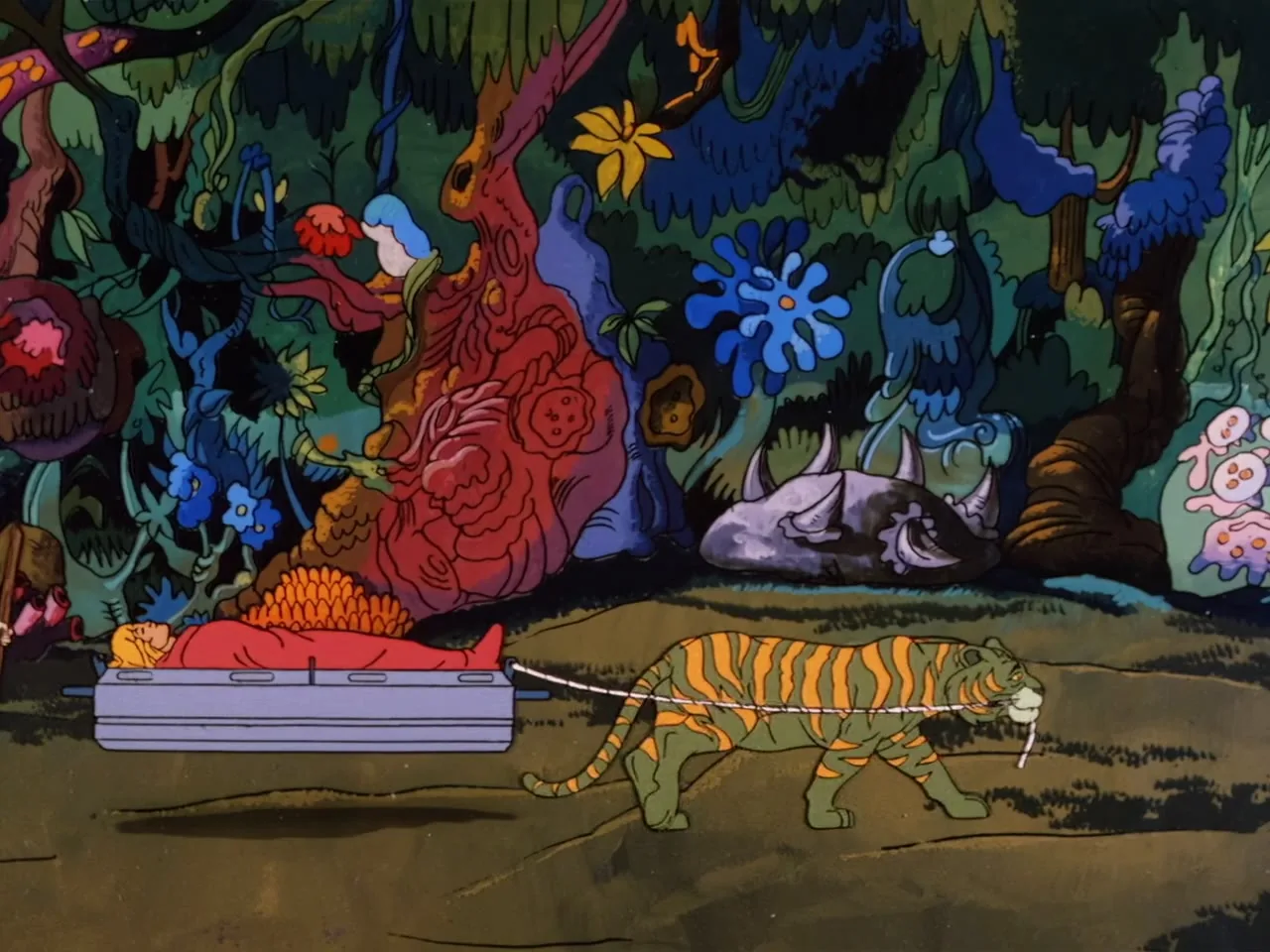
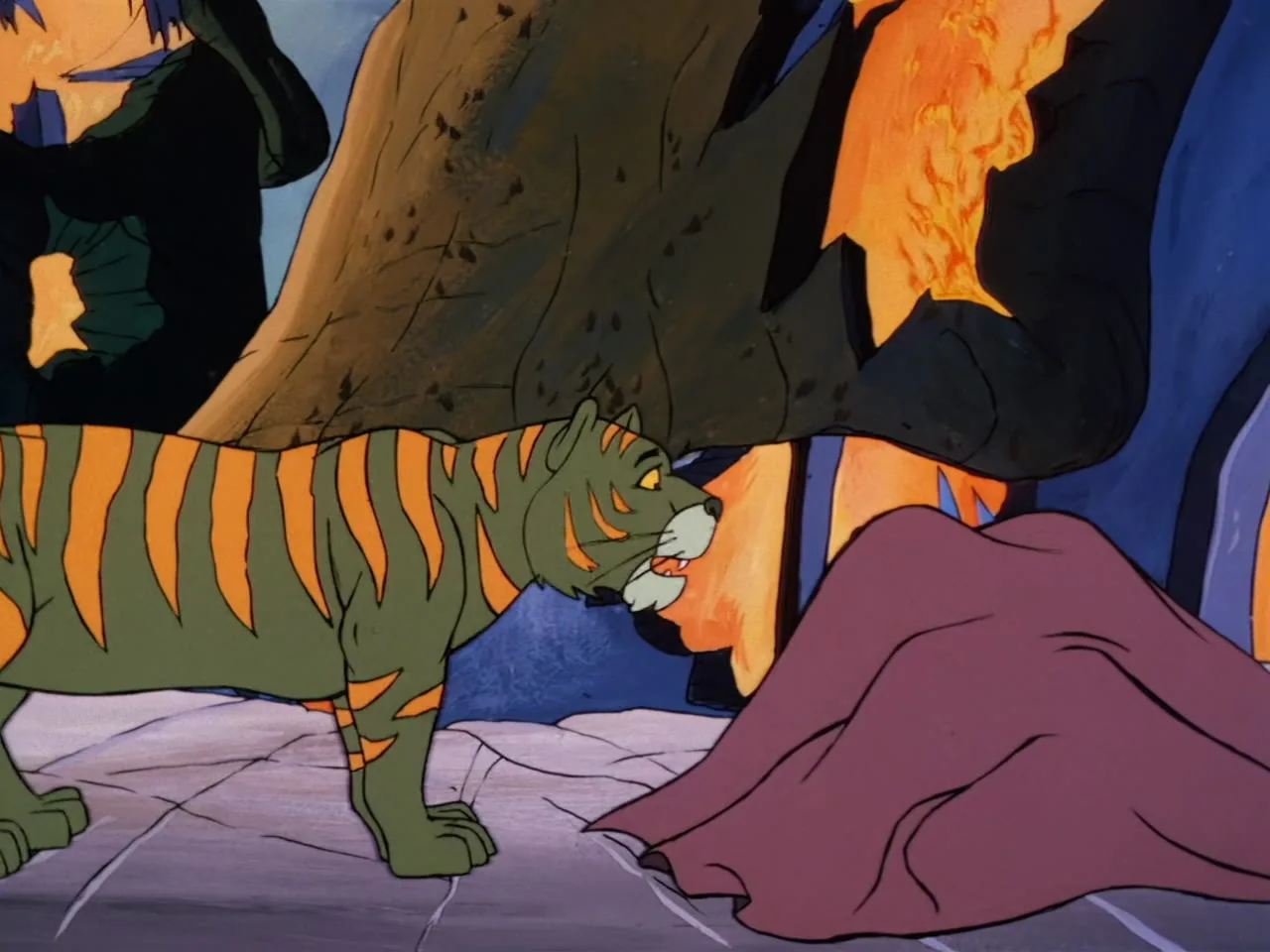
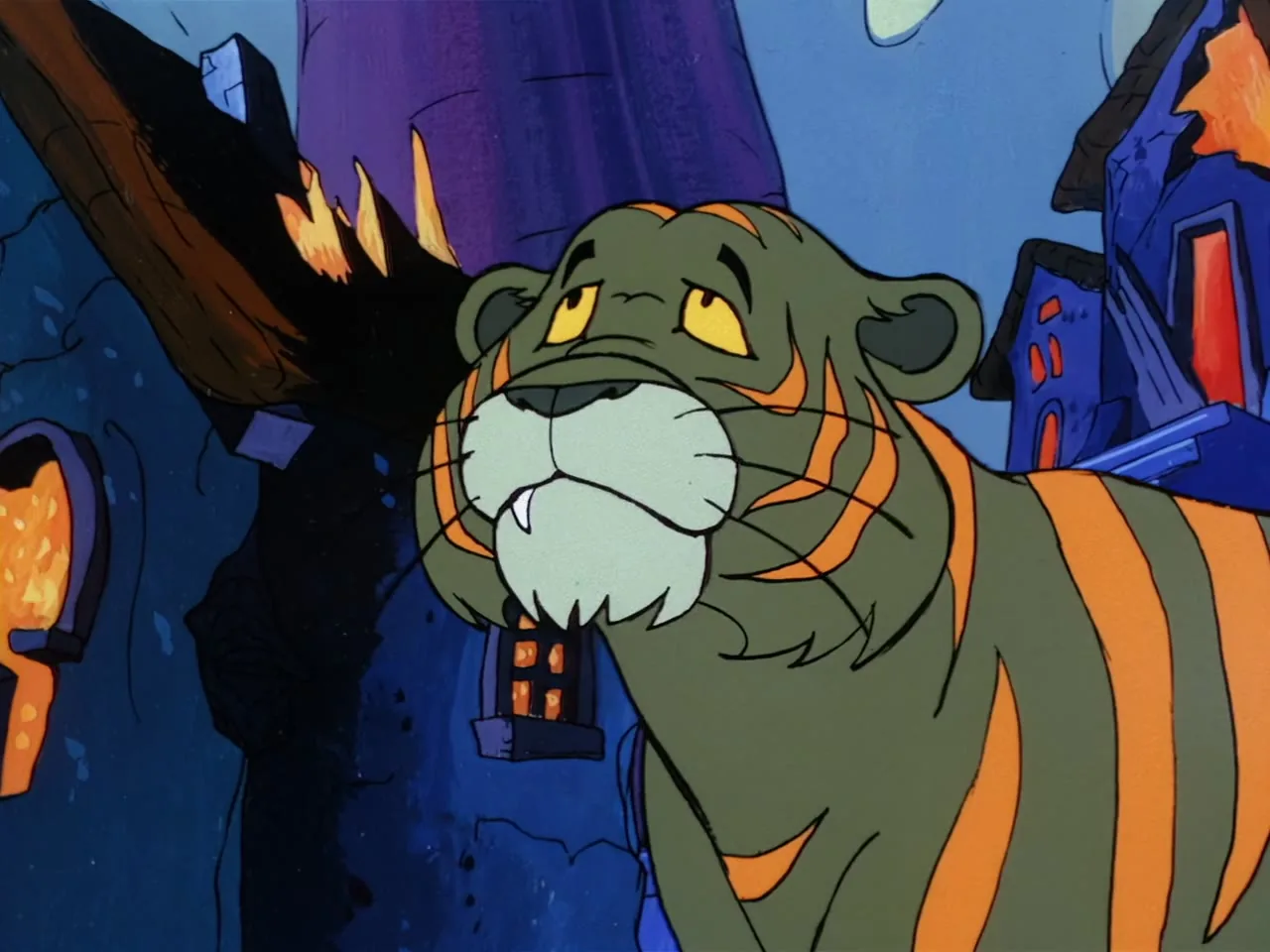
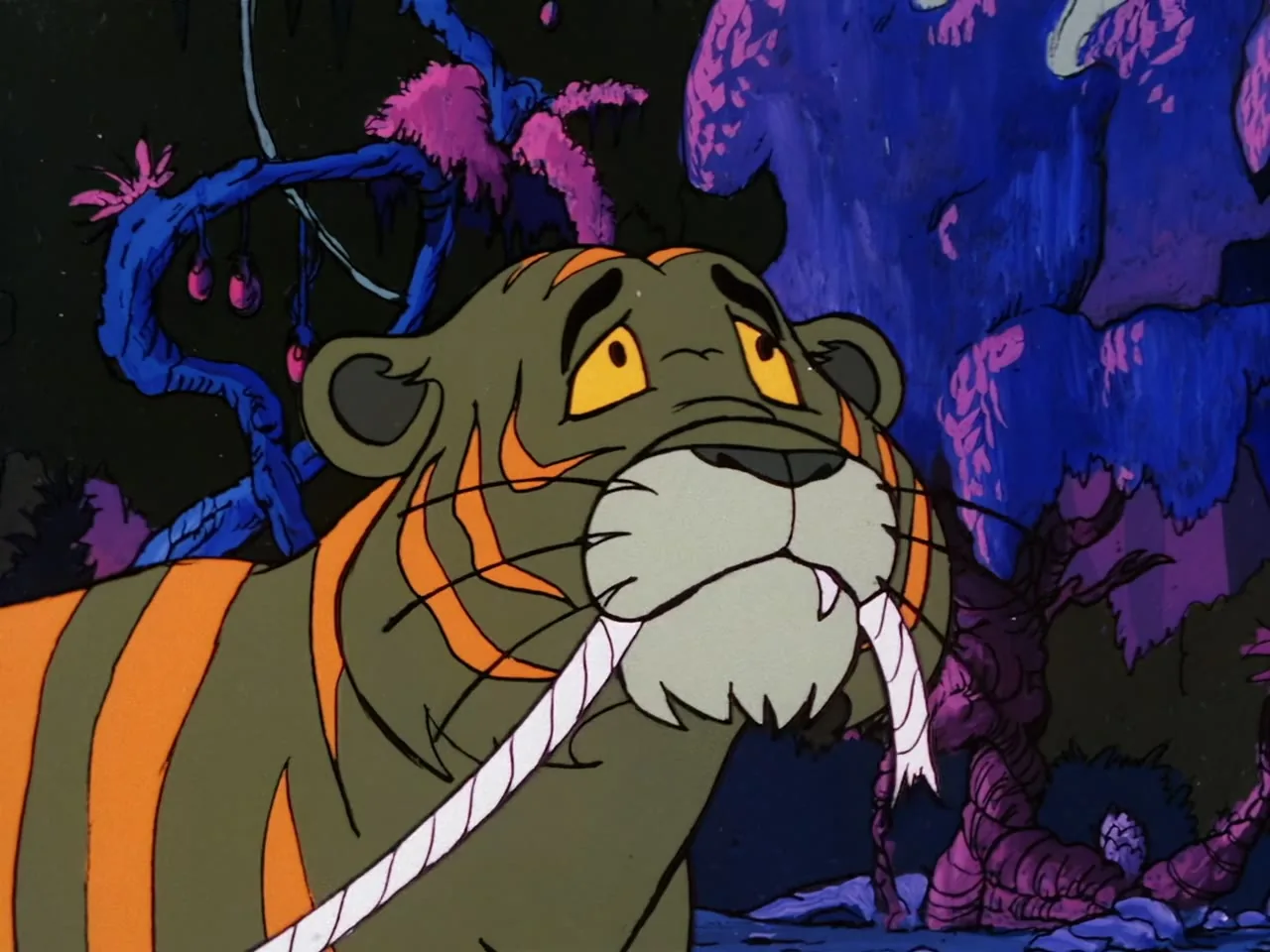
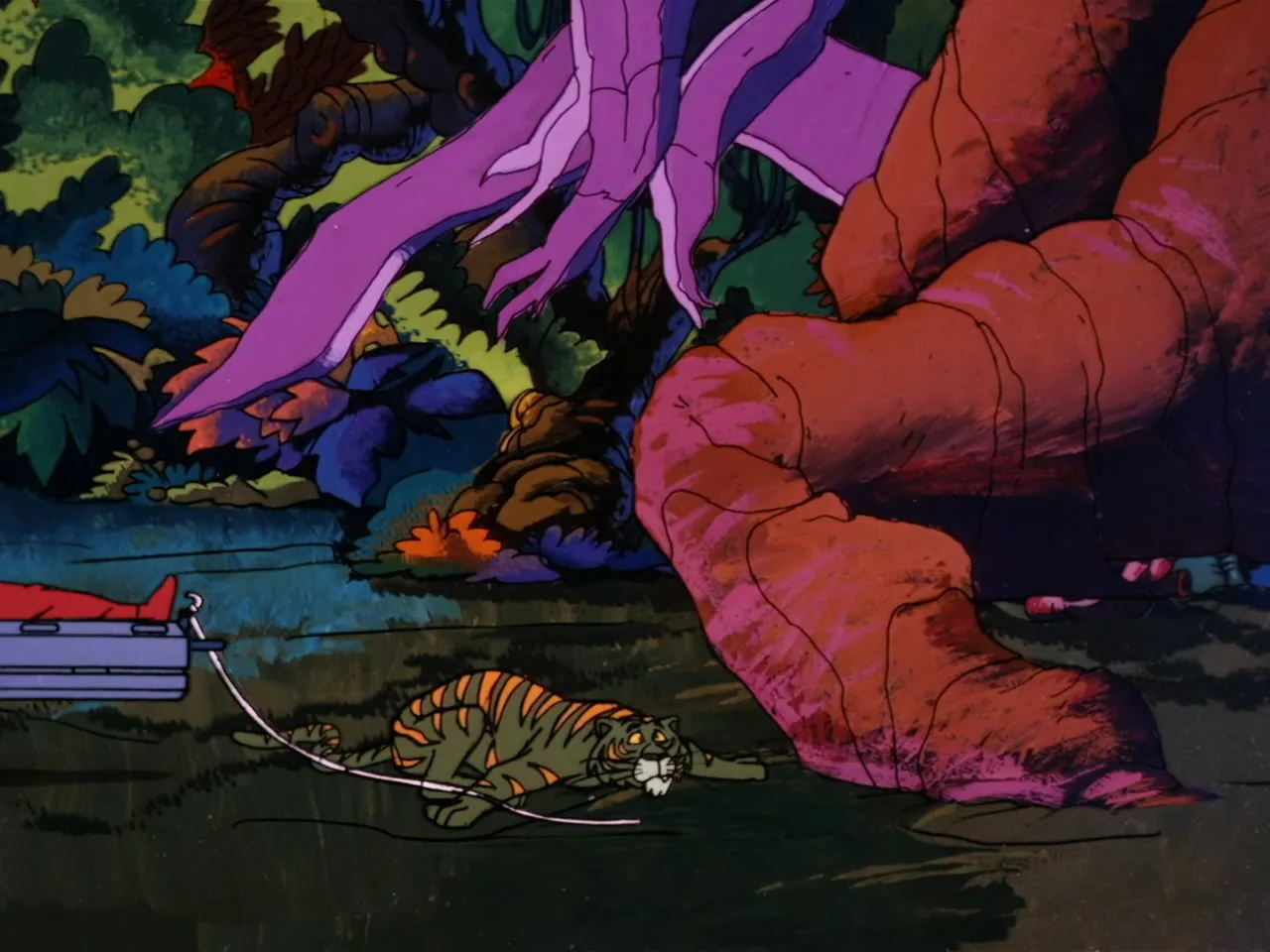
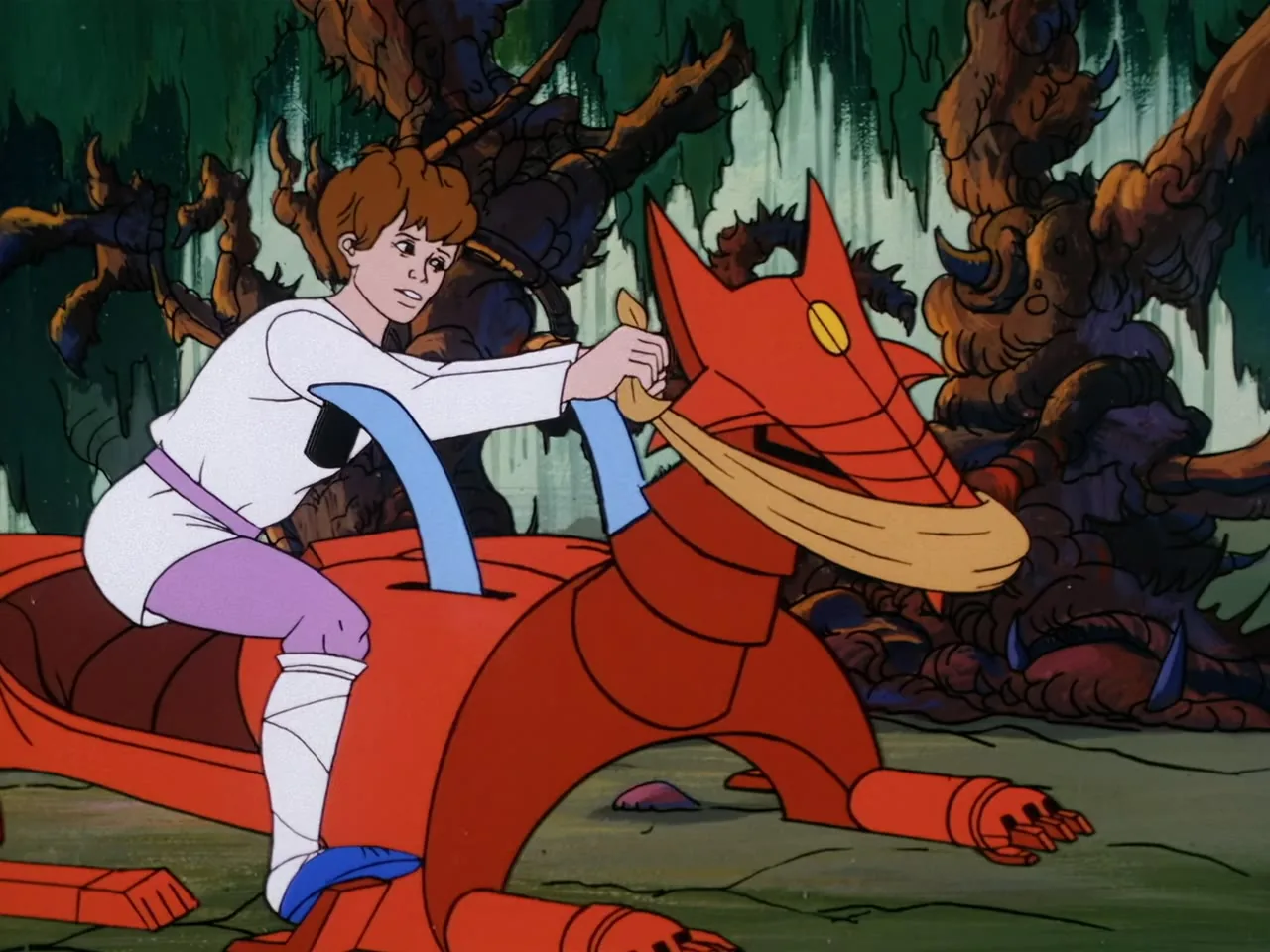
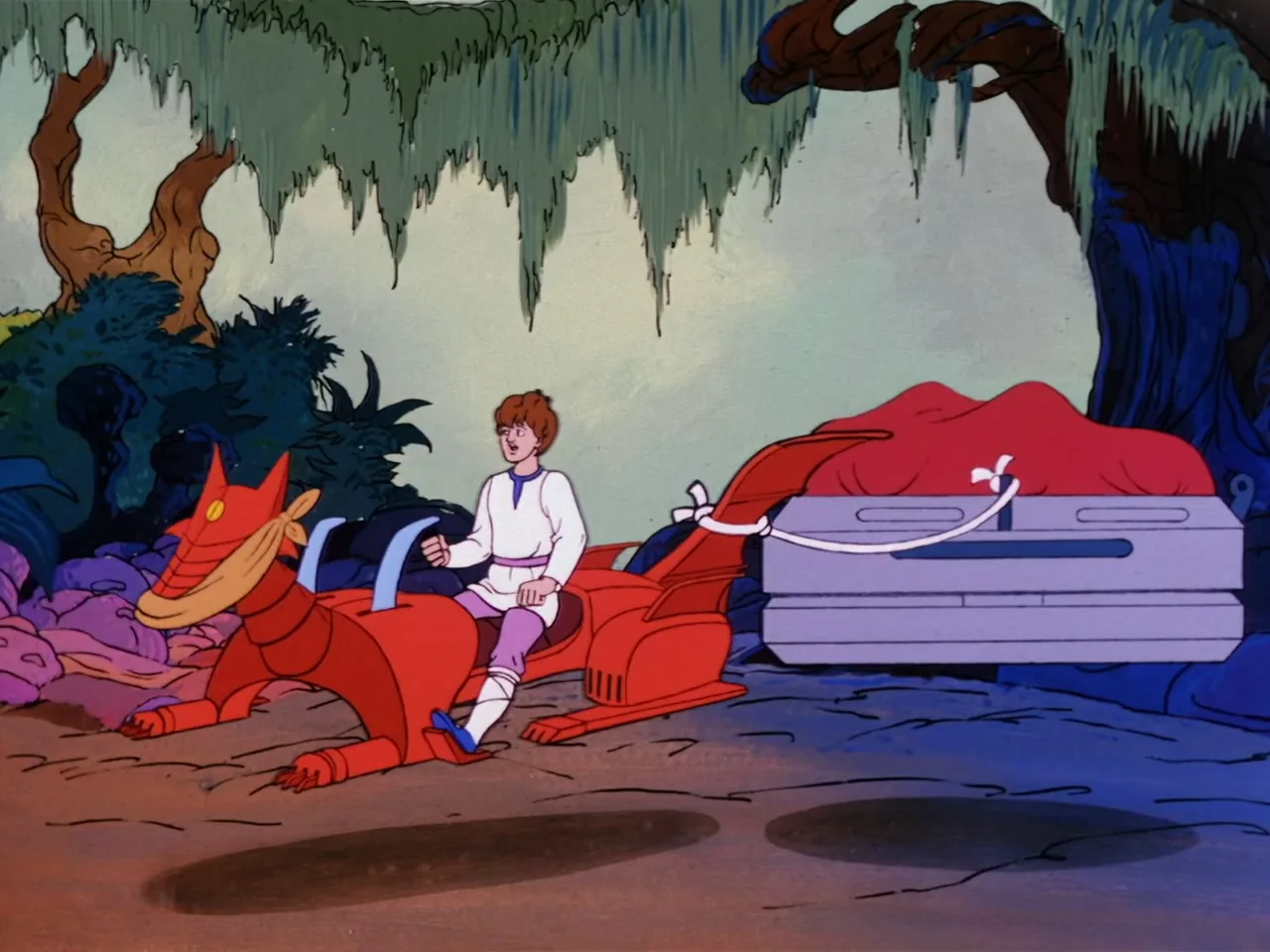
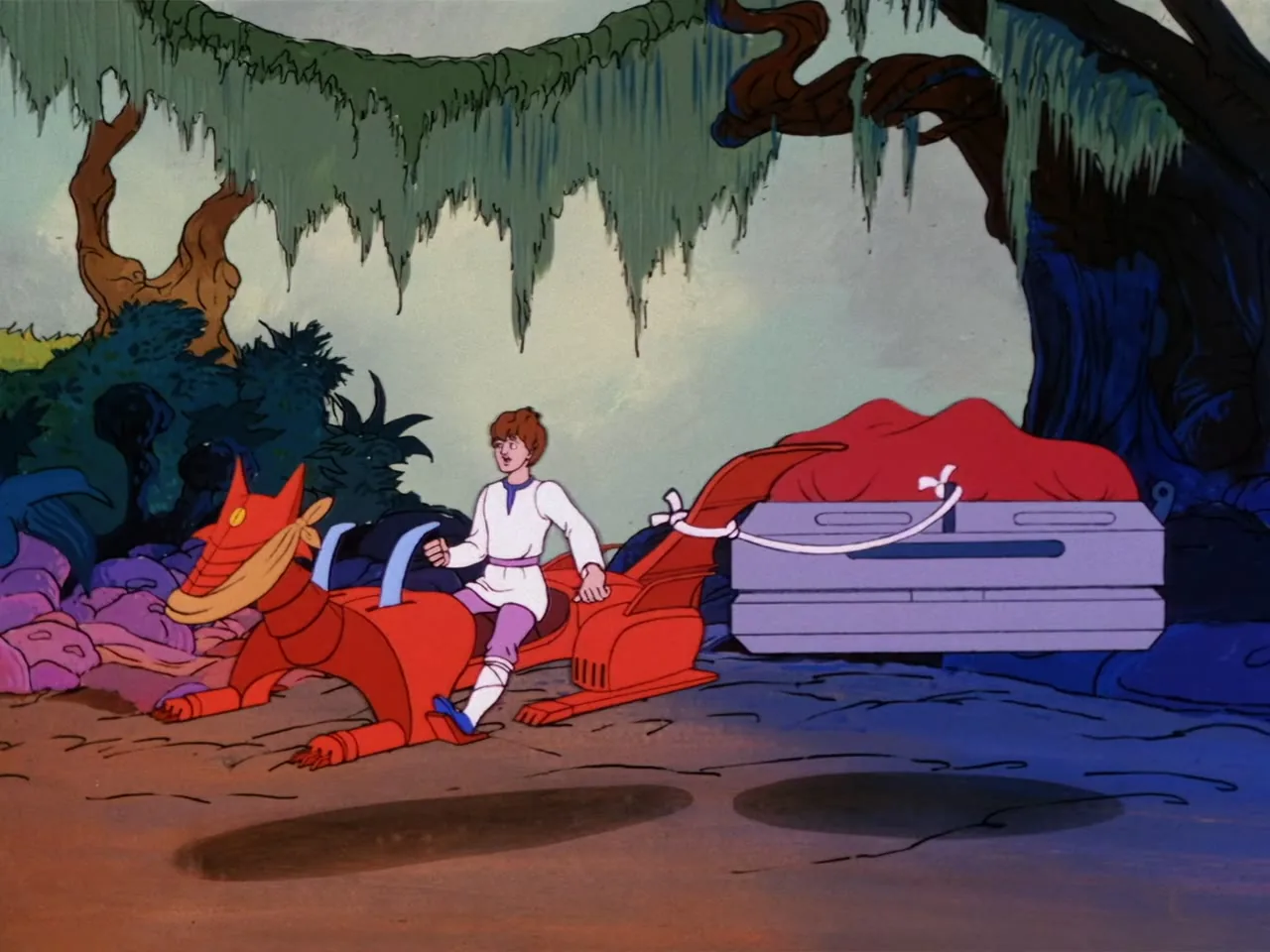
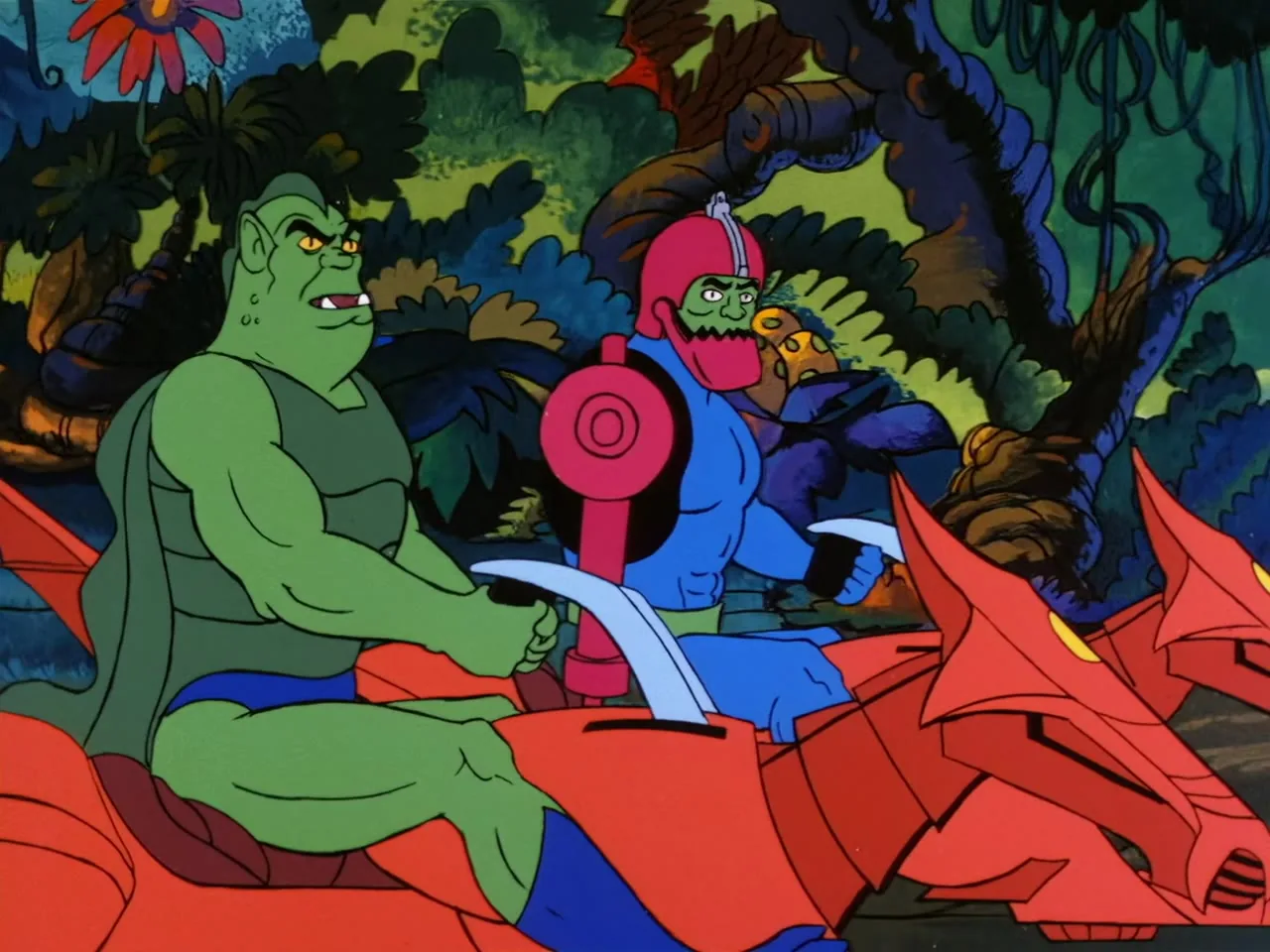
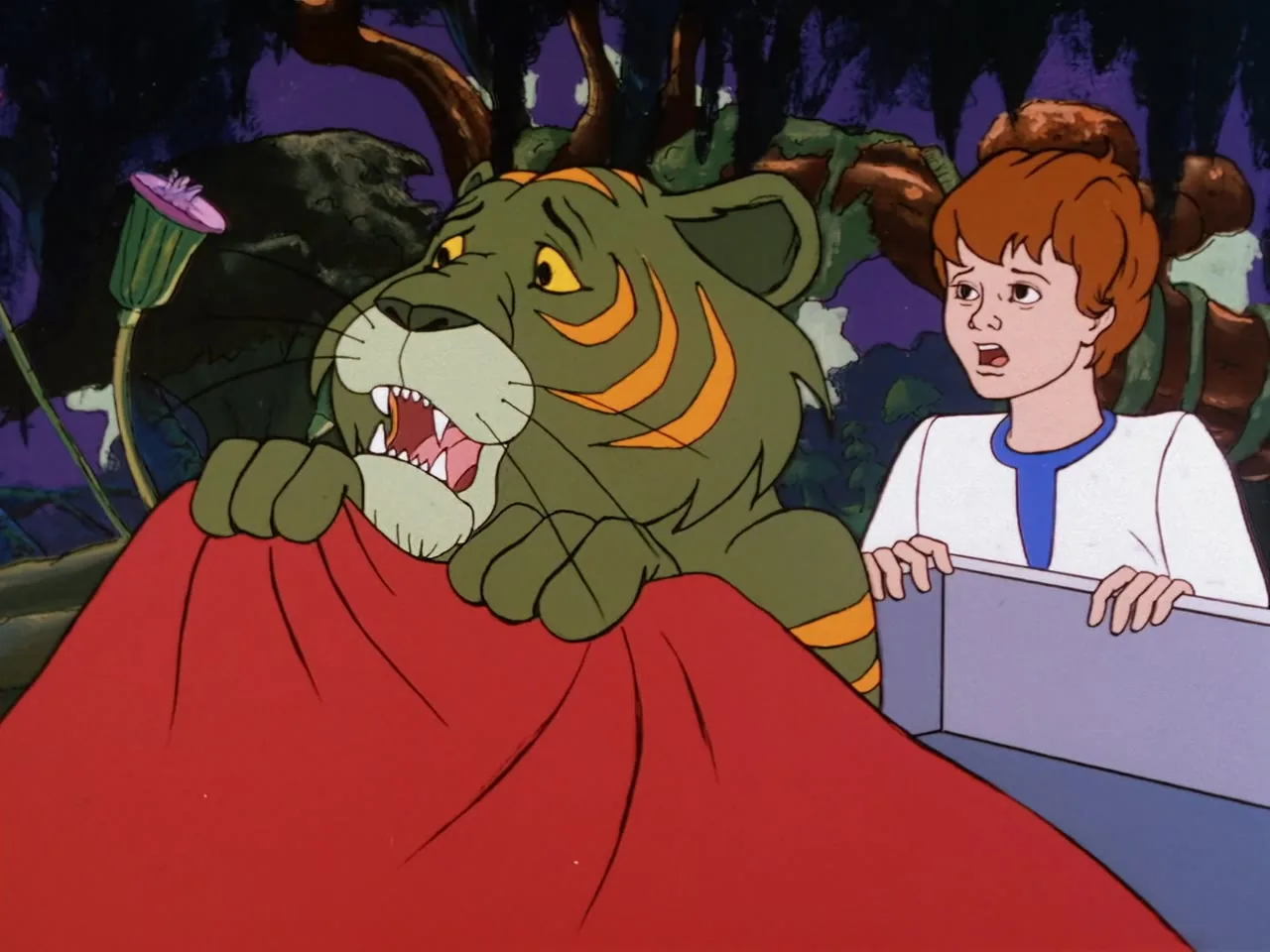
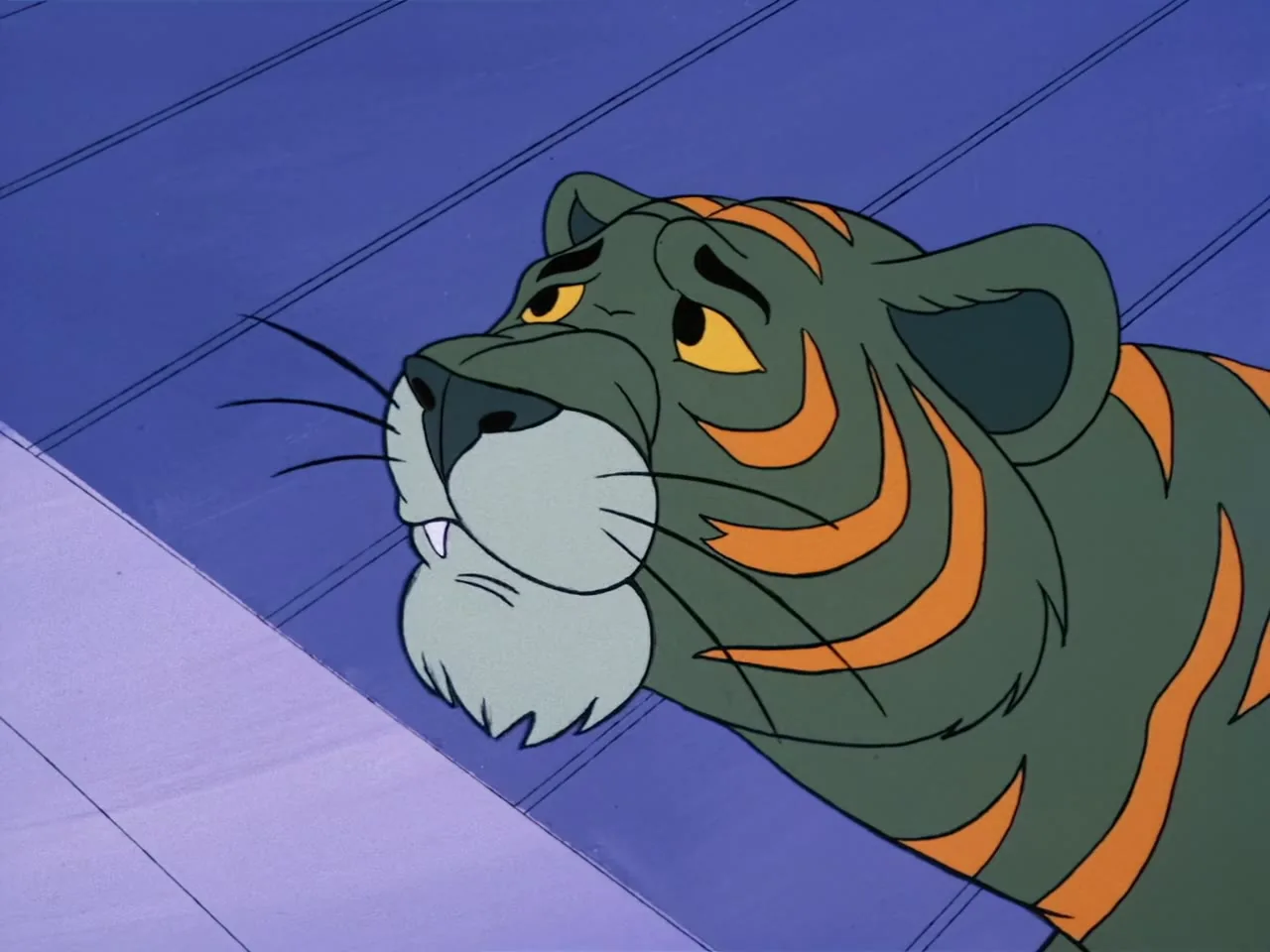
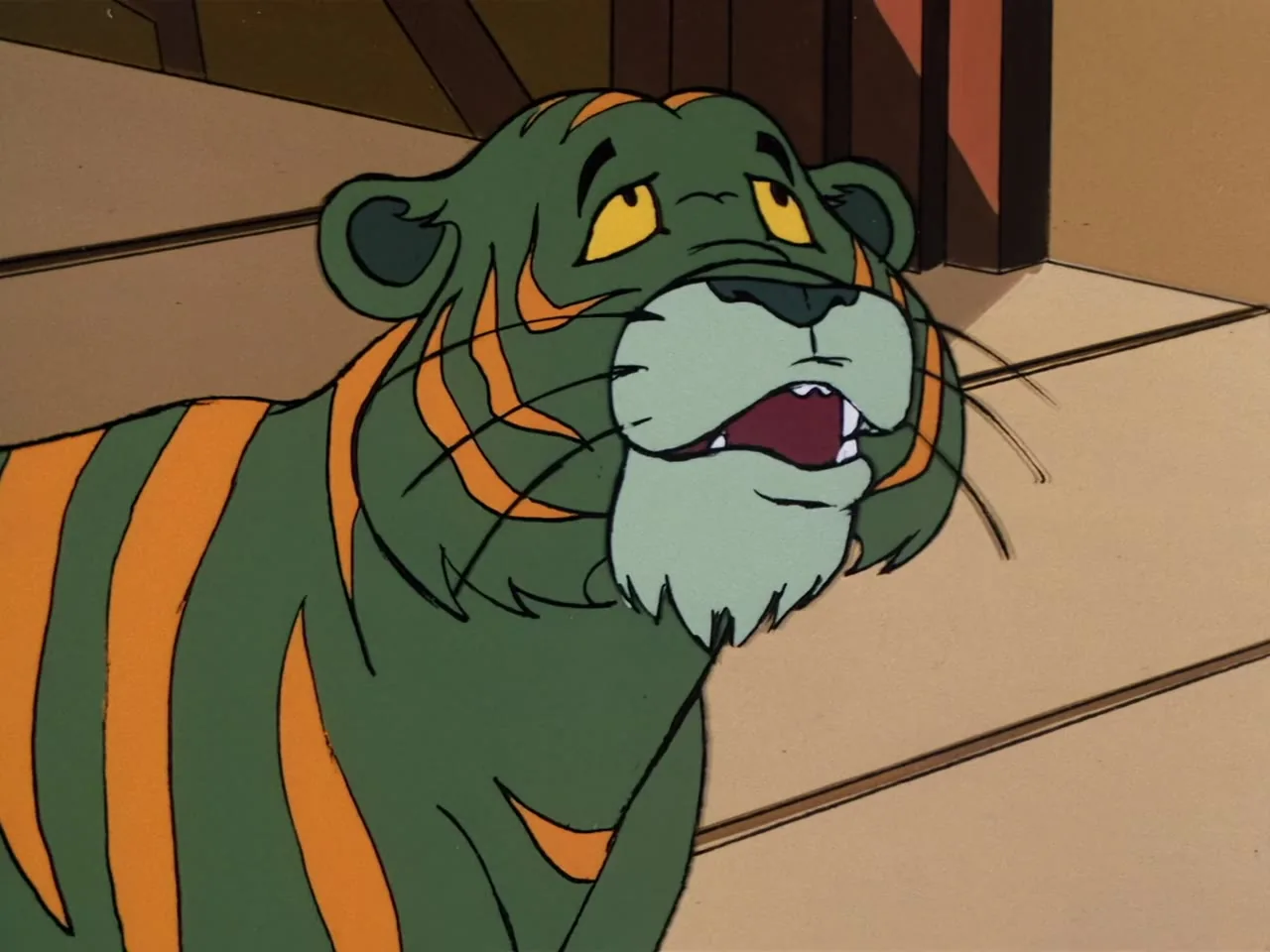
Cringer carries the episode in a way we rarely get to see. With He-Man unconscious or recovering for most of the runtime, there is no cue for the transformation, and Cringer stays Cringer: muzzled, roped, and dragged along as evidence by Trap Jaw and Whiplash, snarling uselessly at captors who do not take him seriously. It is a small, almost accidental showcase for the character, because most episodes sidestep this exact scenario by letting him become Battle Cat before danger gets serious. Here he cannot, and the show lets him sit in that vulnerability instead of writing around it. [1]
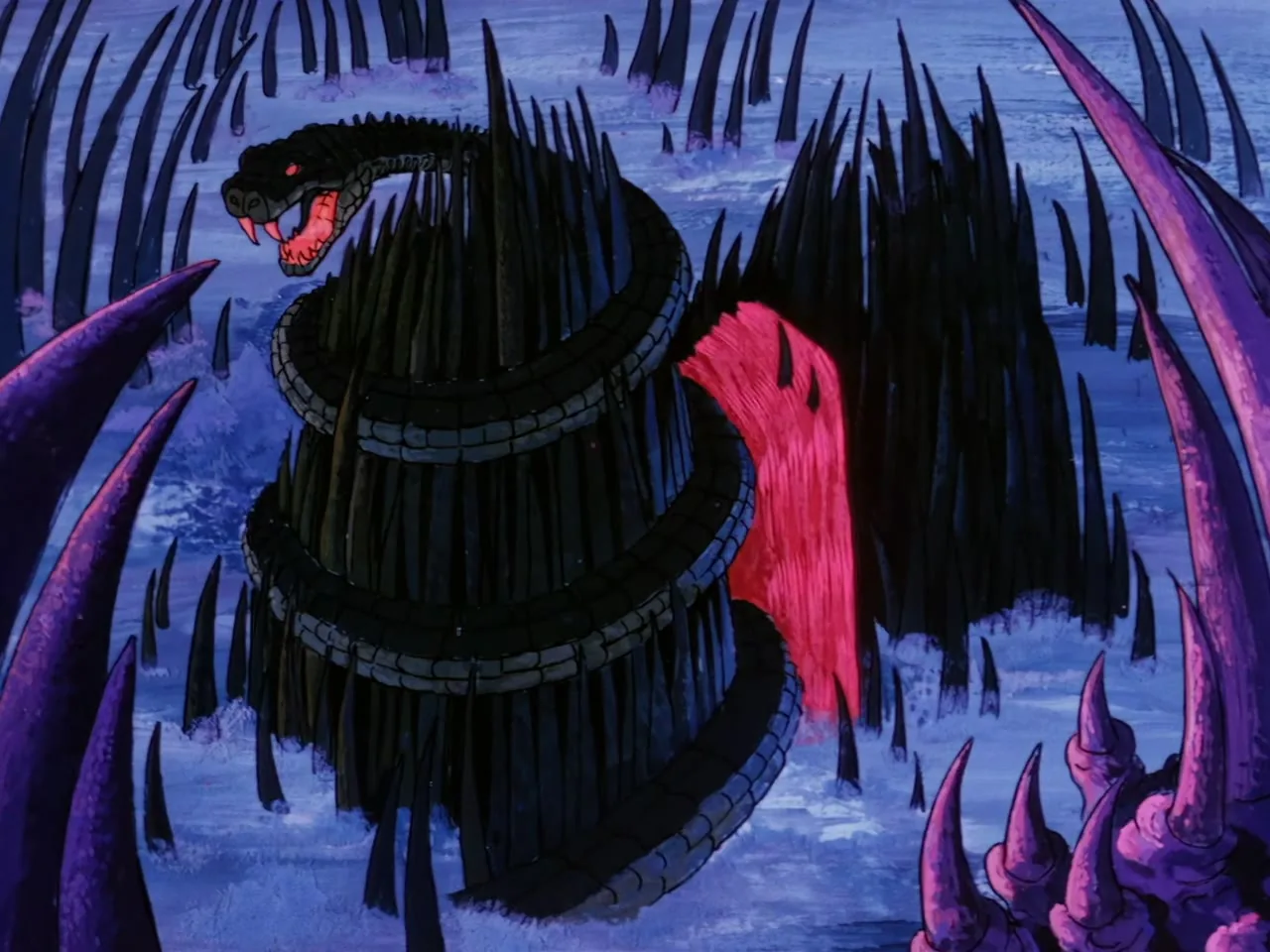
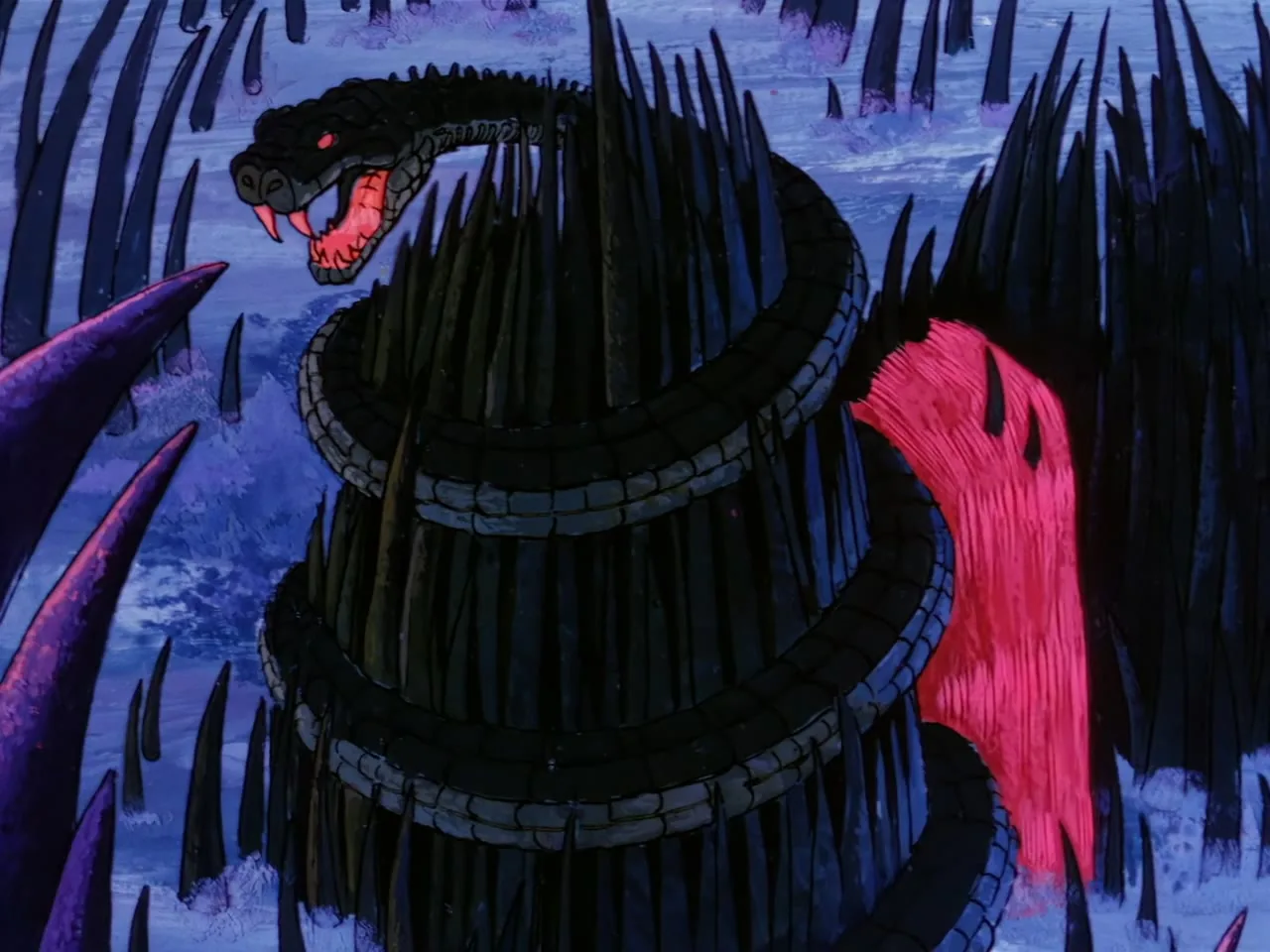
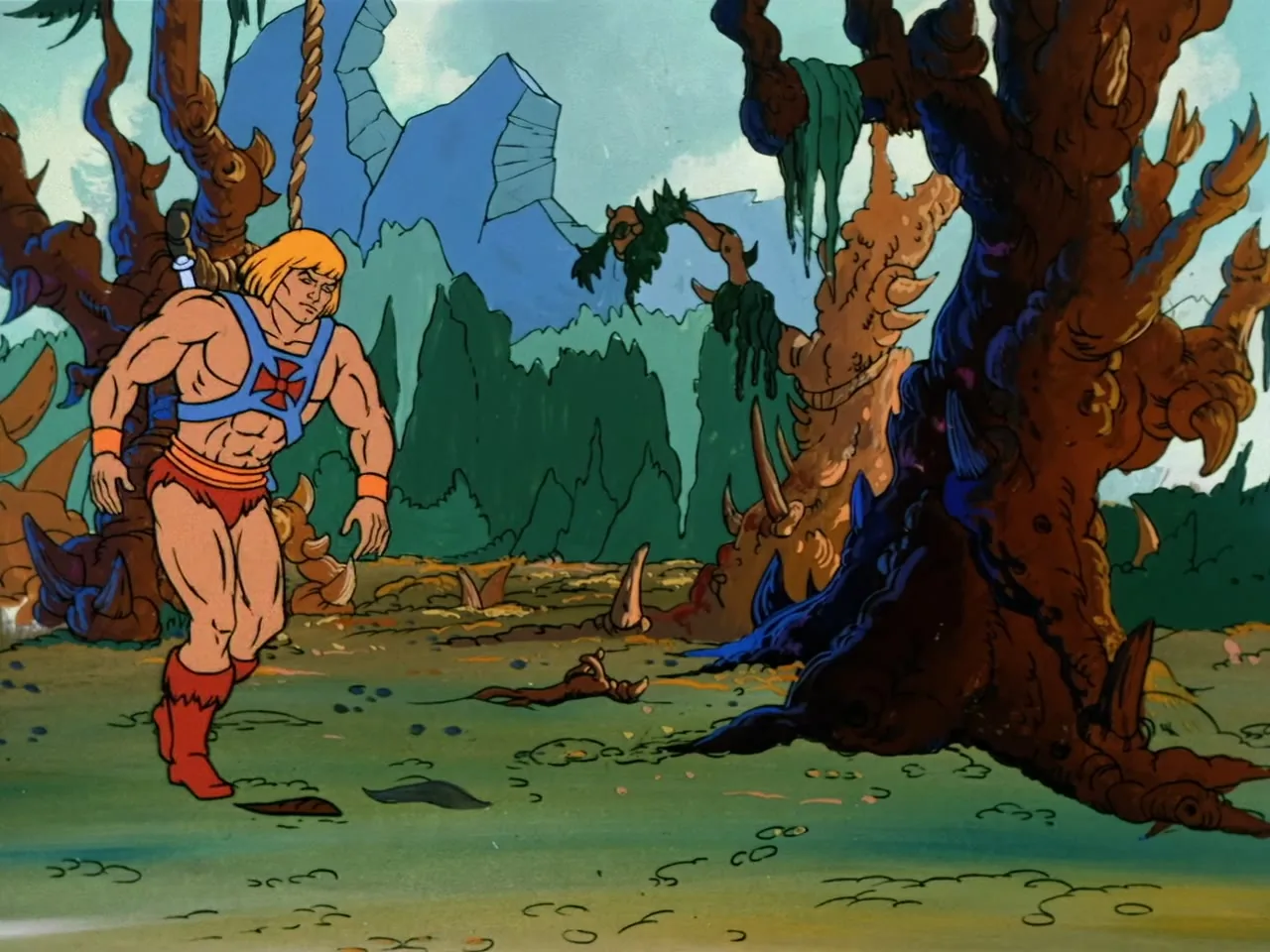
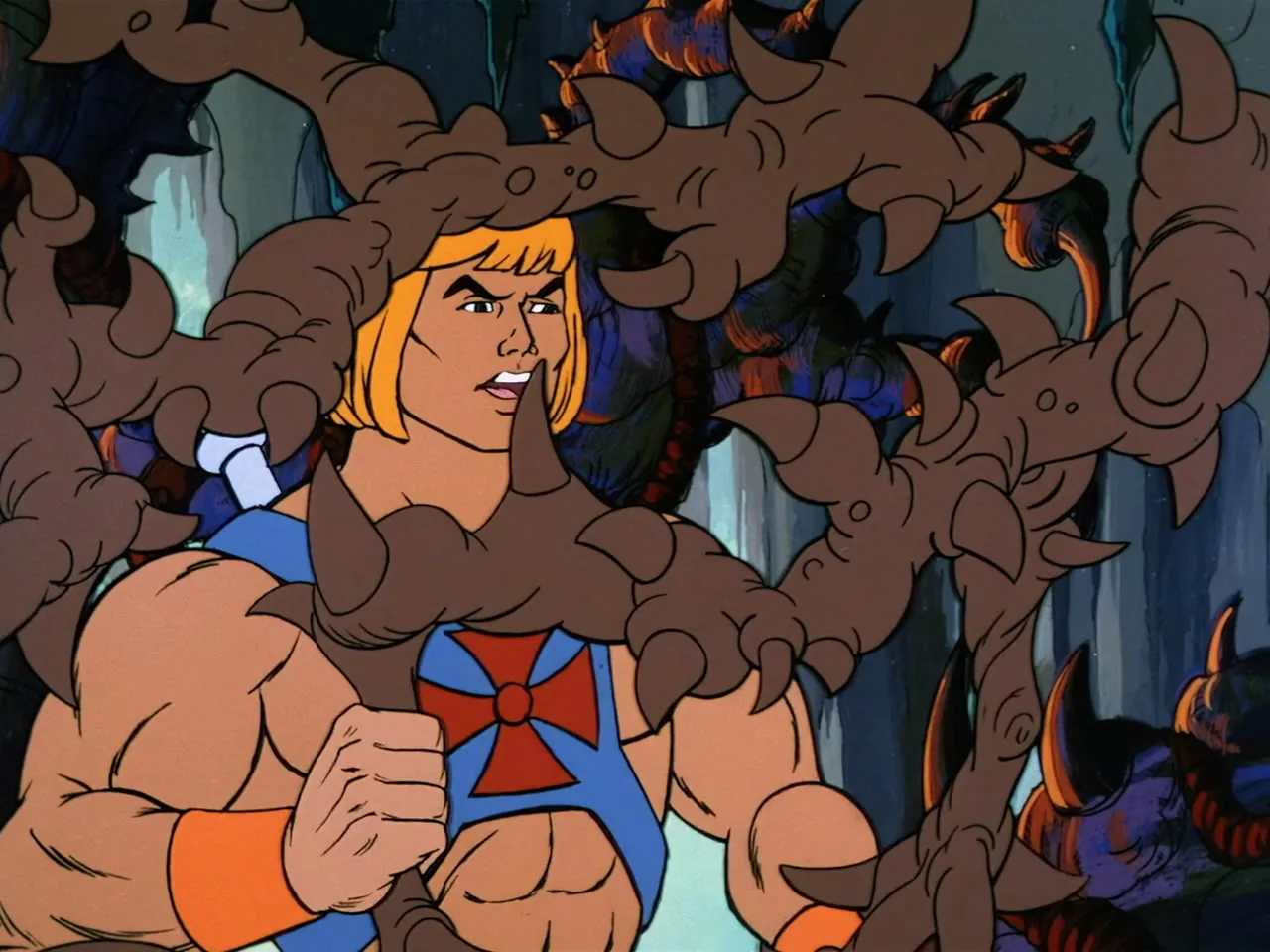
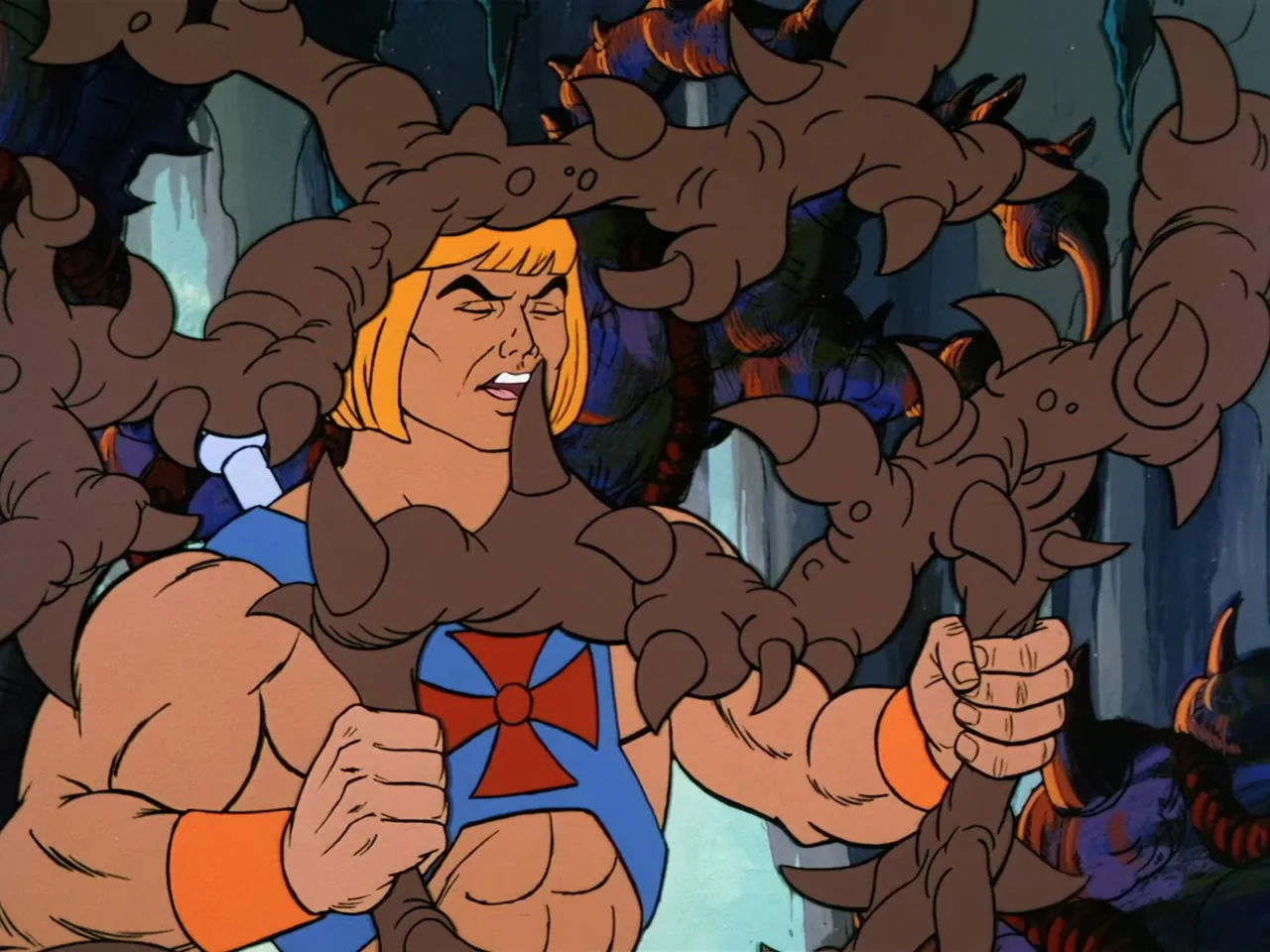
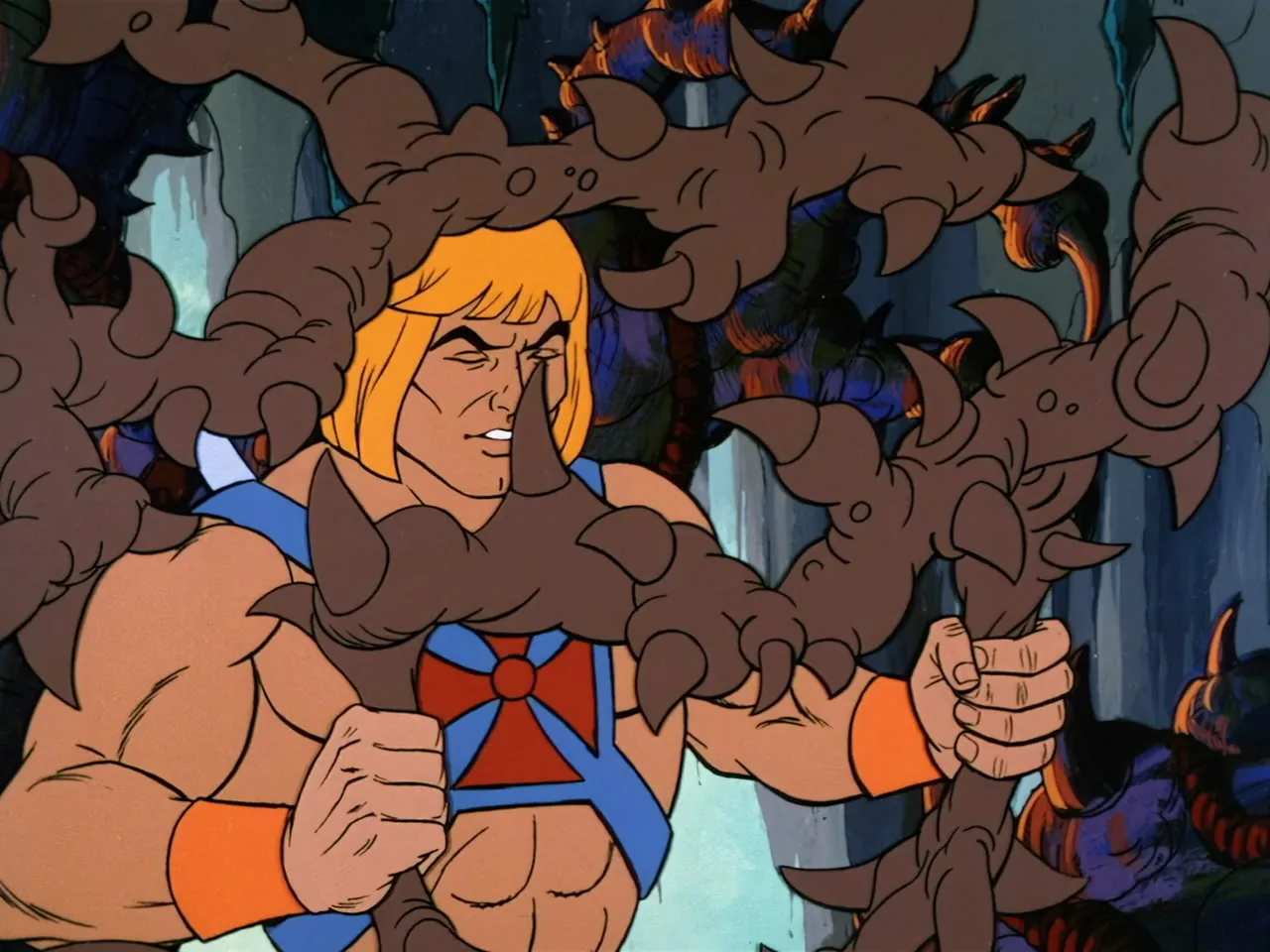
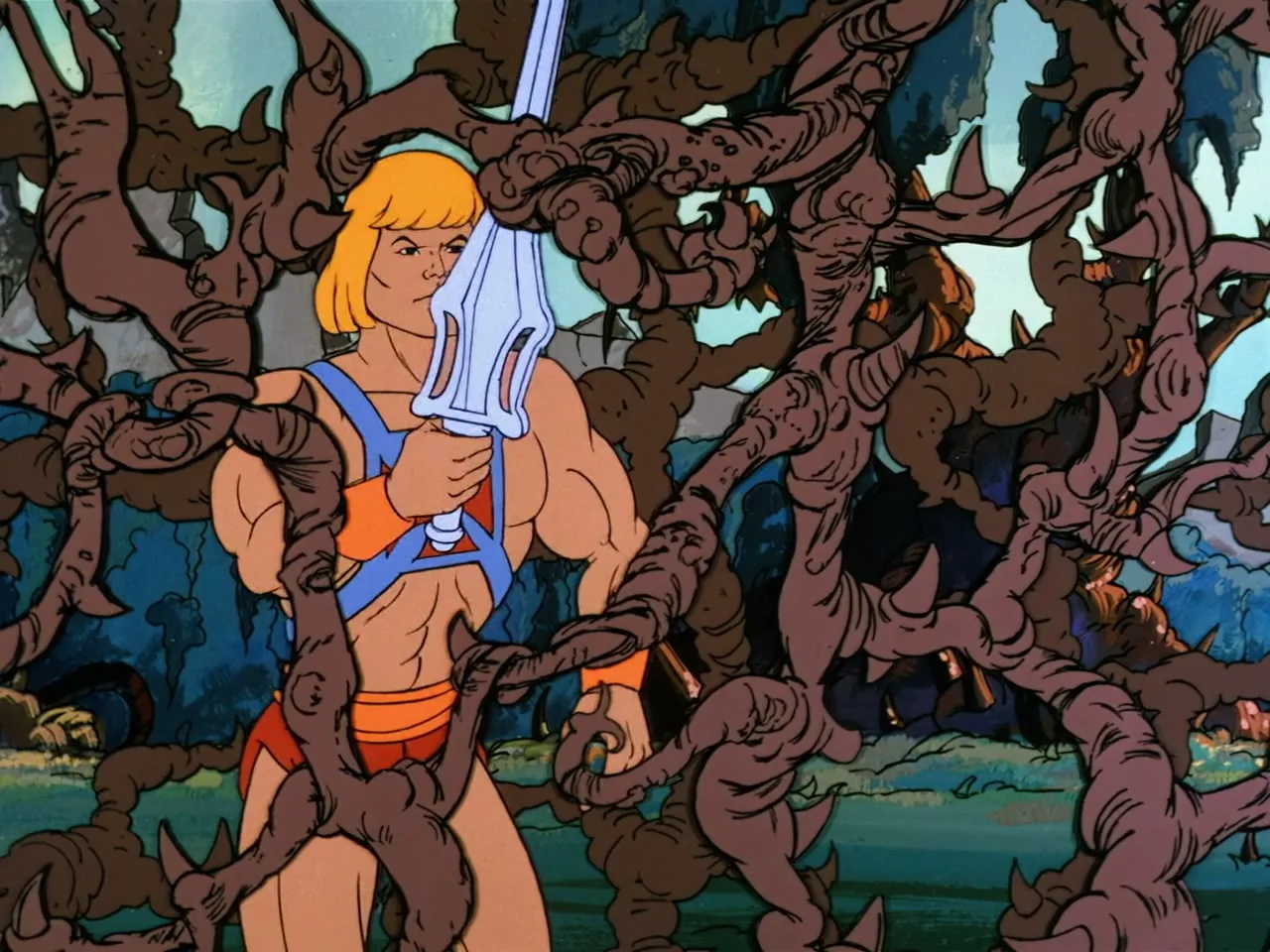
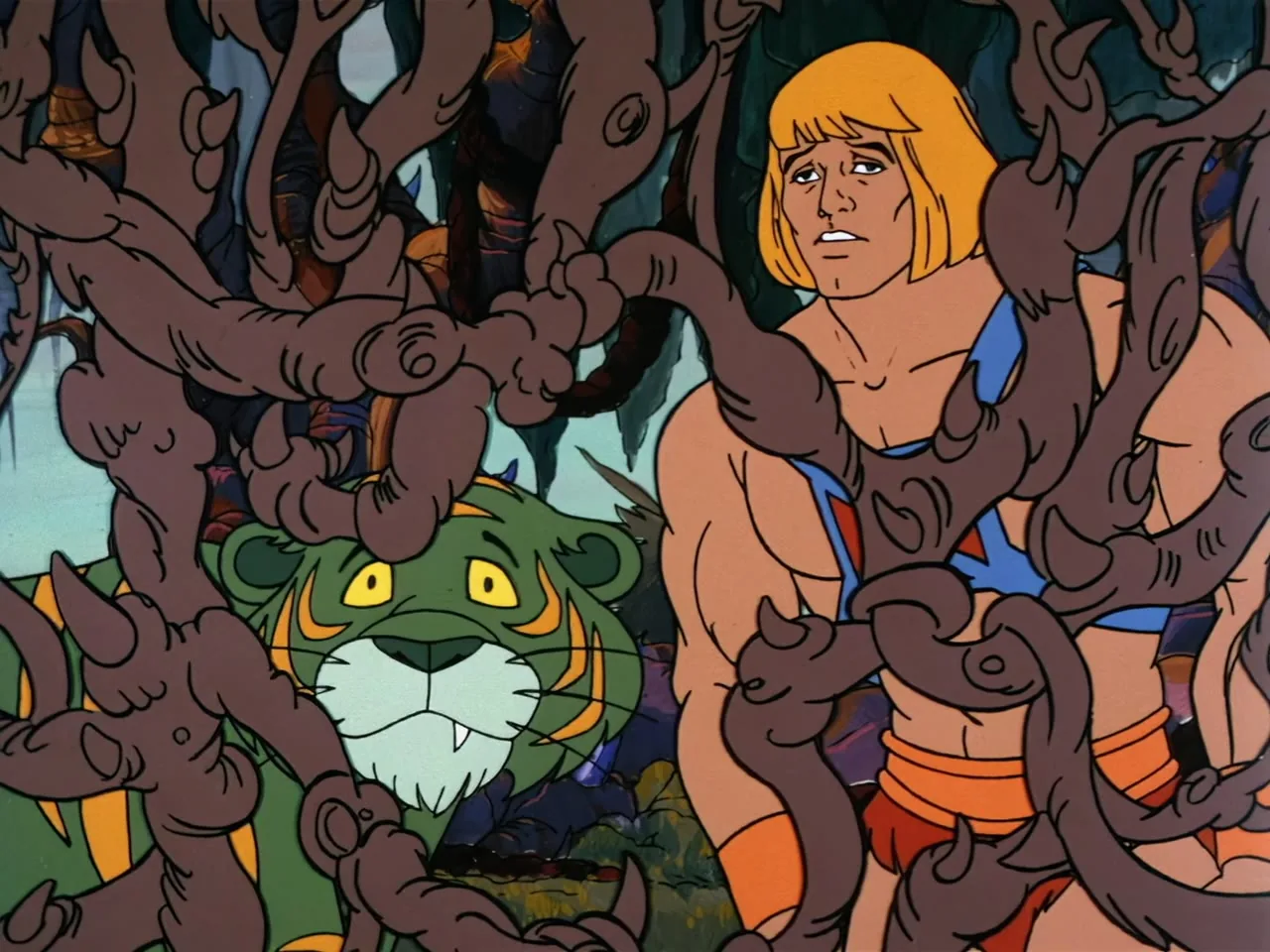
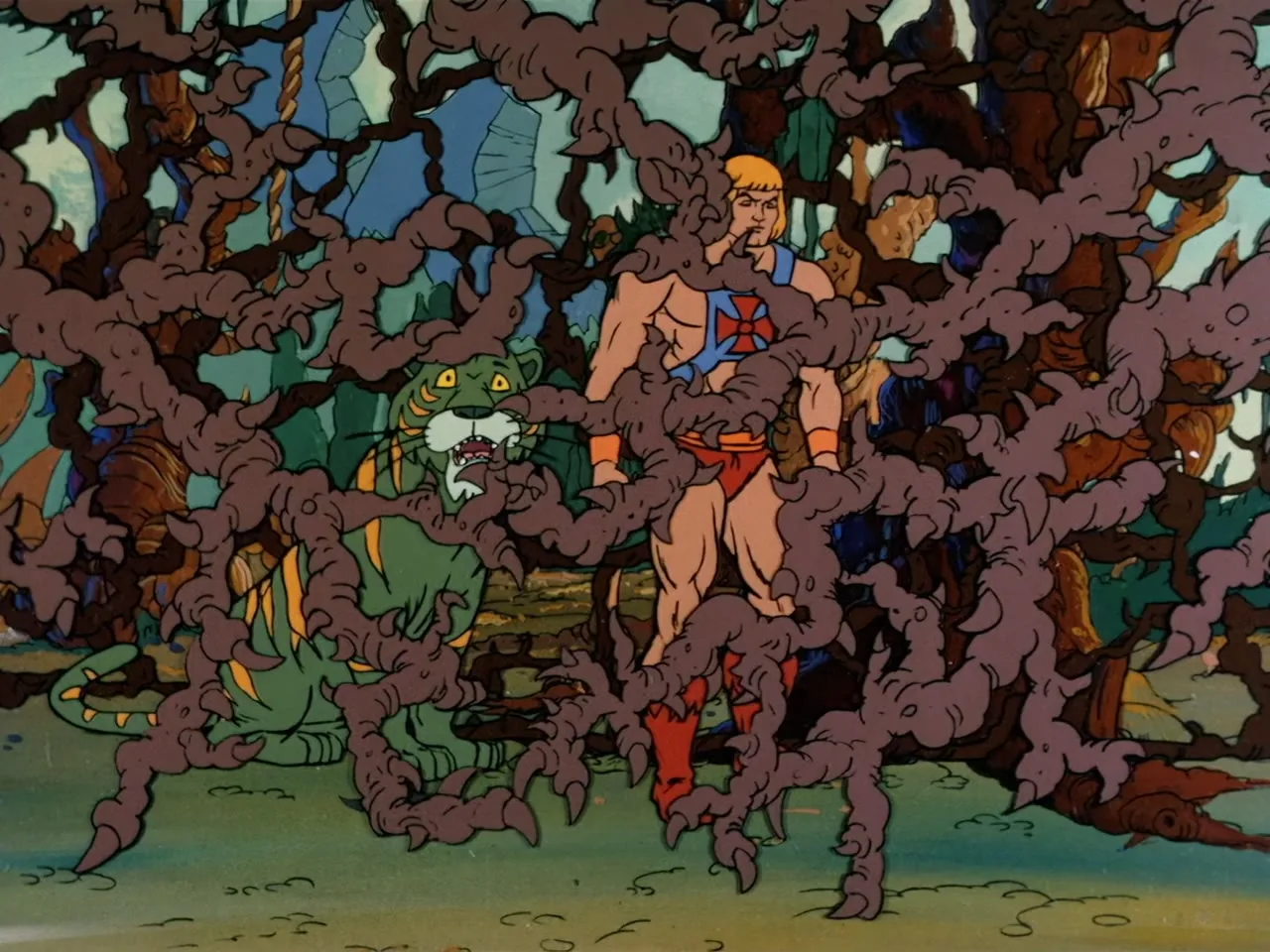
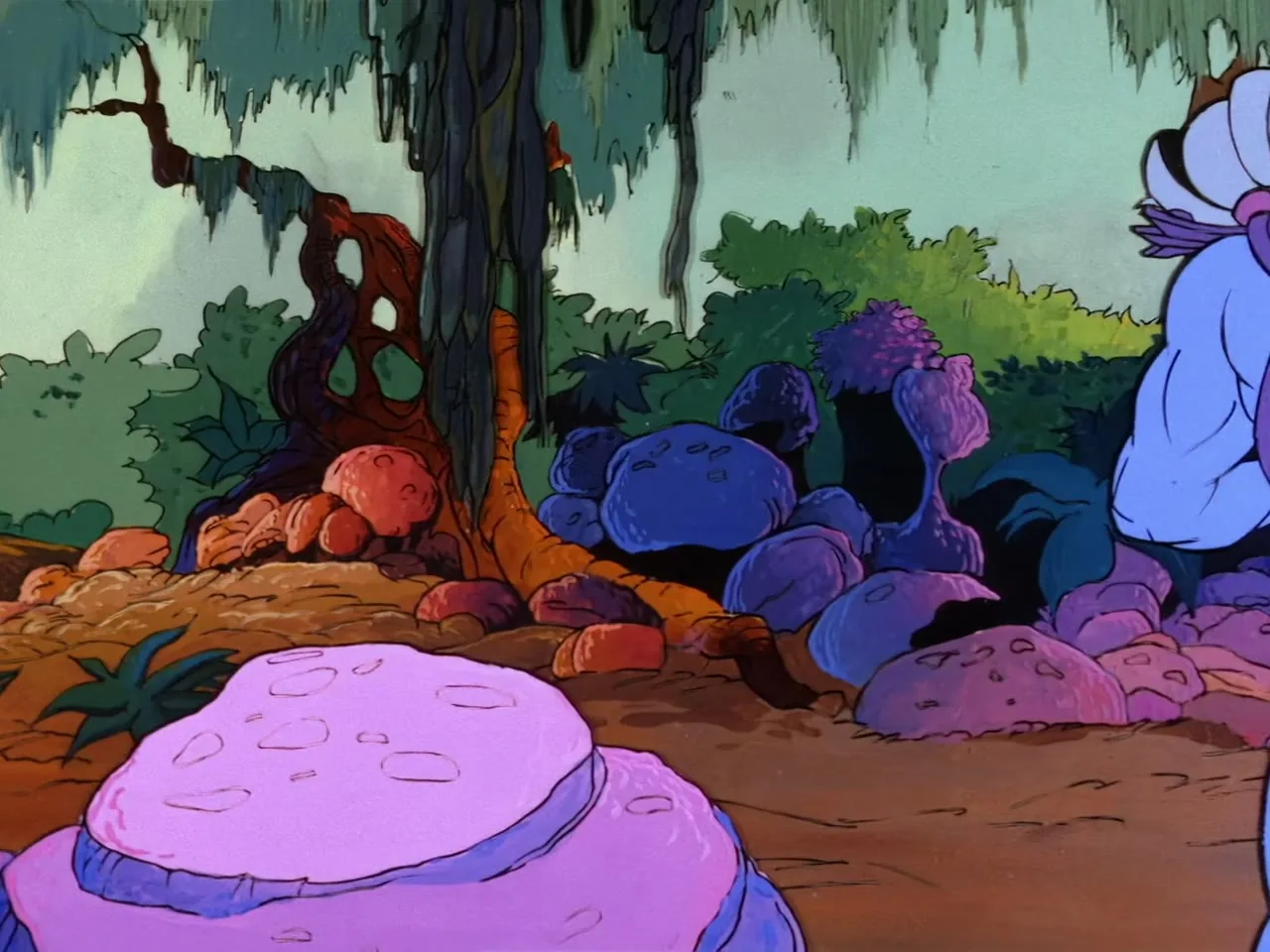
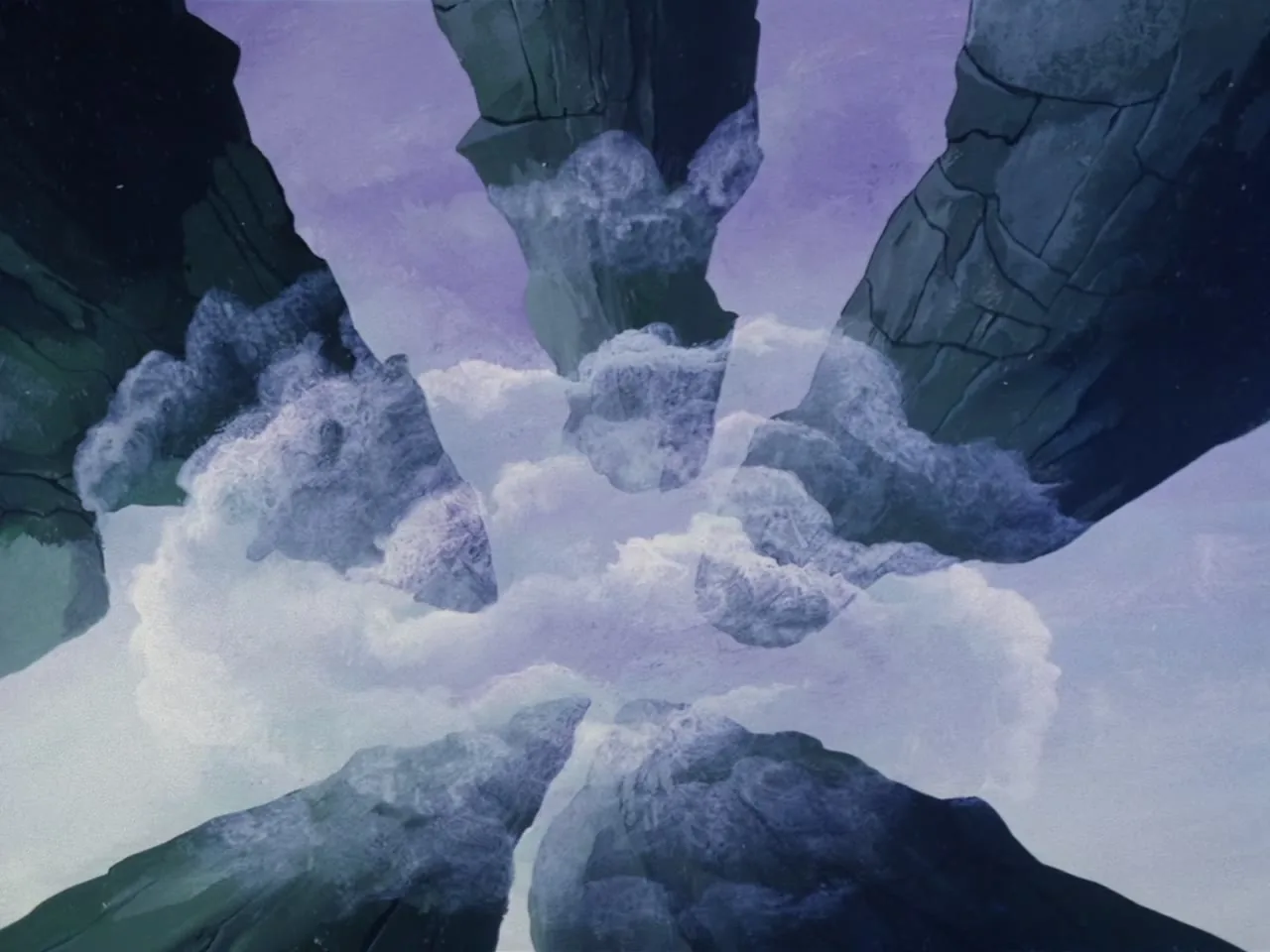
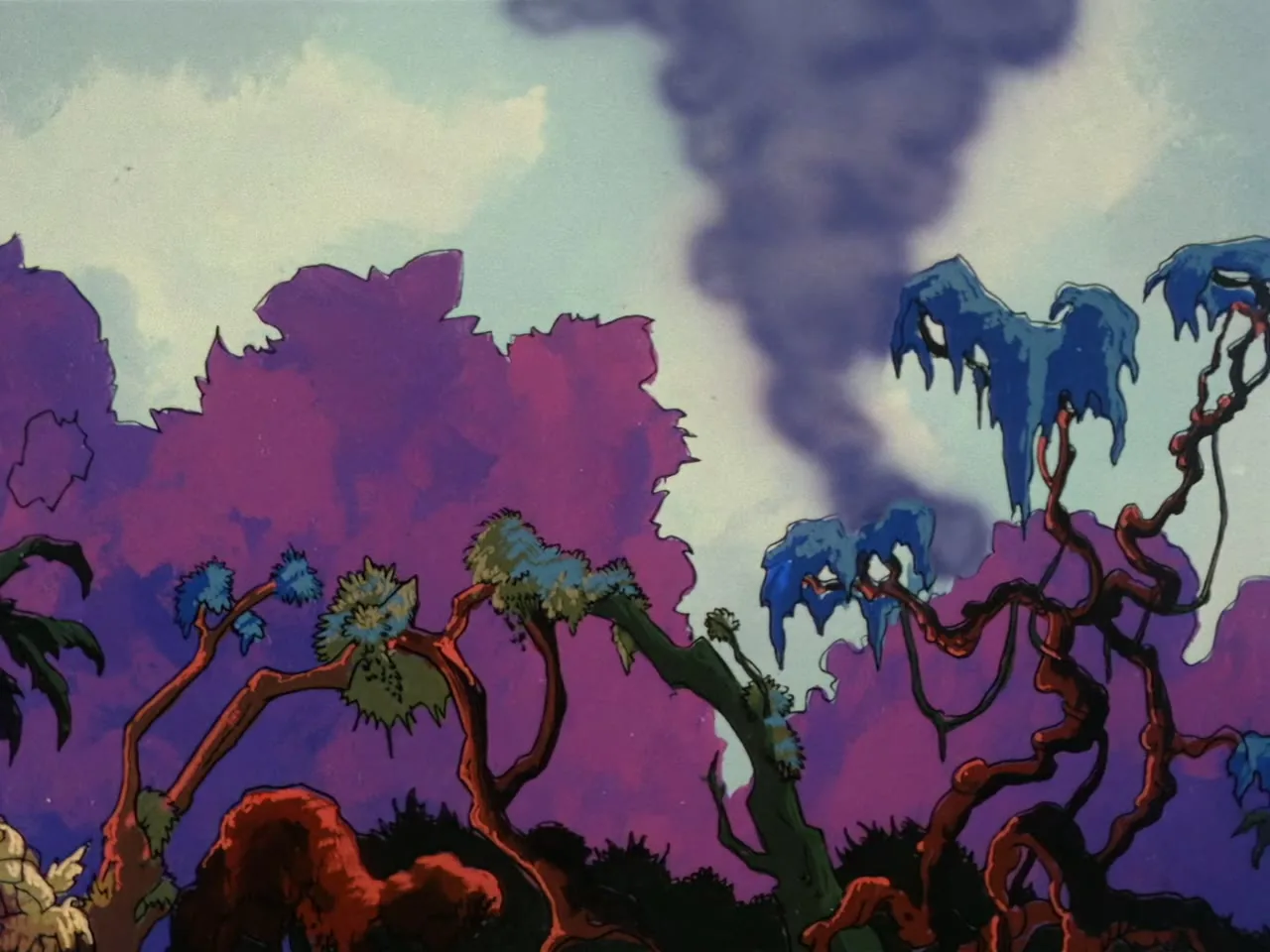
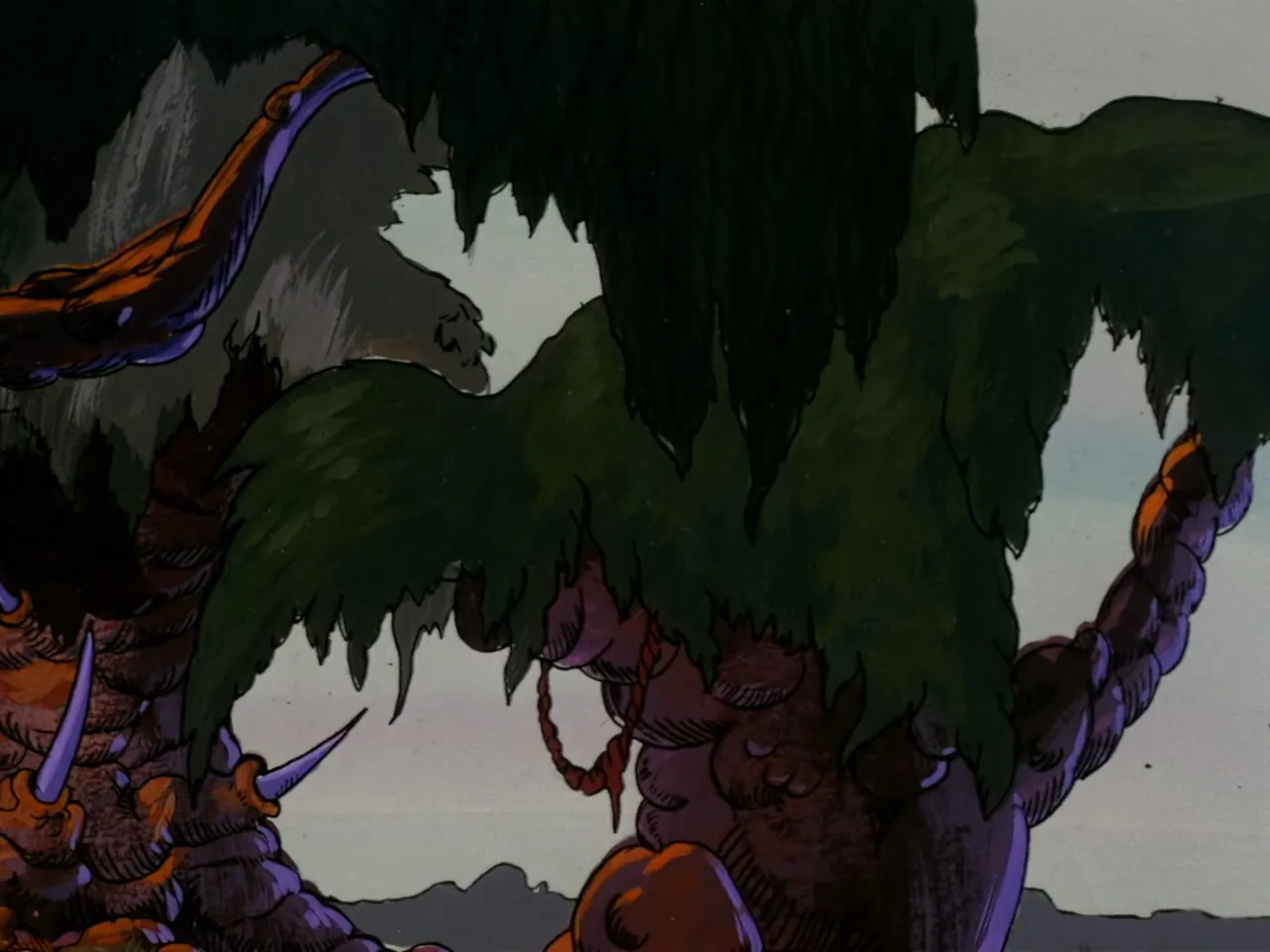
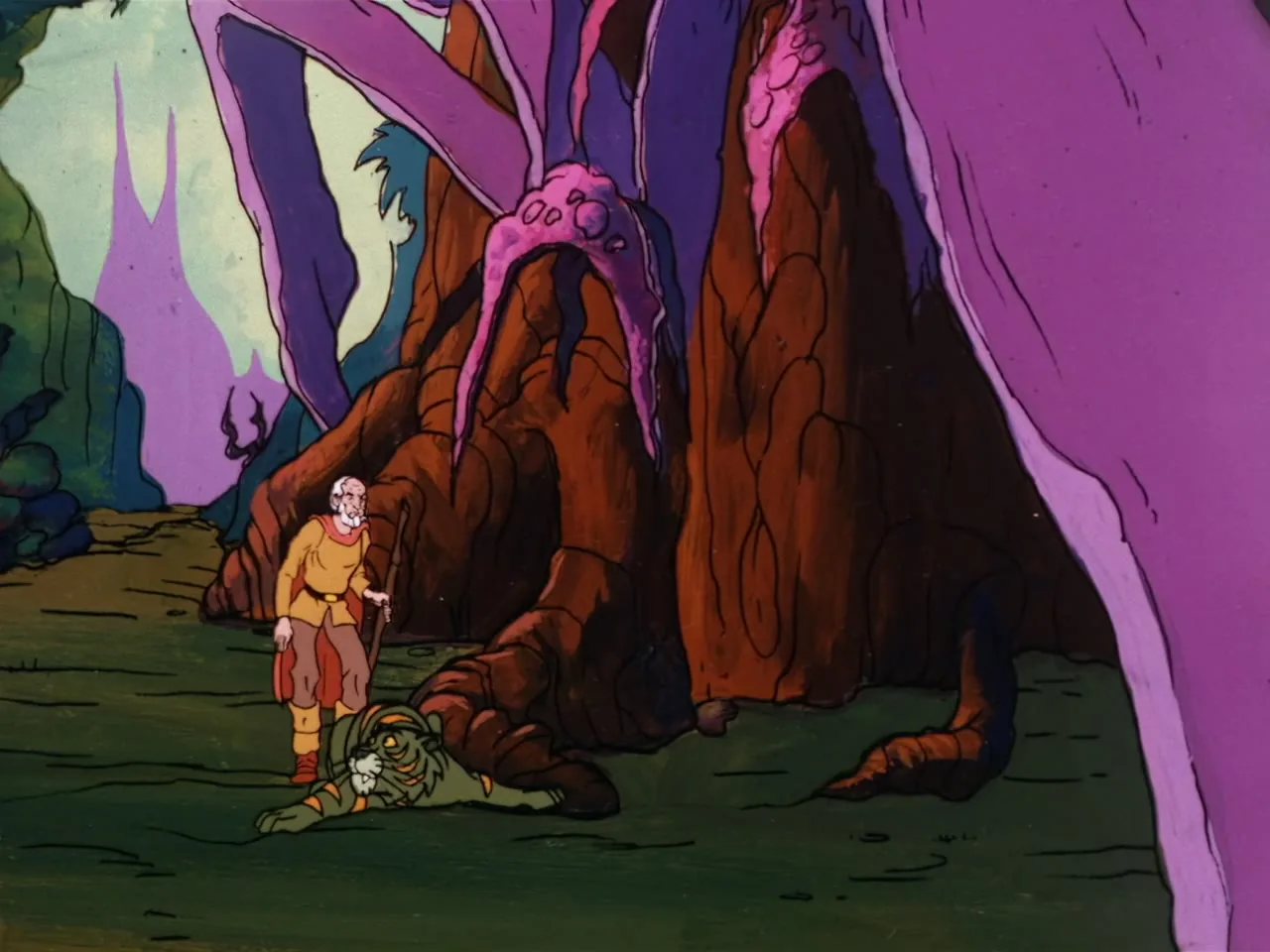
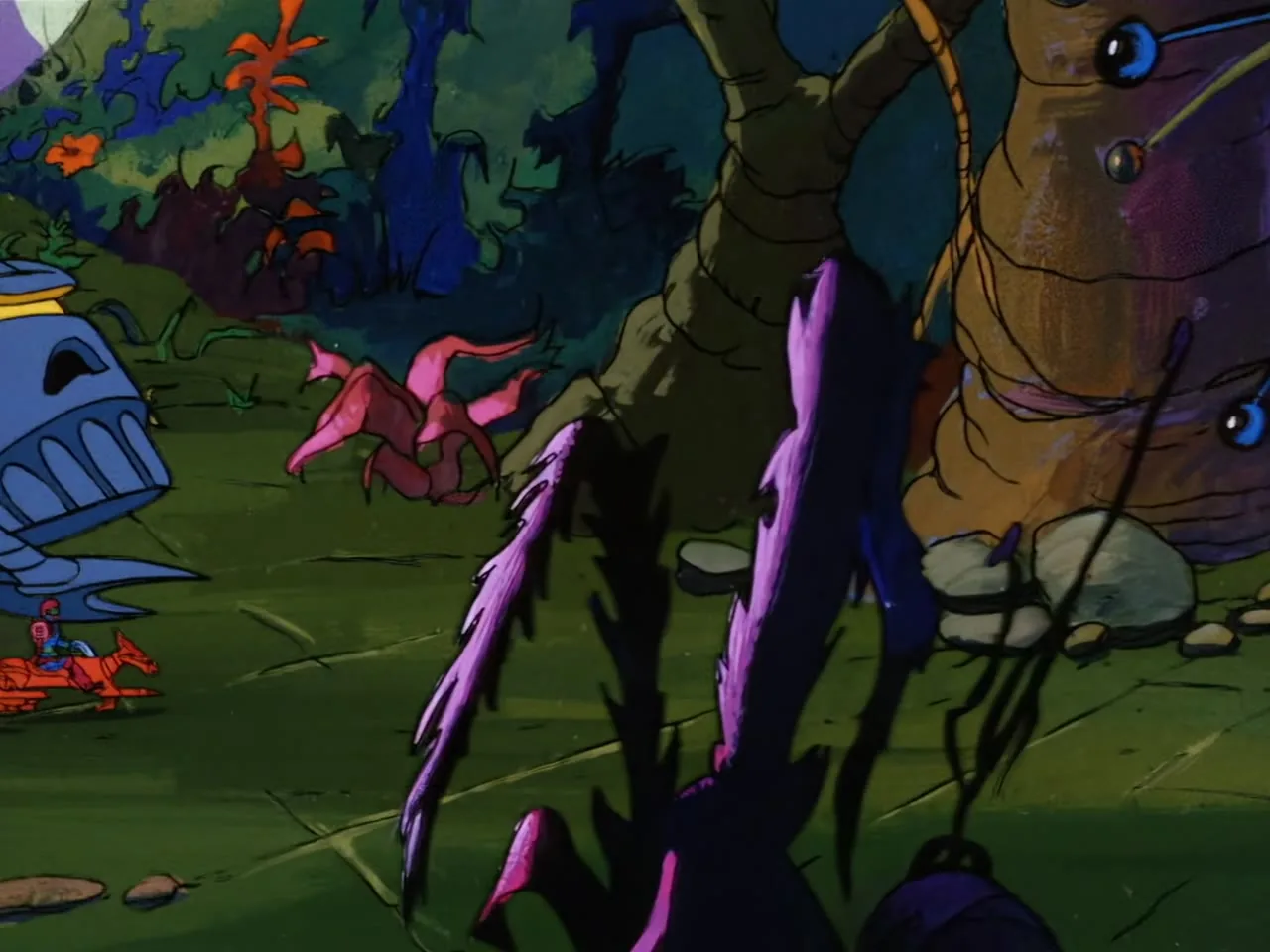
The healing tree itself, the episode's answer for how He-Man recovers, is one of the stranger pieces of environmental design the series puts to use this season: an enormous grove of purple, tendril-like limbs that does nothing except exist as a place of safety, with no explanation of why it heals or who planted it there. That vagueness works in the episode's favor. It needs a reason for He-Man to stay weak long enough for the moral to matter, and a half-explained miracle tree does that cleanly, without derailing the plot Skeletor is running in parallel.
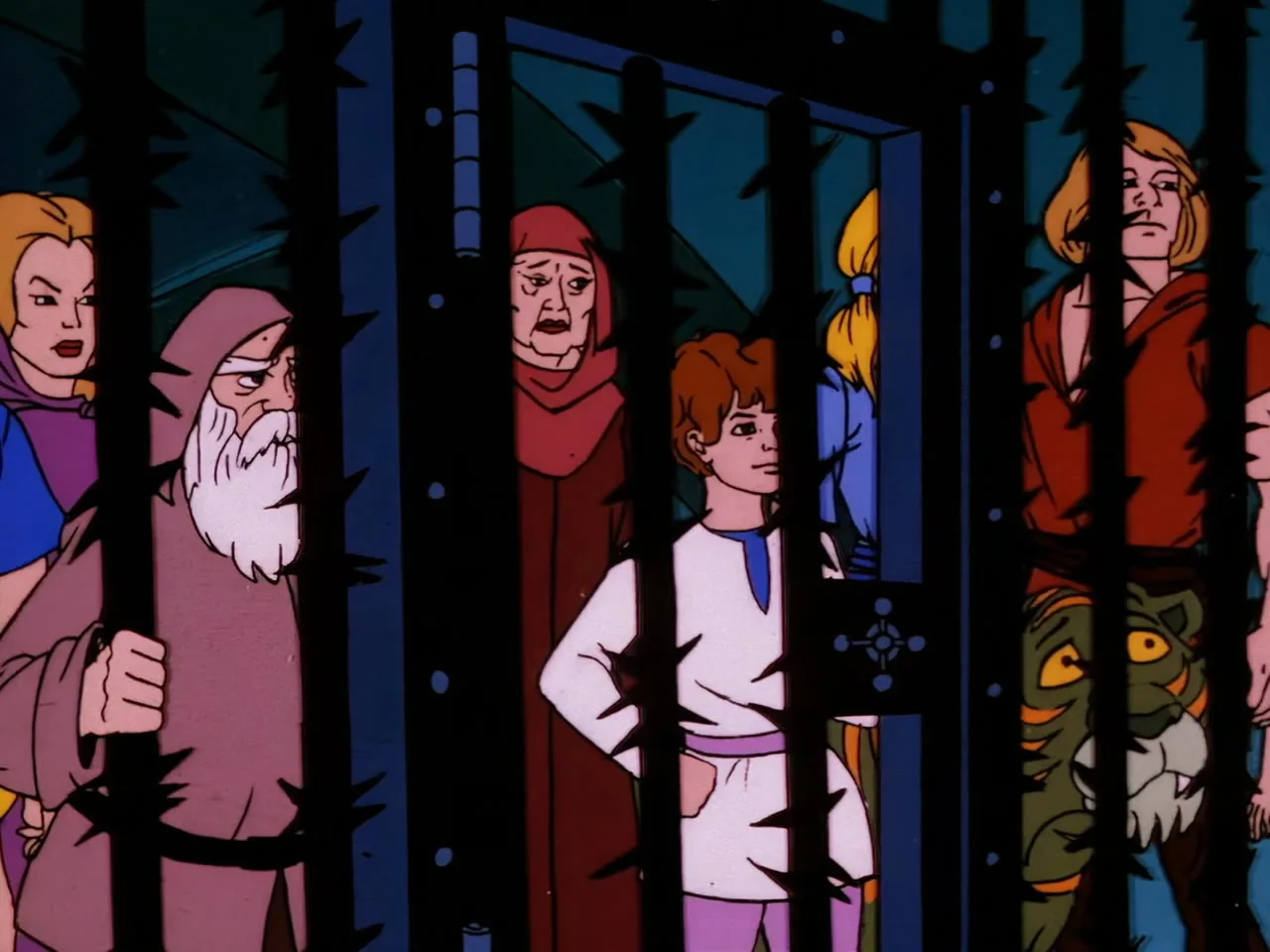
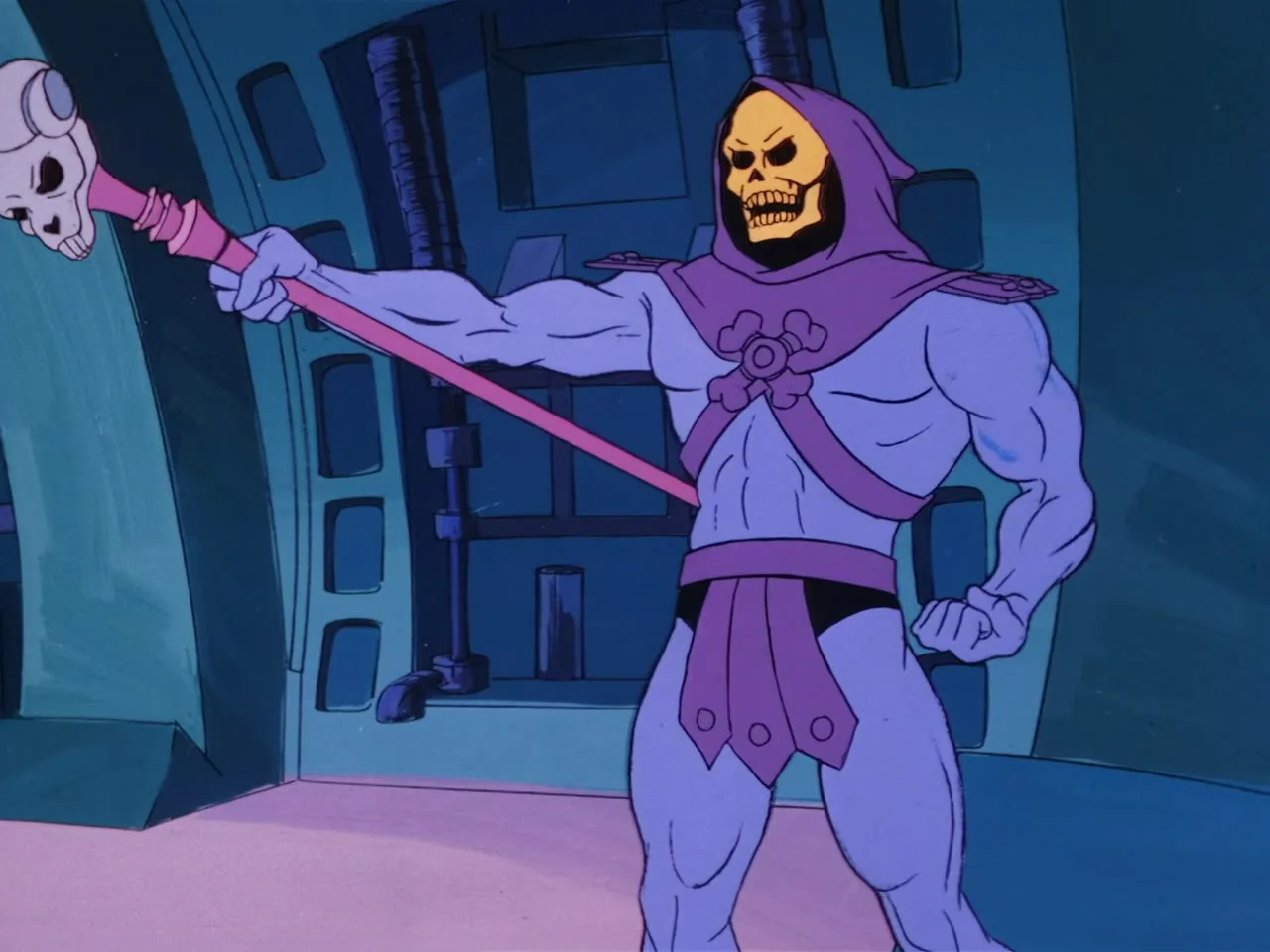
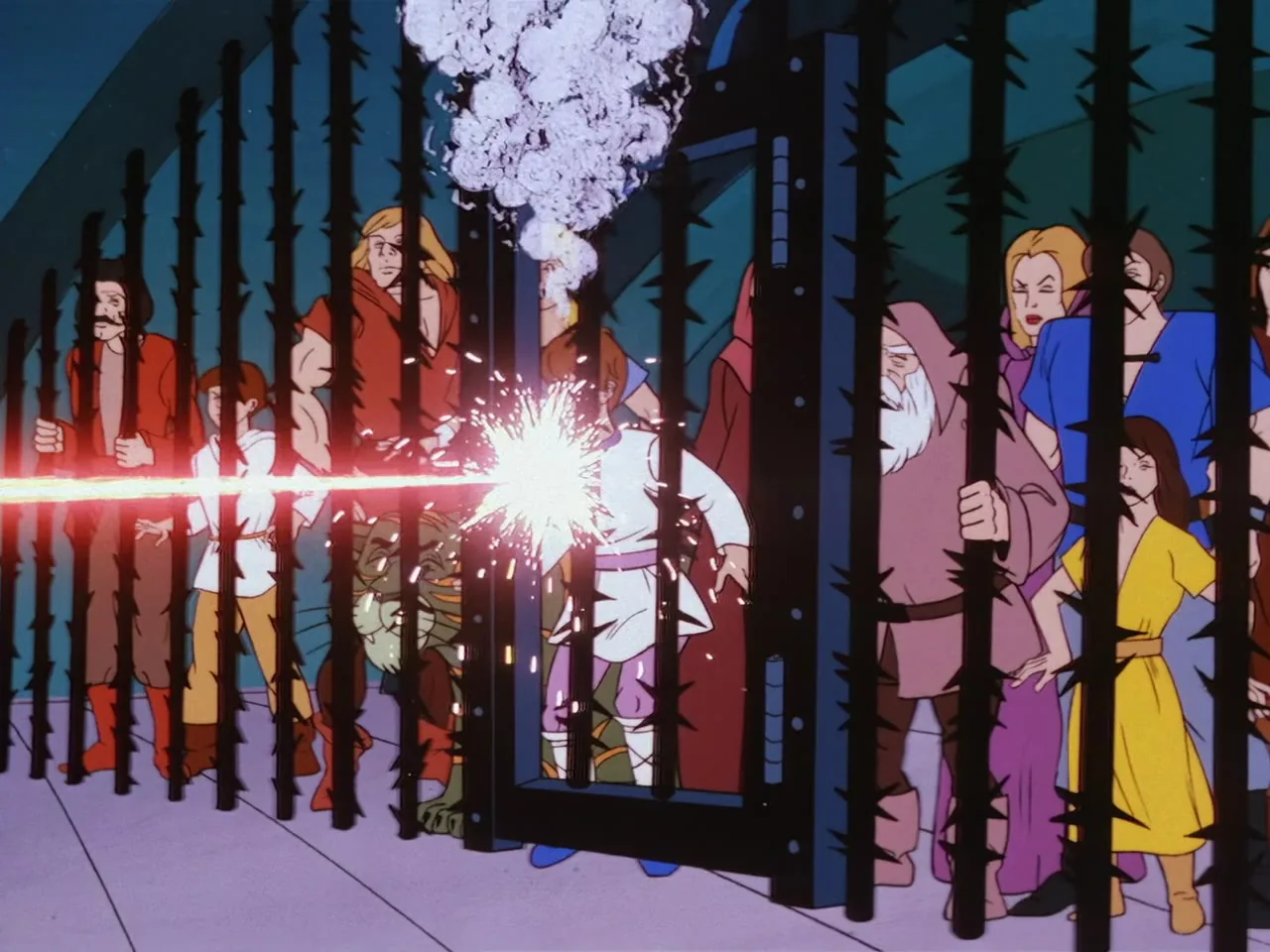
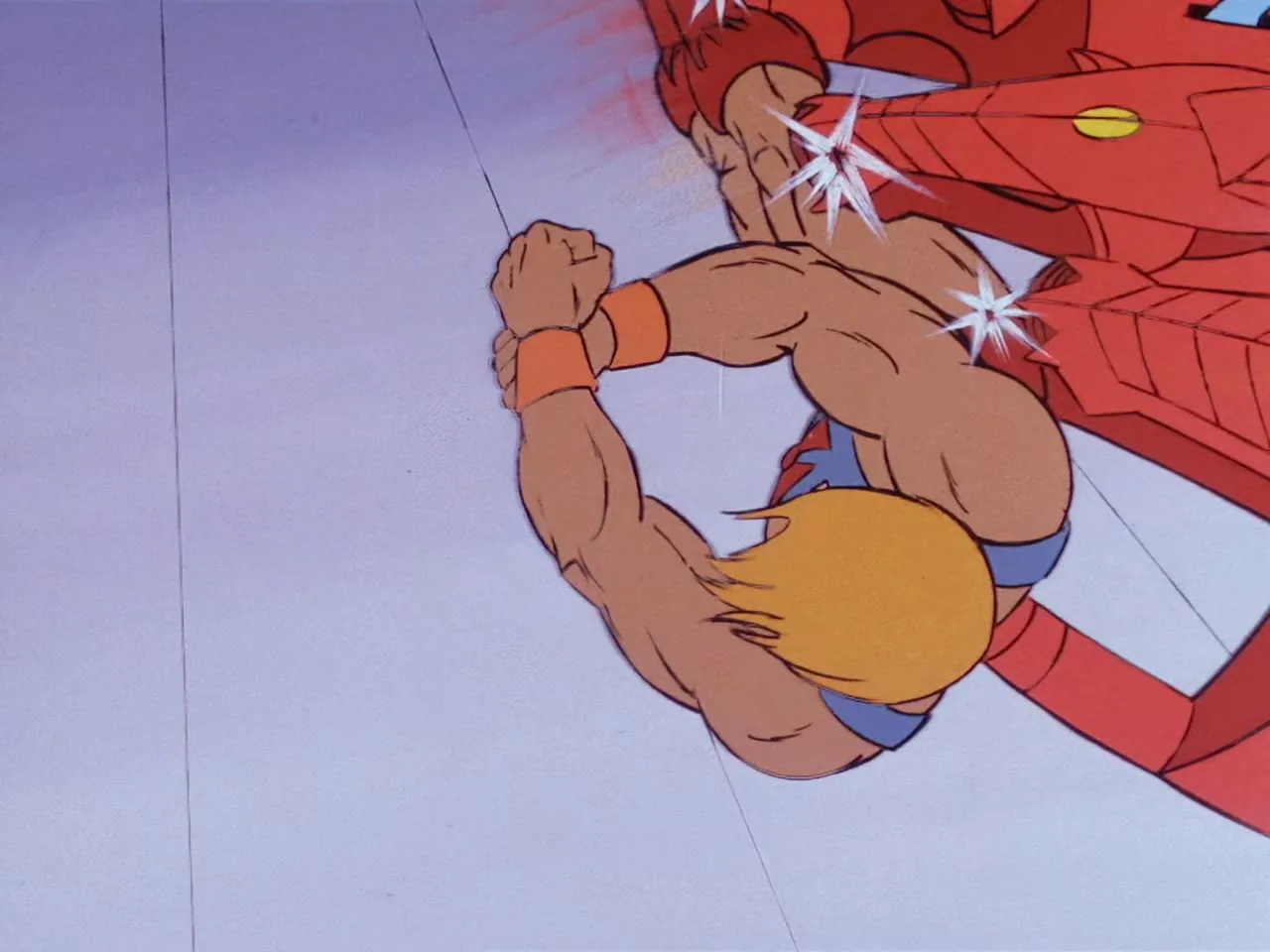
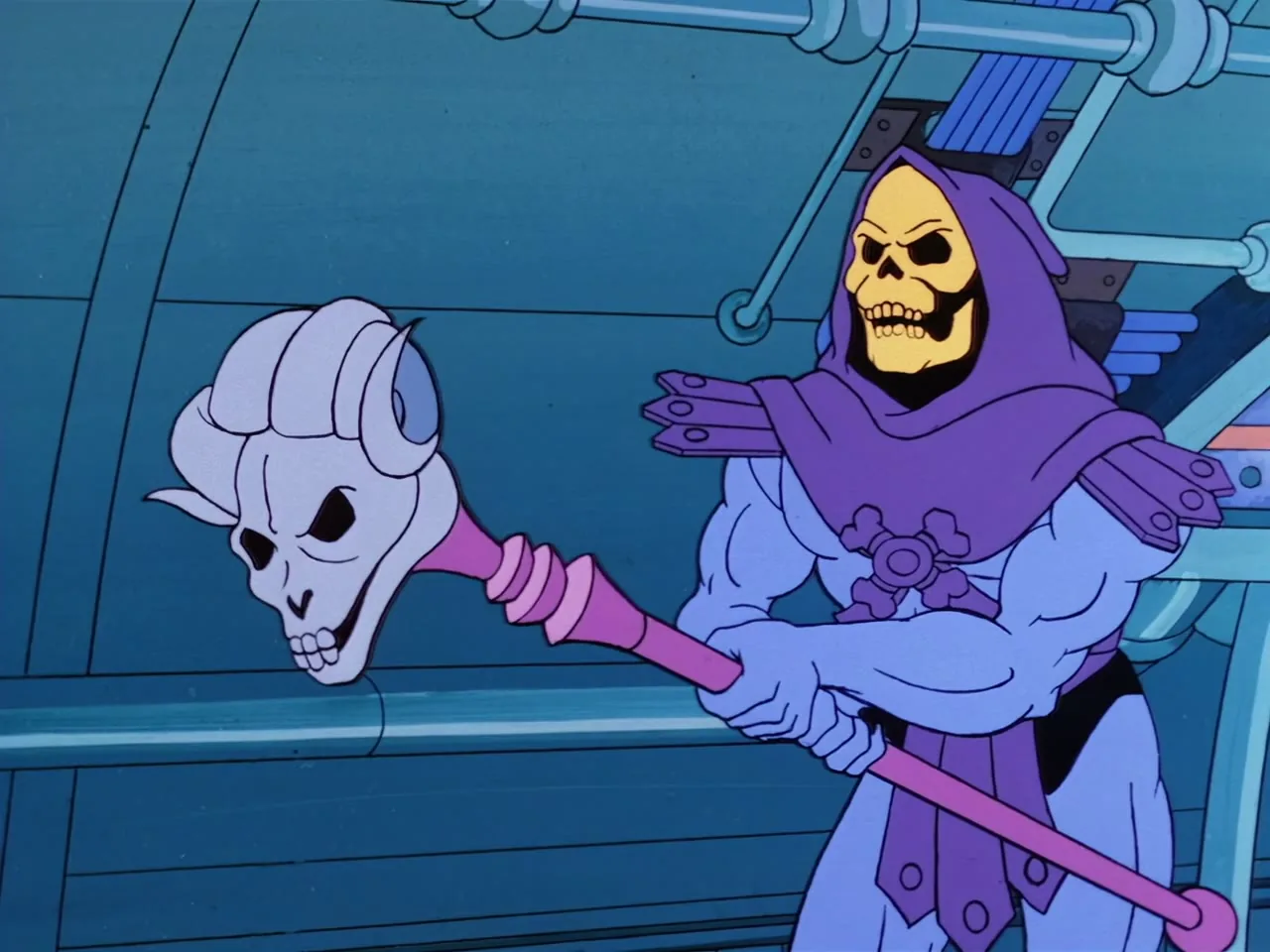
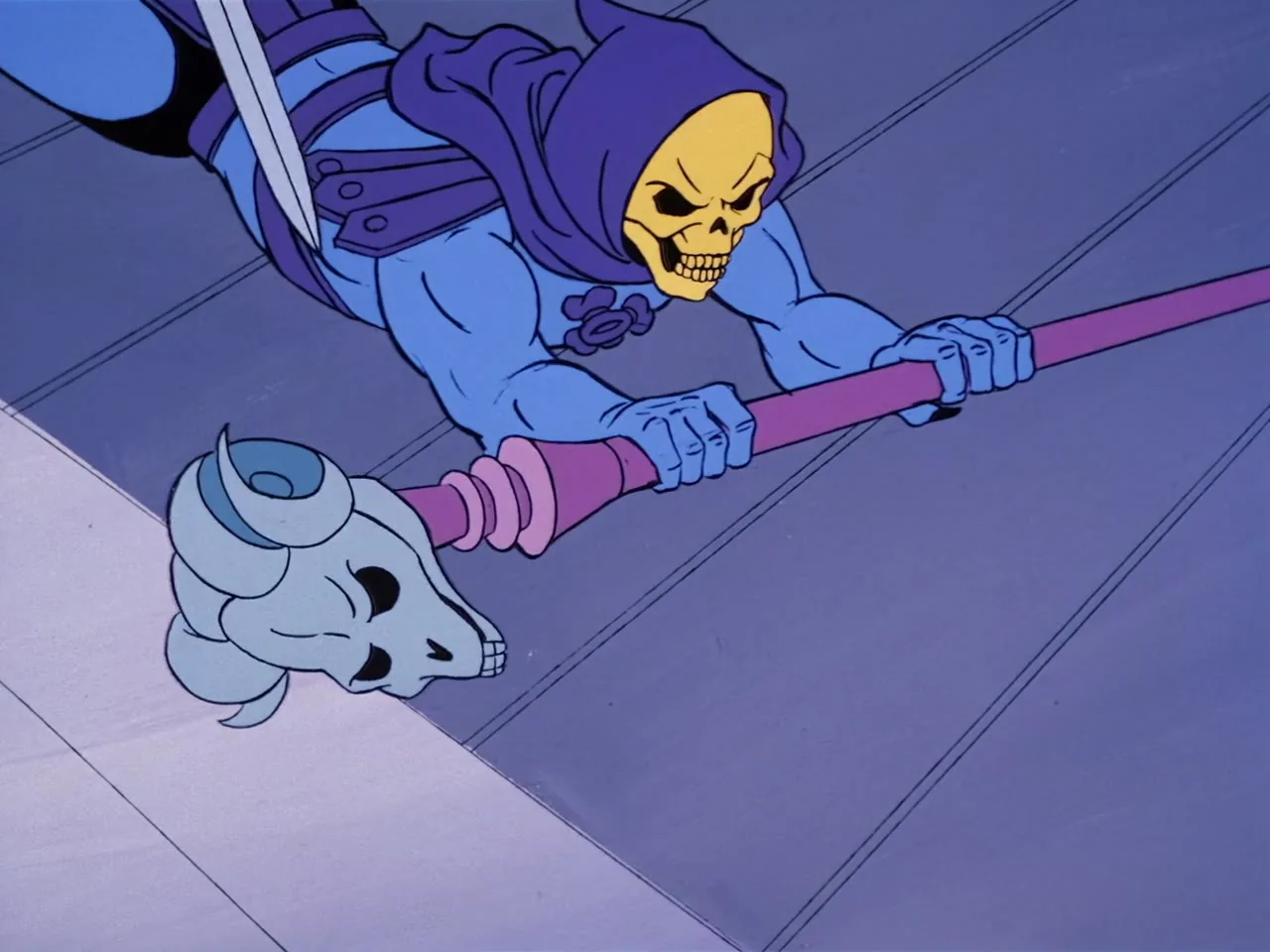
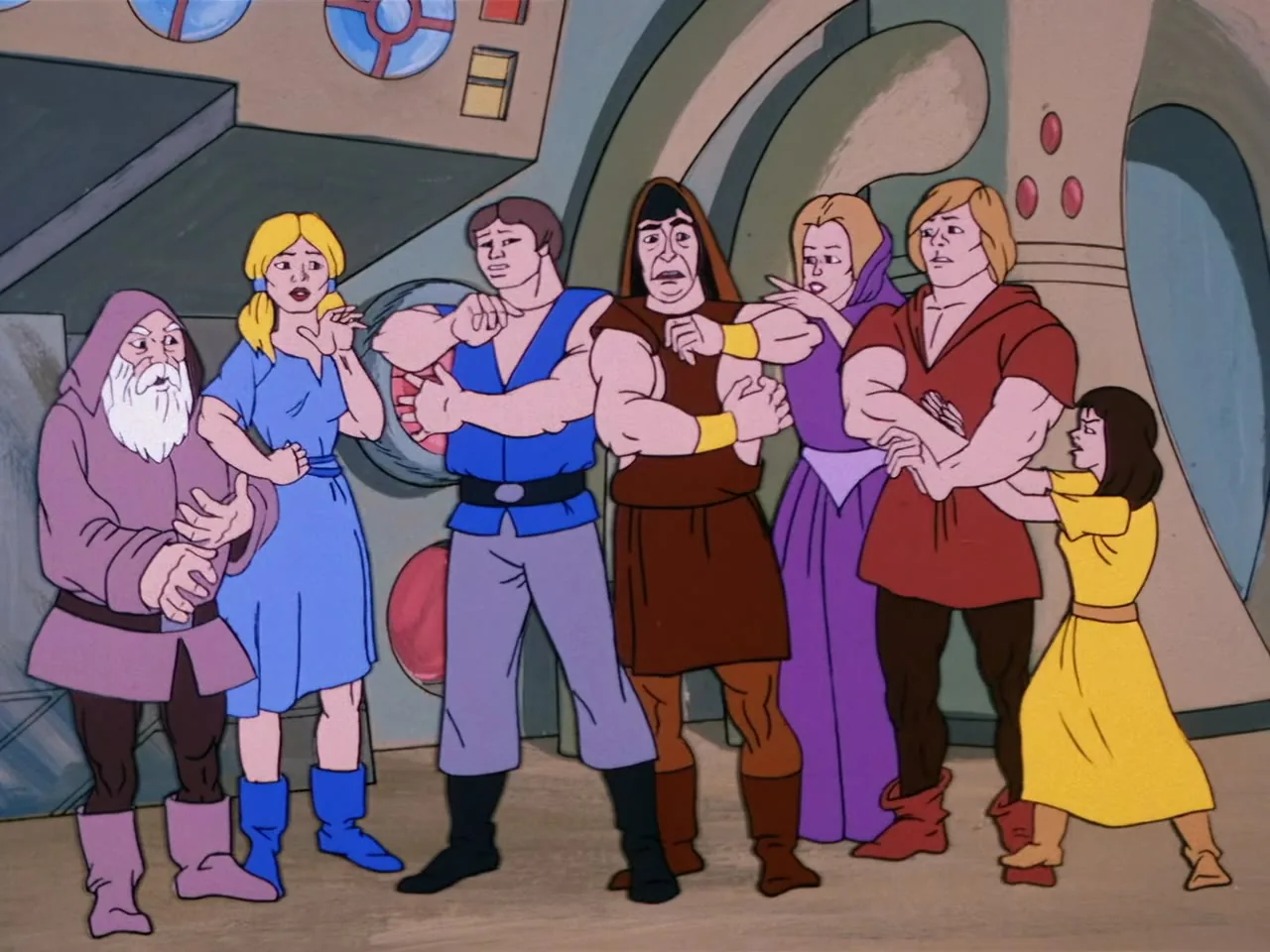
Where the episode runs thin is the fight it eventually delivers. Once He-Man recovers, "Hunt for He-Man" reverts to the formula it spent twenty minutes avoiding: a direct raid on Snake Mountain, a sword against a staff, and a prison cell of captured villagers who exist mainly to be freed in the closing minutes. None of it is badly done, but after an episode built around withheld strength, watching that strength return and resolve everything so quickly plays as a step down in ambition rather than a payoff.
What the episode is actually testing, though, is never the fight. It is whether an ordinary boy with a sick stranger in his care, and a reward on offer, does the right thing without being forced to. The closing exchange trusts that question enough to let Drak admit how close he came, and to let Cringer turn to the audience and agree.
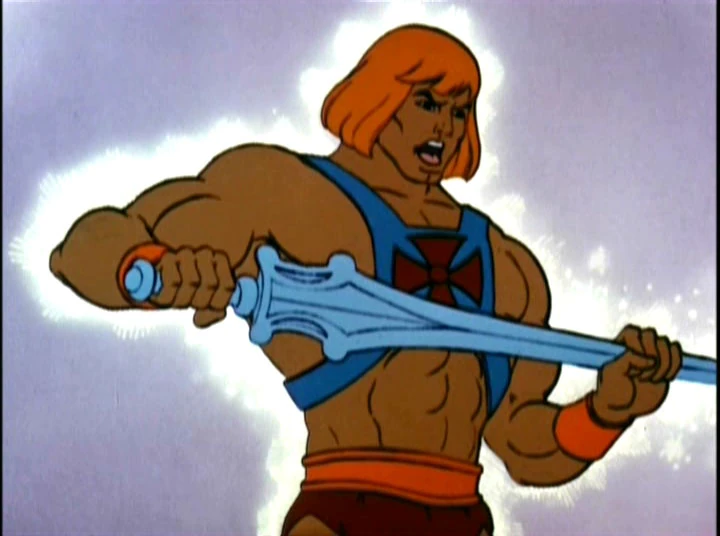
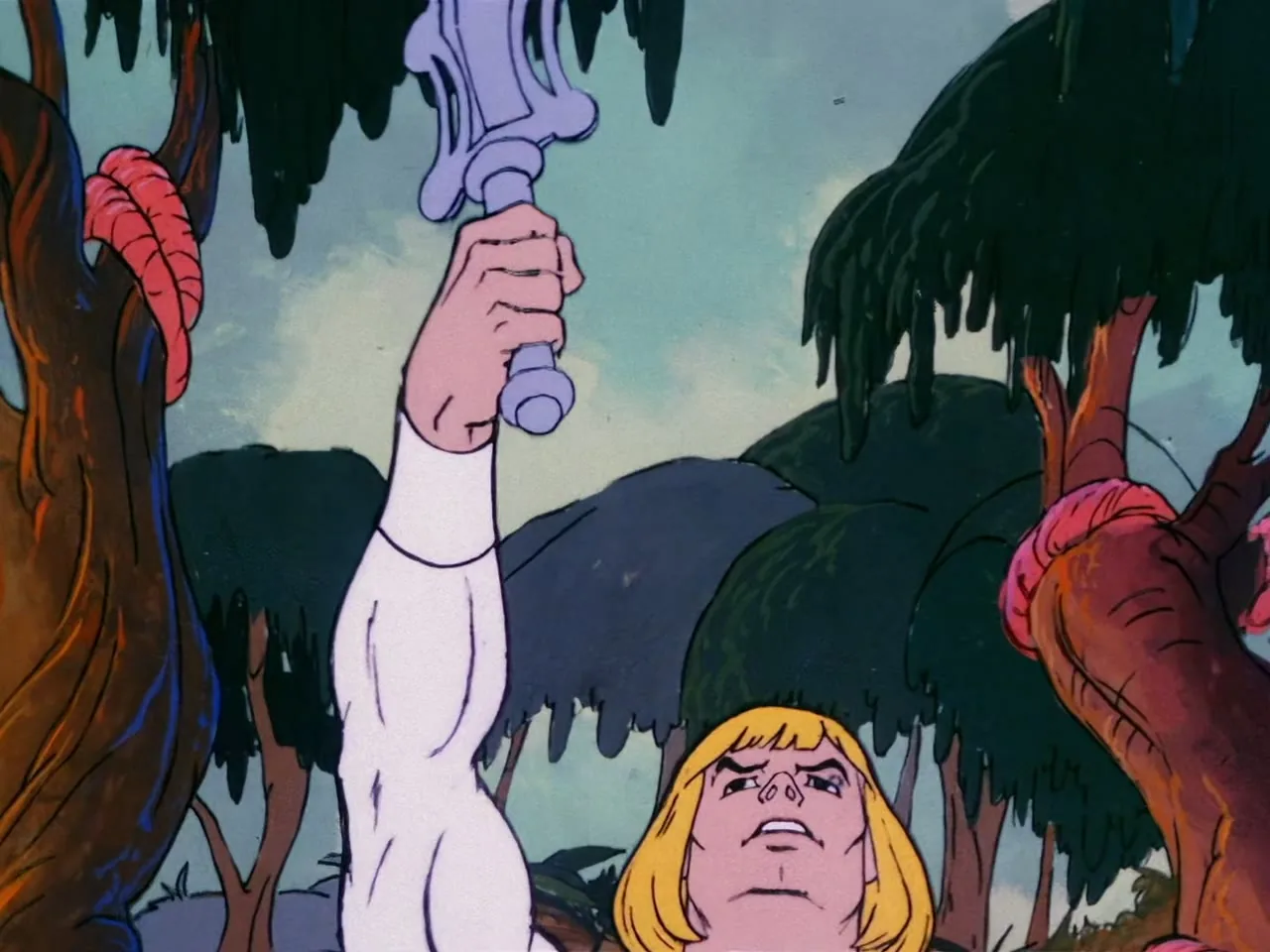
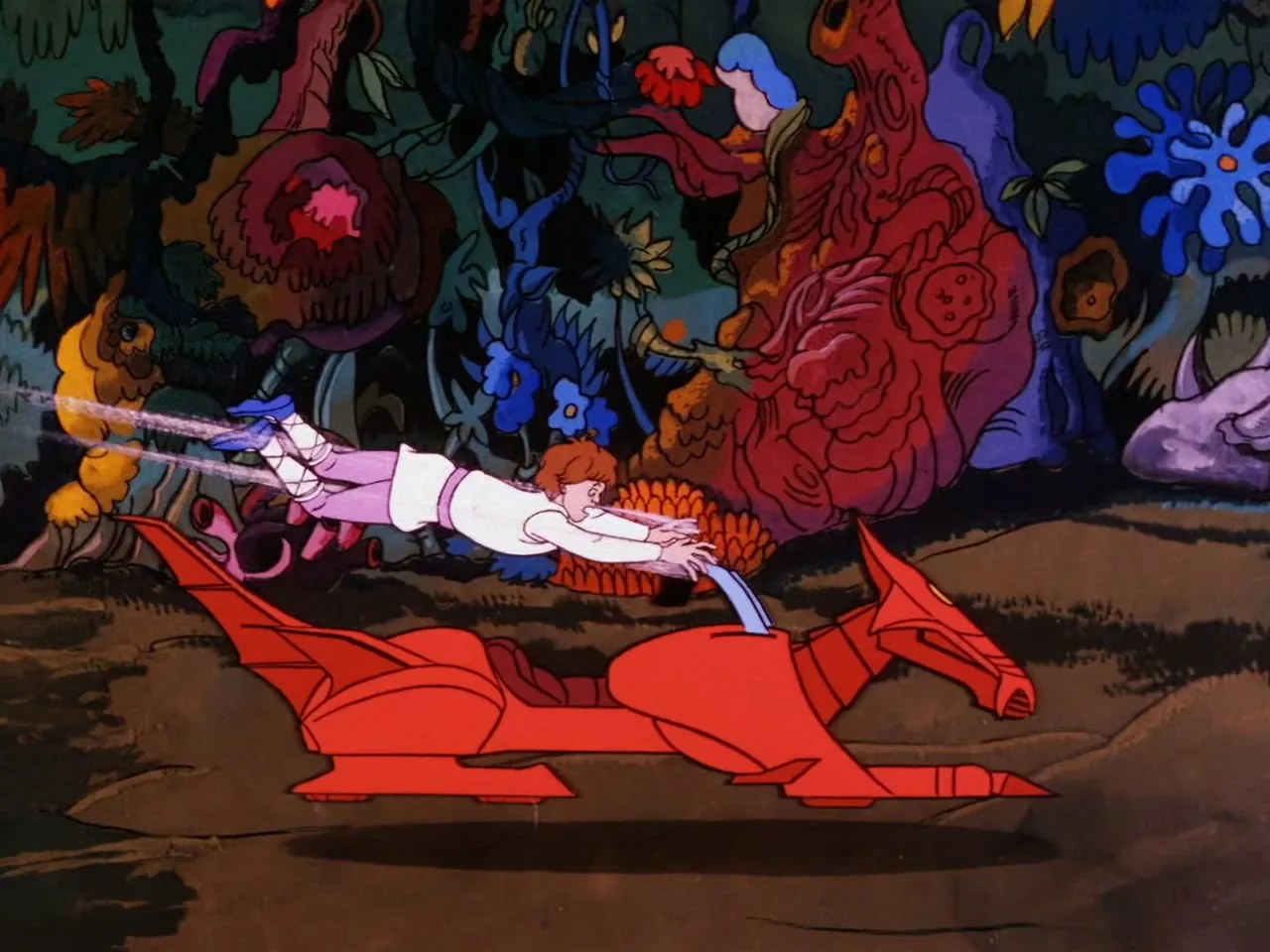
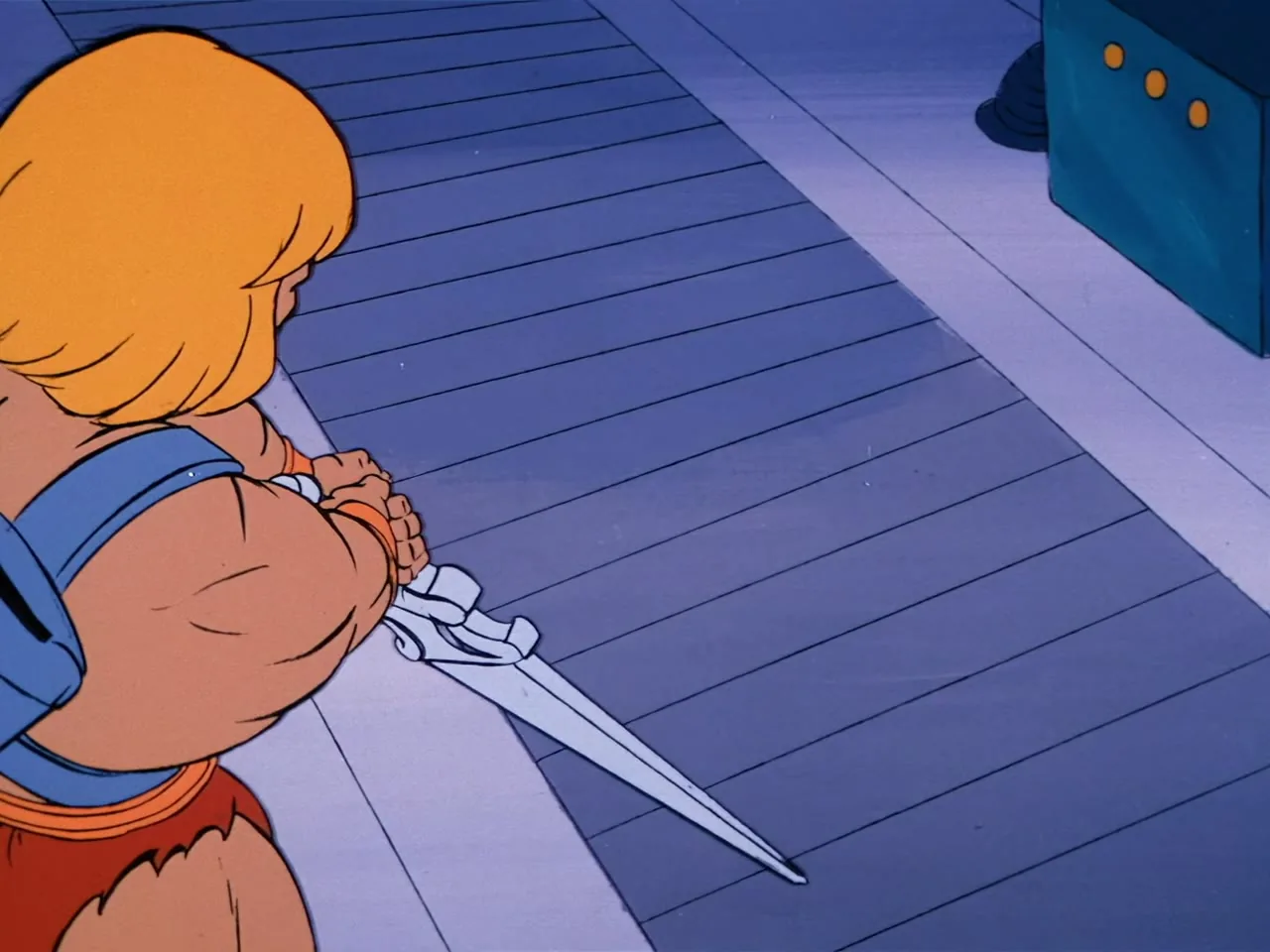
[1] The animation reuses Prince Adam's sword-draw sequence from earlier episodes and the leaping-Cringer shot from "One for All," standard practice for a Filmation season this deep into its run. Neither reuse undercuts the character work described above, since both come before the crash rather than after it.
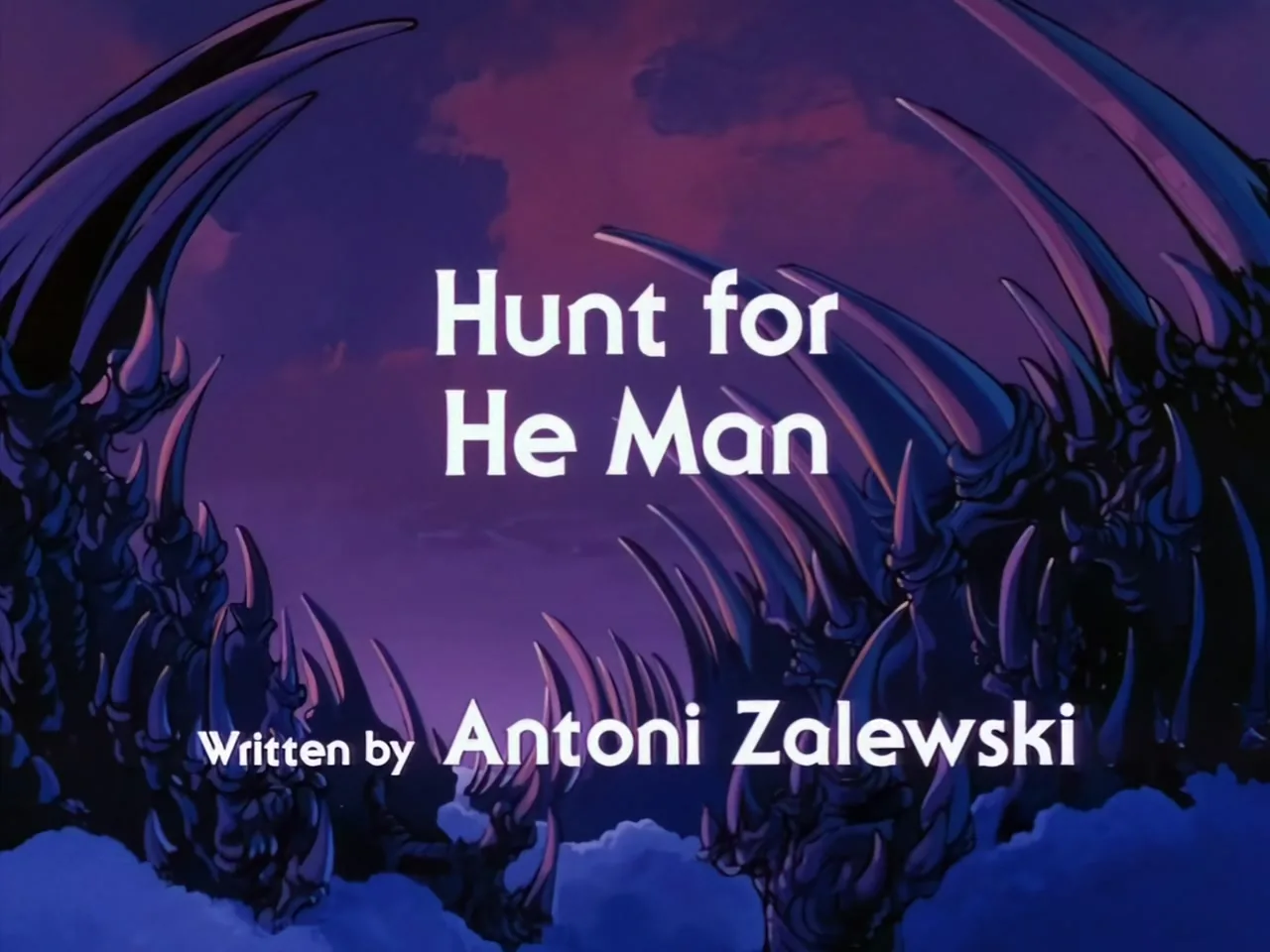
- Script approval came May 14, 1984, with a final revision dated June 12, 1984, and the episode aired that fall. The title card omits the hyphen in He-Man's name, rendering it "He Man." This episode is unusual in that Cringer stays by He-Man's side the entire runtime but is never transformed into Battle Cat, since He-Man is unconscious or too weak to draw his sword for most of it; none of Skeletor's Evil Warriors ever questions why Prince Adam's pet happens to be helping He-Man. Drak's village is burned down by Skeletor's Robot Hunters partway through, raising the stakes on his family's decision beyond the abstract. The healing tree that restores He-Man appears only this once on the series, an enormous grove of purple, tendril-like limbs with no explanation given for its power. Continuity: the animated sequence of Prince Adam unsheathing his sword is reused in Revenge is Never Sweet; the shot of Cringer leaping over the camera first appeared in One for All; and the running-and-diving sequence for He-Man was previously used in The Defection, Search for the VHO, and Jacob and the Widgets. Animation goofs: when Whiplash activates the freeze ray with his tail, Skeletor's laugh plays in Trap Jaw's voice, and the freeze ray itself is shown as a red electrical charge rather than the white beam used everywhere else it appears.
DISCUSSION
Join the conversation.
Comments below are mirrored on the heman.org forum. Sign in once, post anywhere.