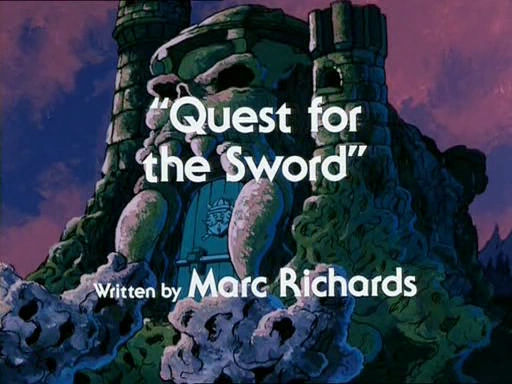
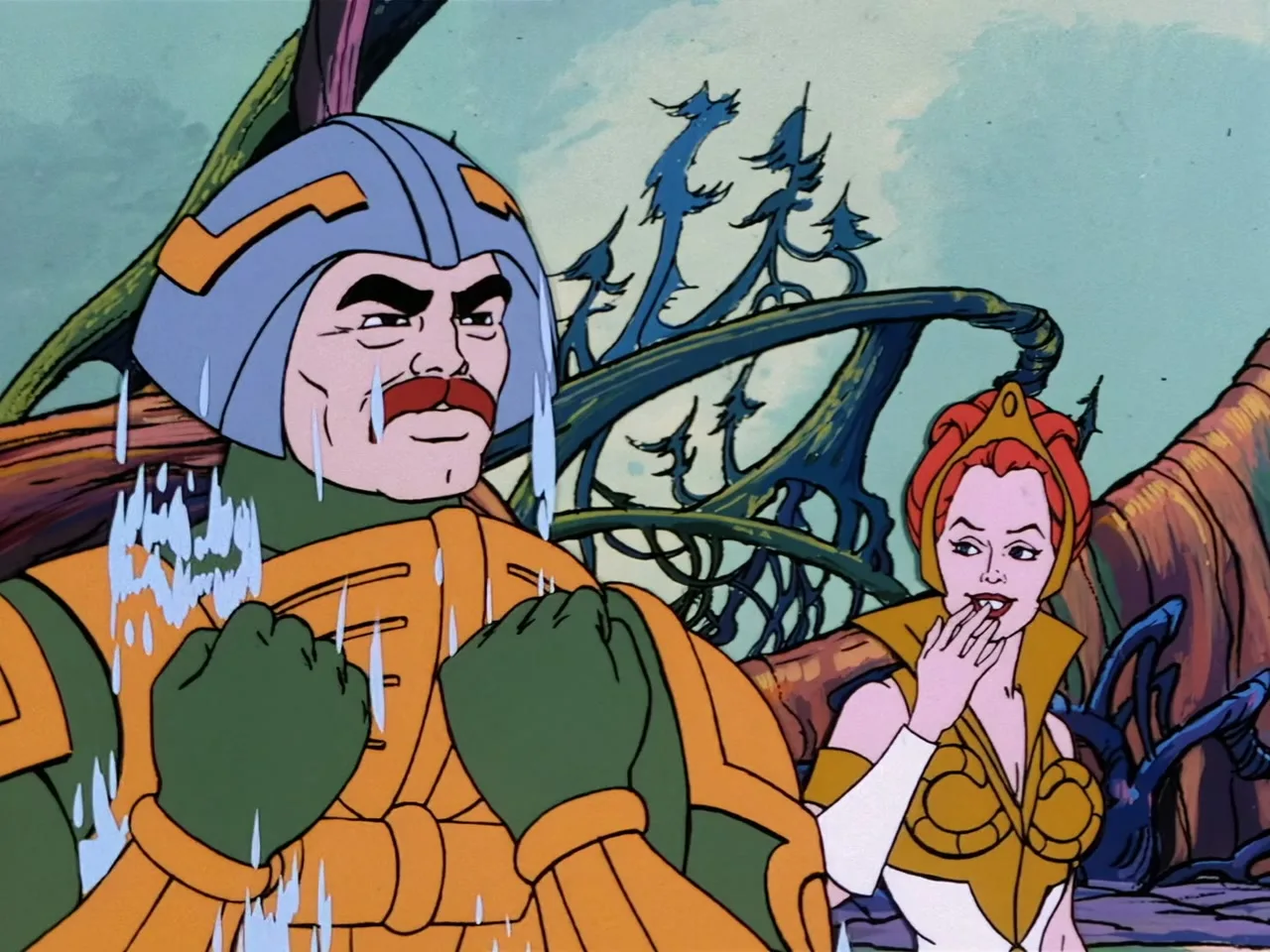

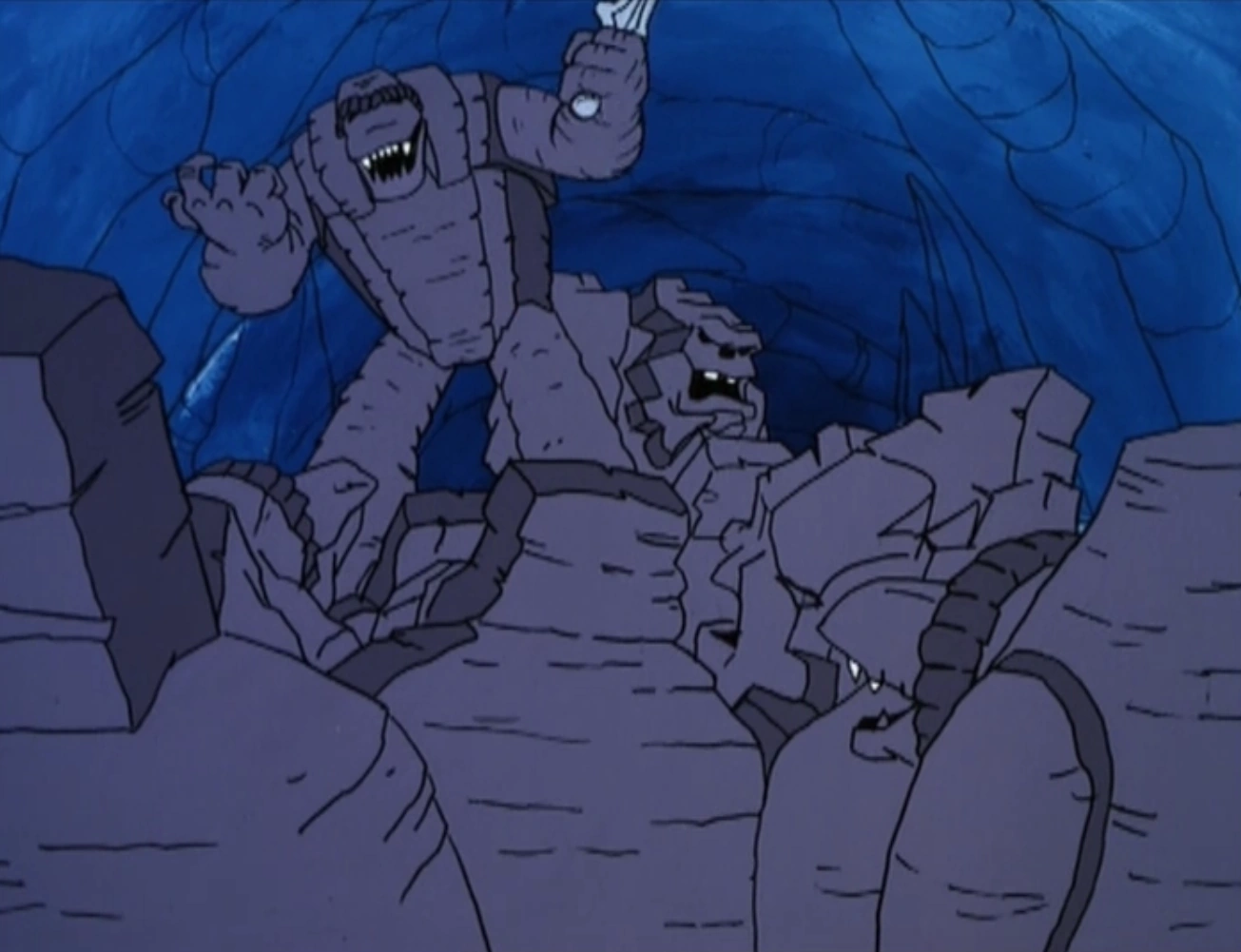
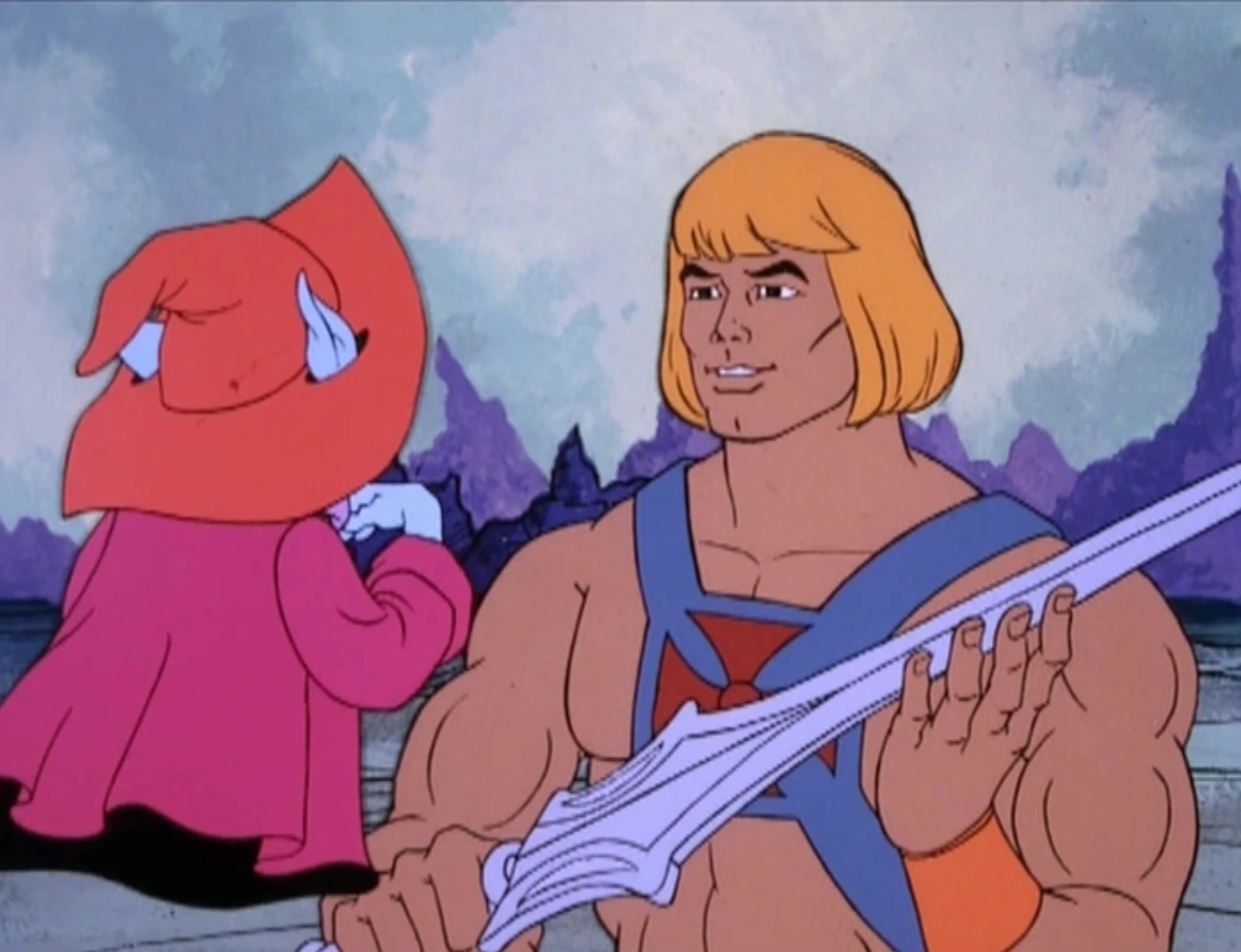
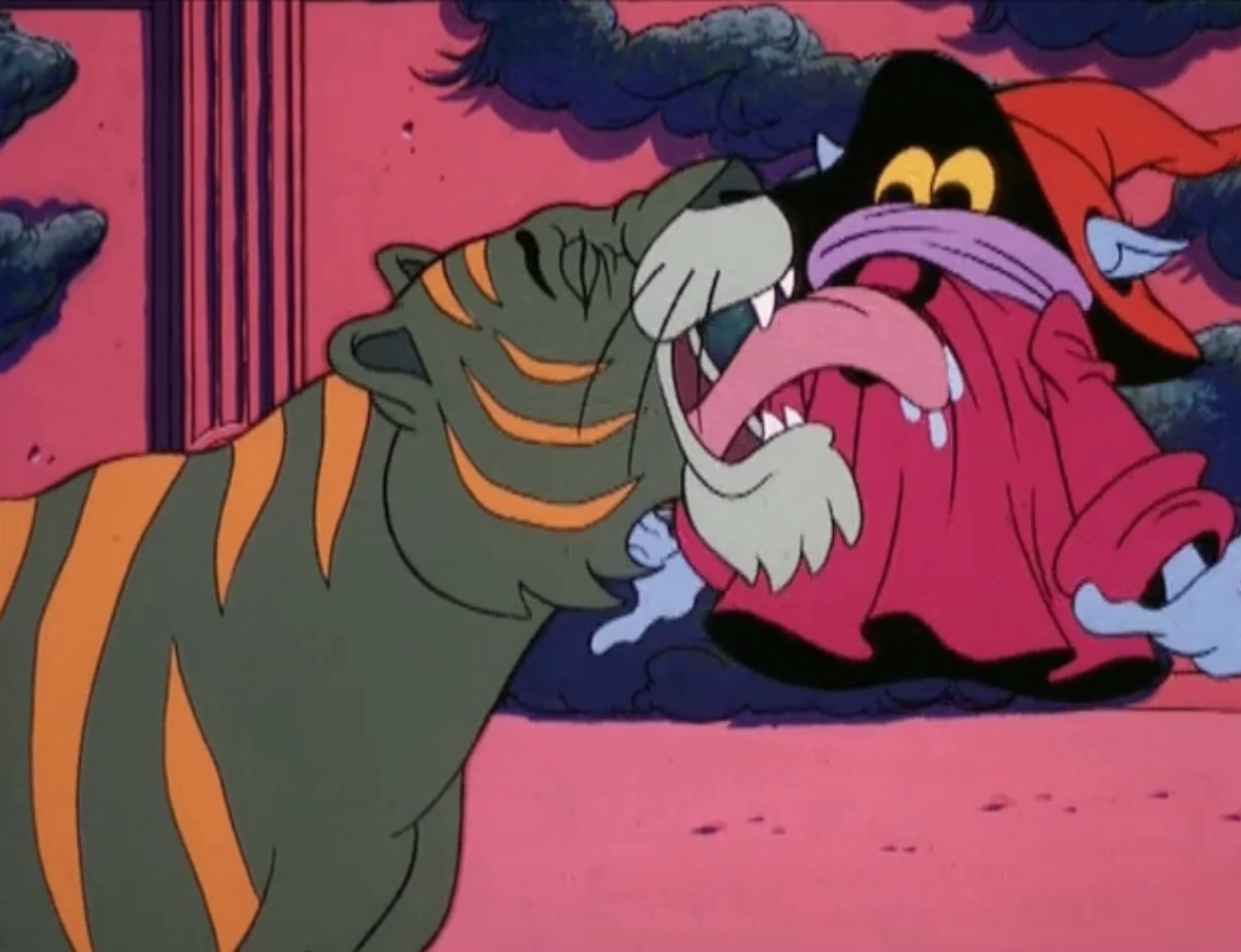
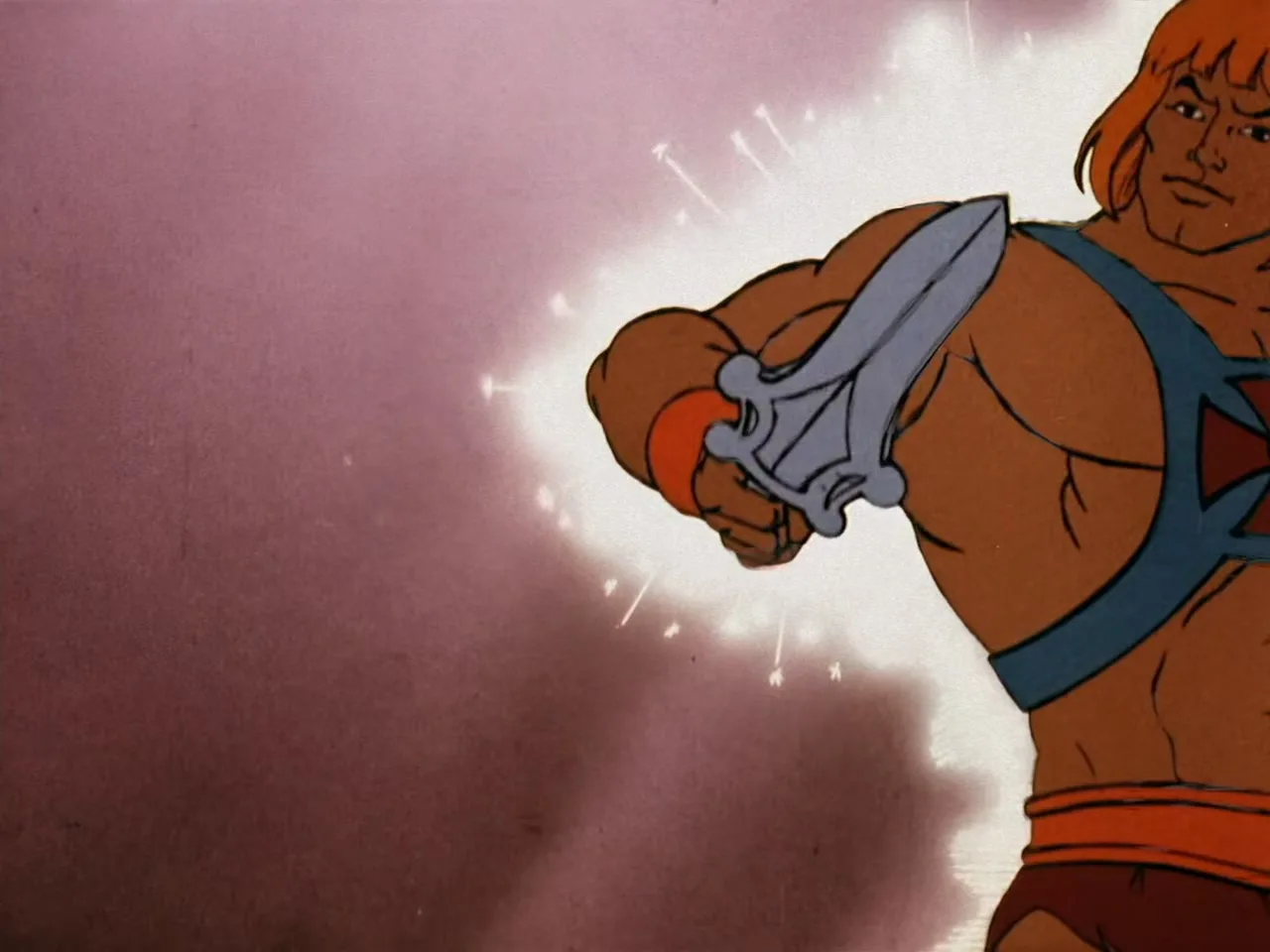
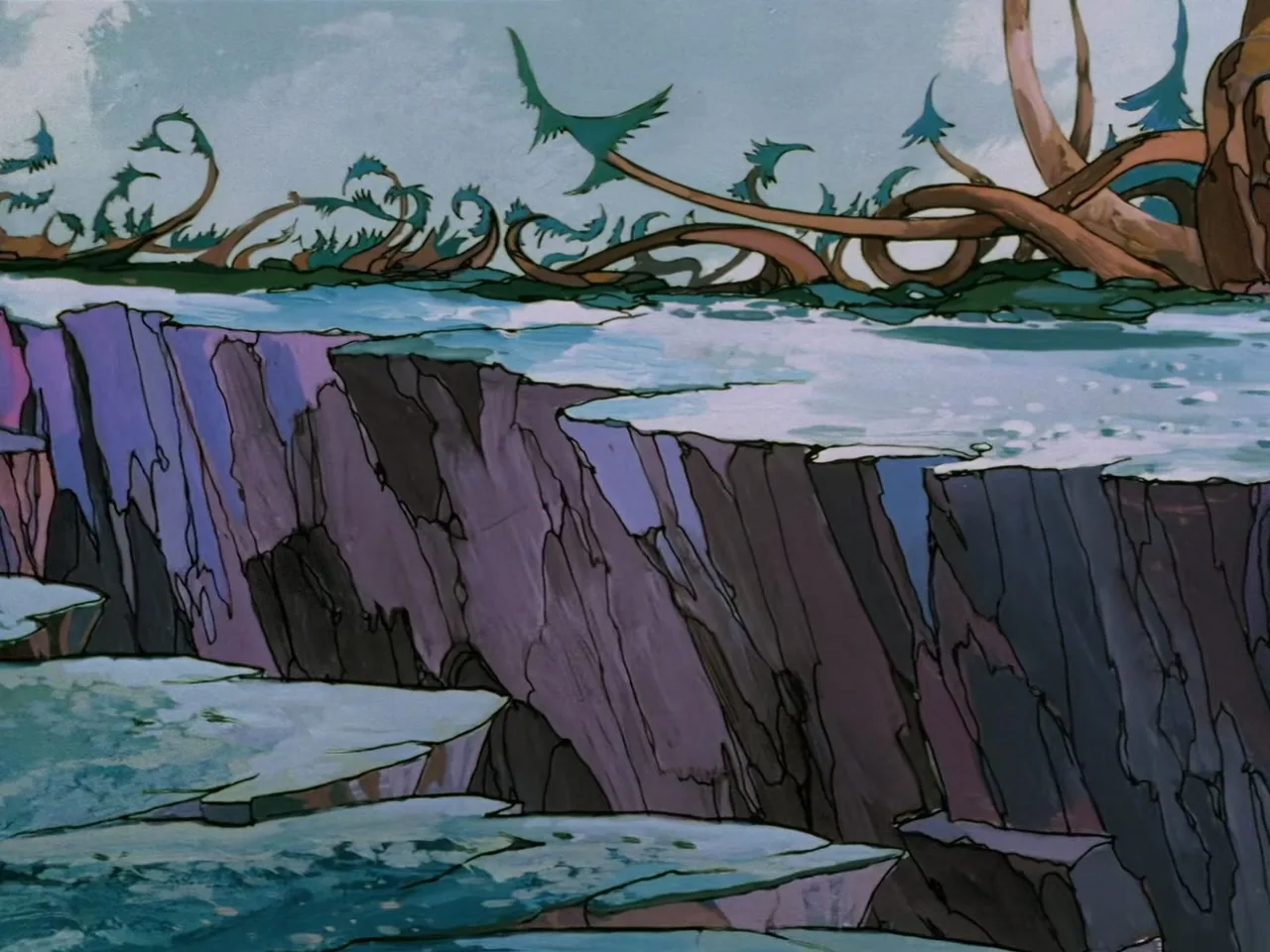
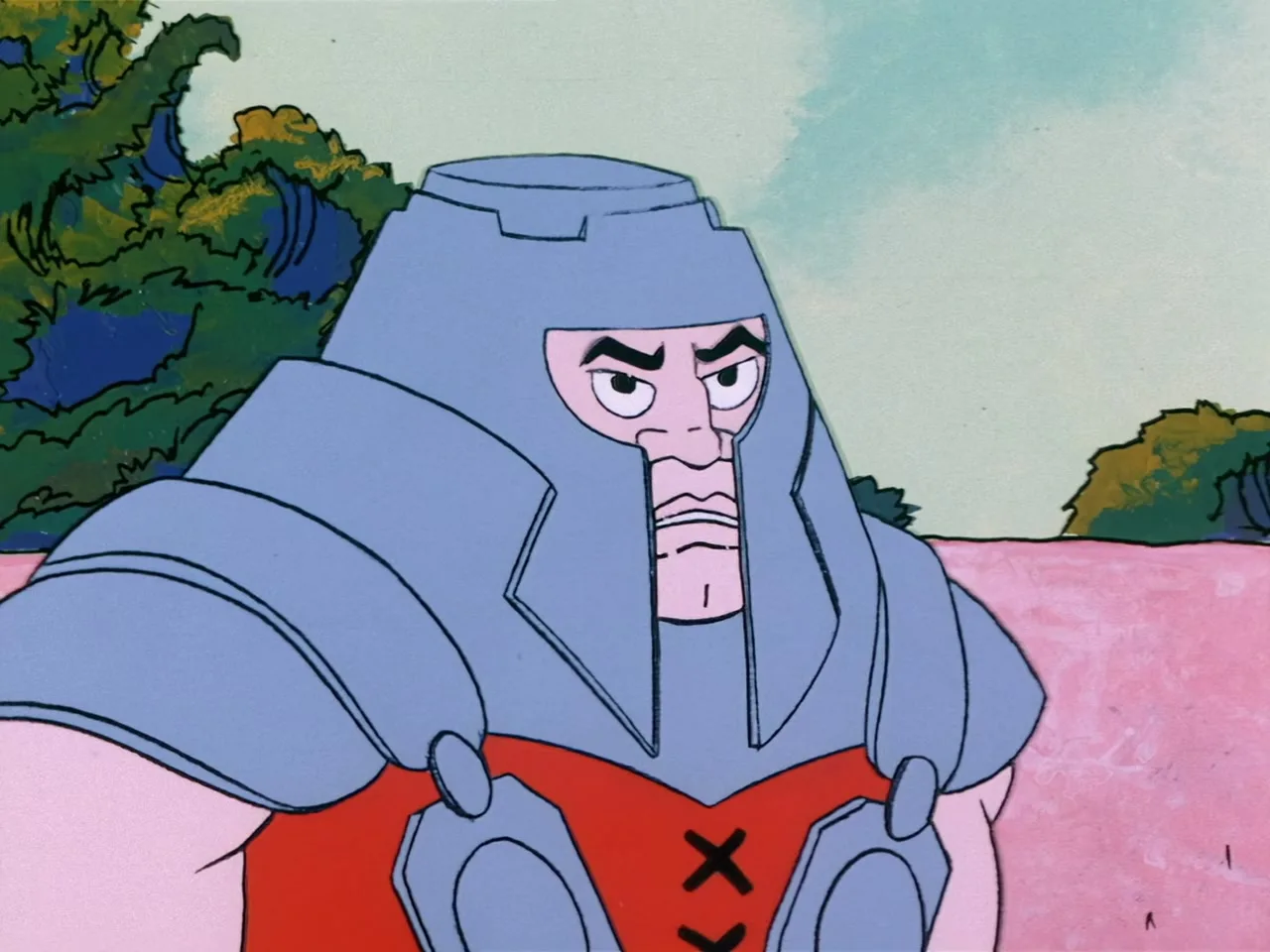
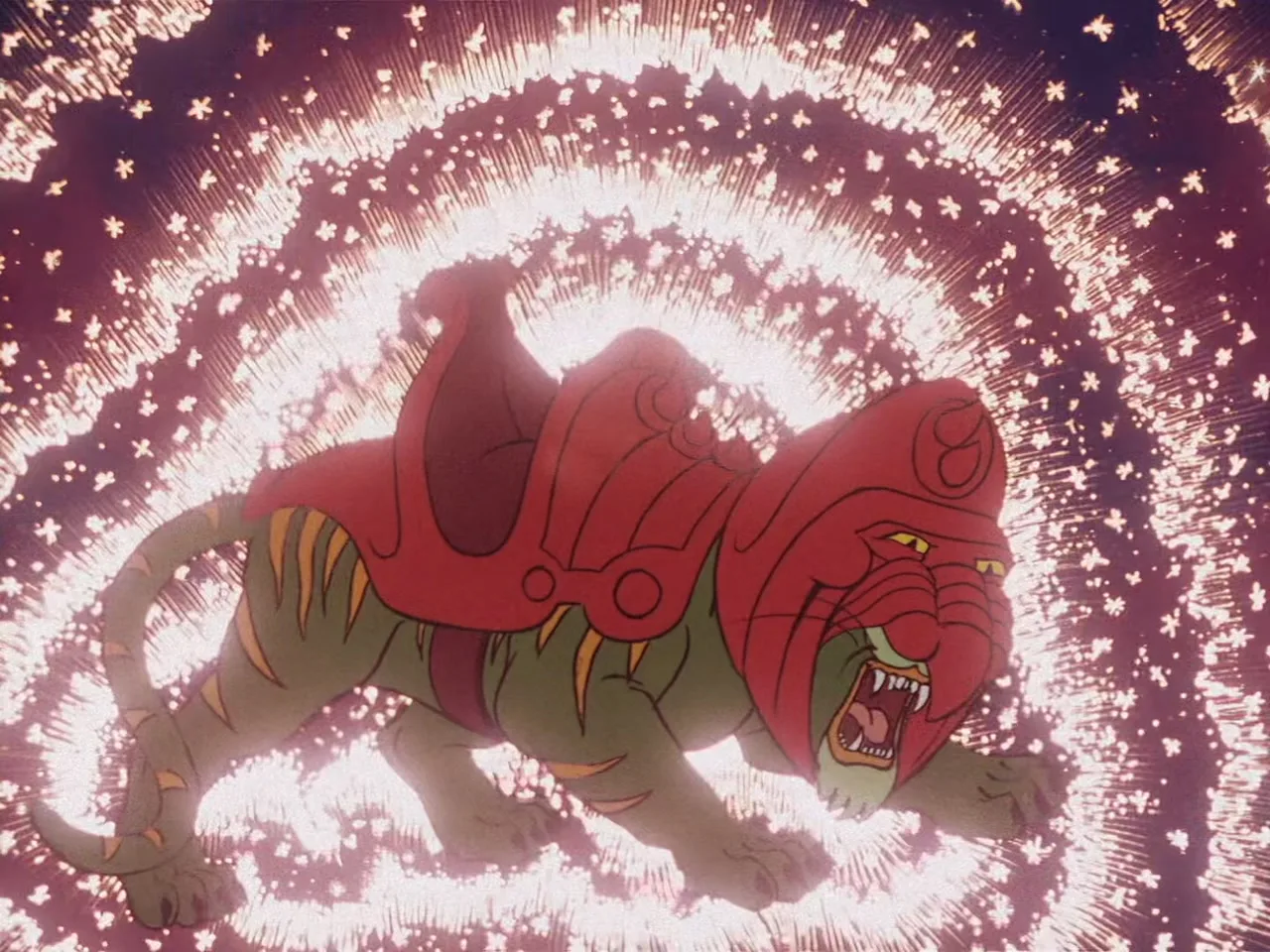
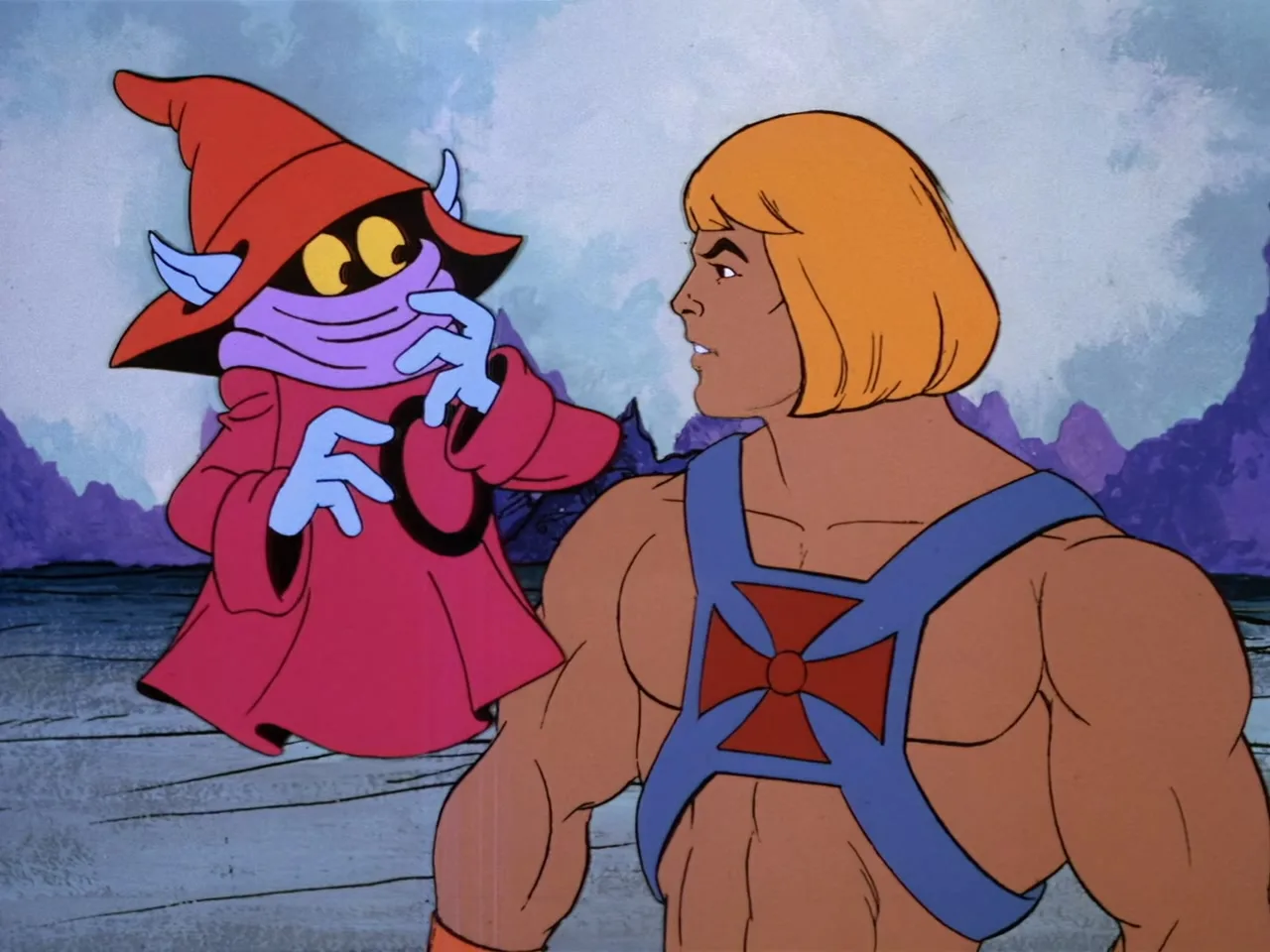
A lakeside picnic turns into a crisis when a sudden volcanic eruption tears open a gorge, cutting two children off from their mother. Adam and Cringer transform to help, and He-Man uses a length of vine to pull the crack's edge back together long enough for Man-At-Arms to carry the children across. In the chaos, He-Man loses his grip on the vine, and by the time he flies back across in the Wind Raider, a Rock Man named Rabar has already claimed the fallen Power Sword for his own.
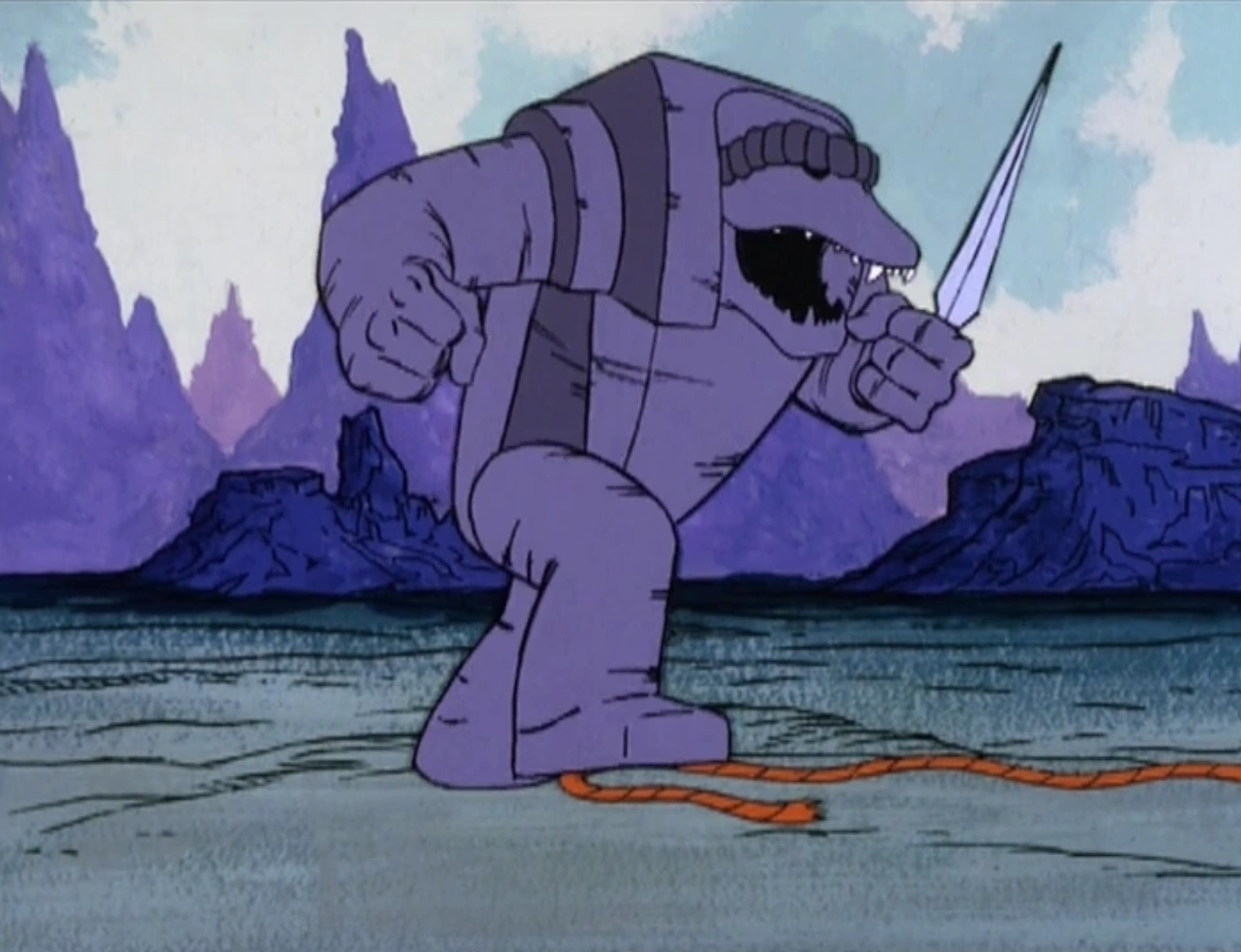
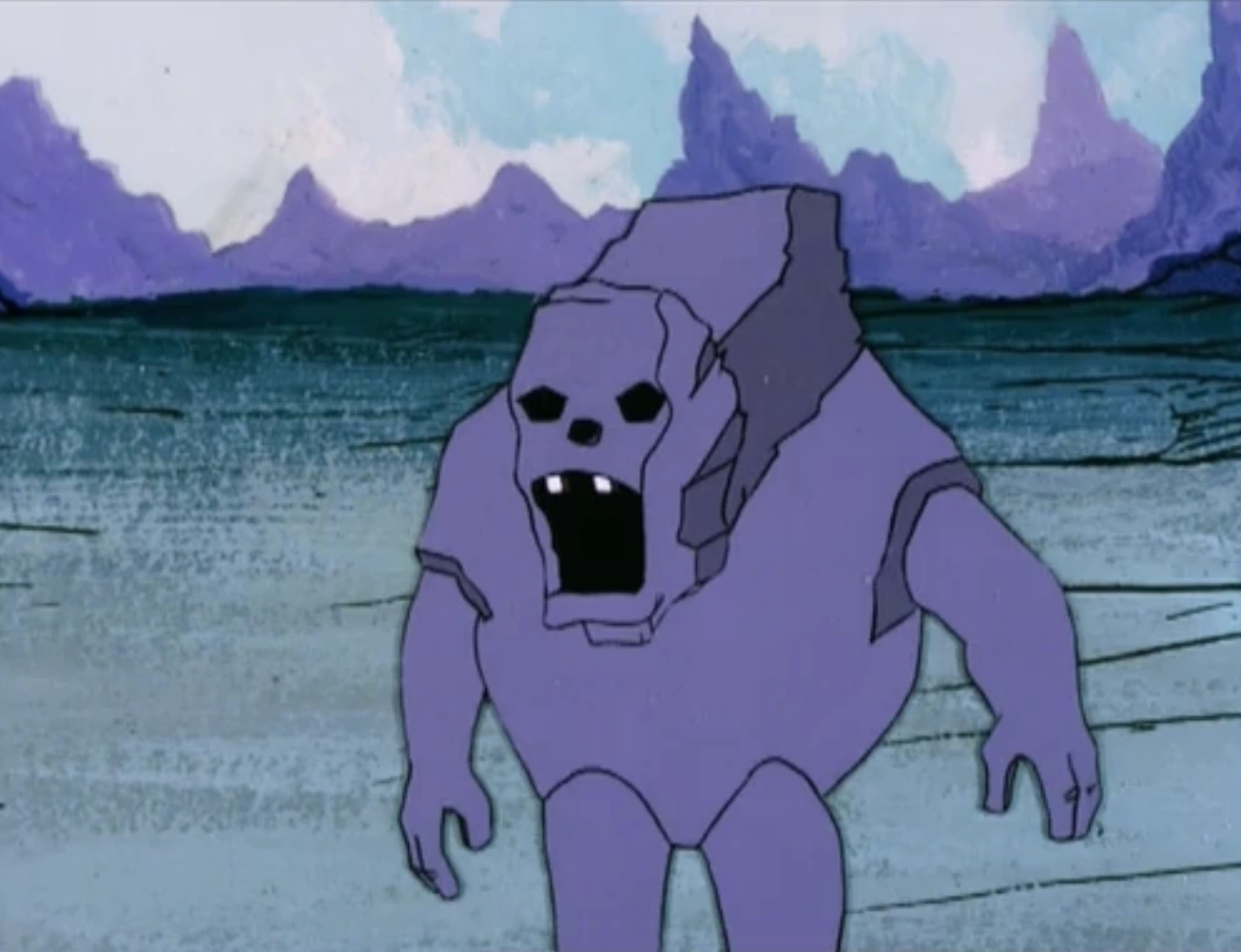

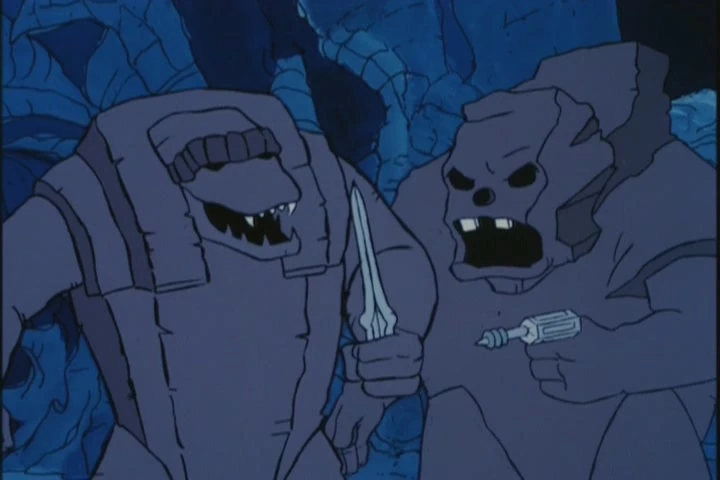
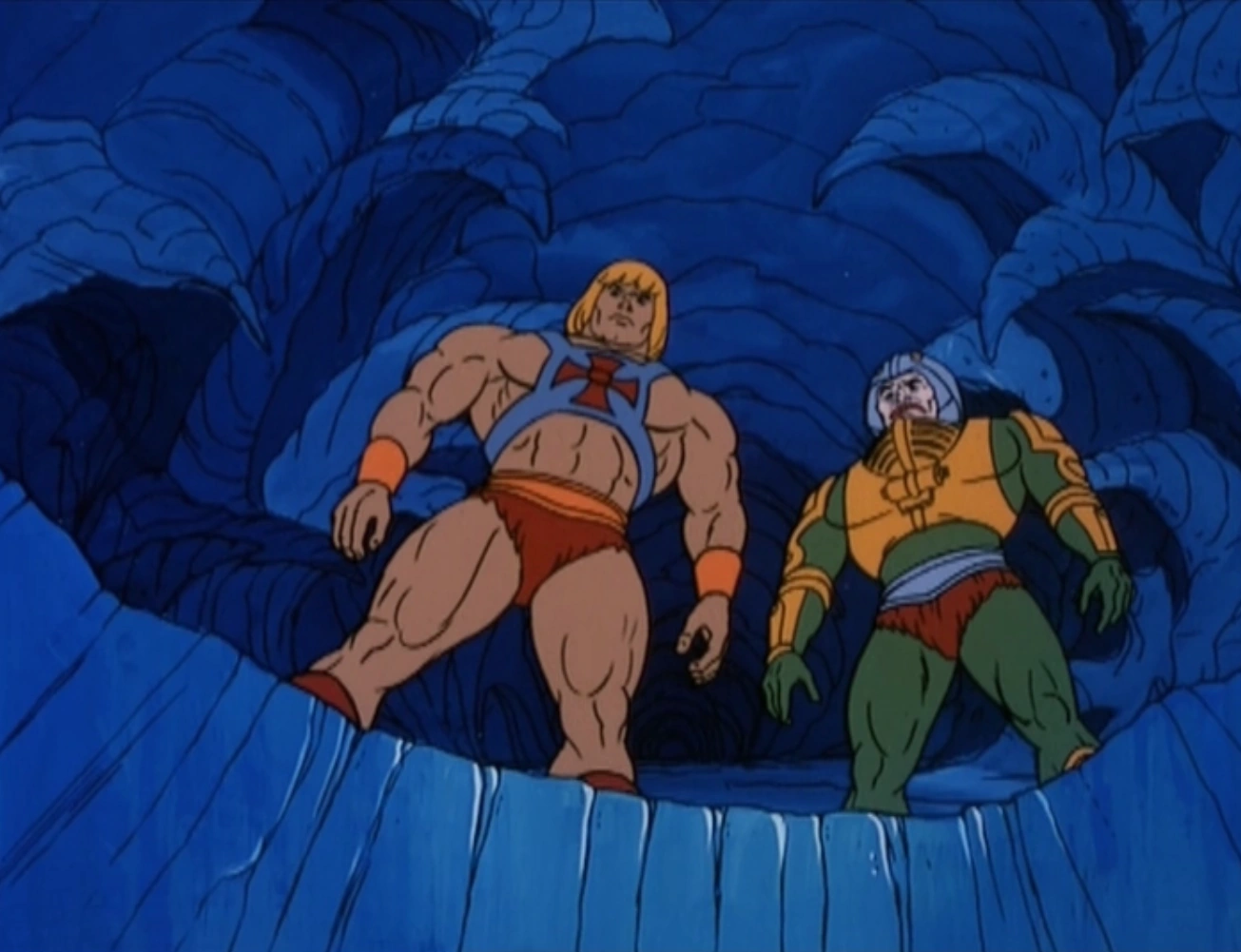
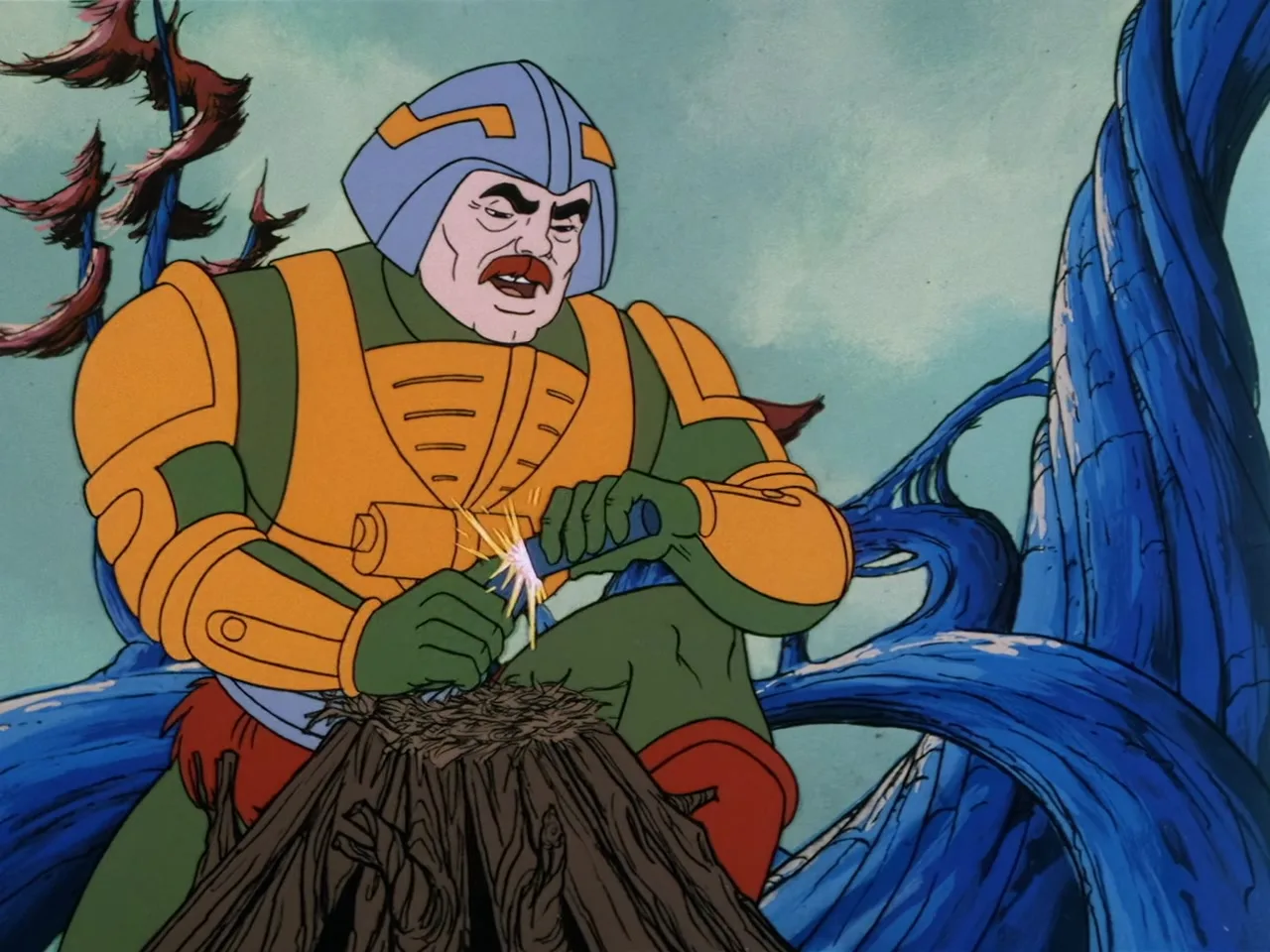
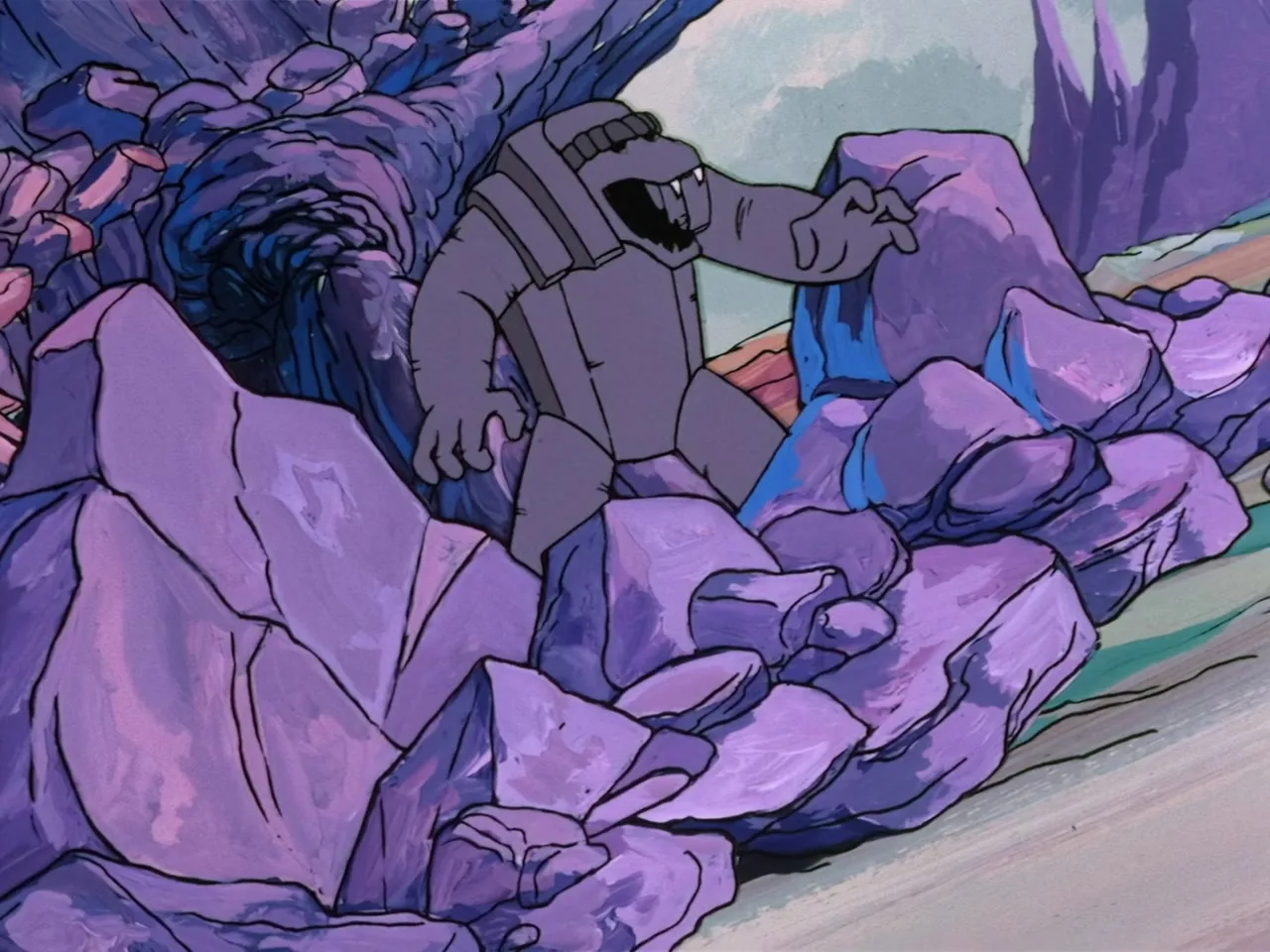
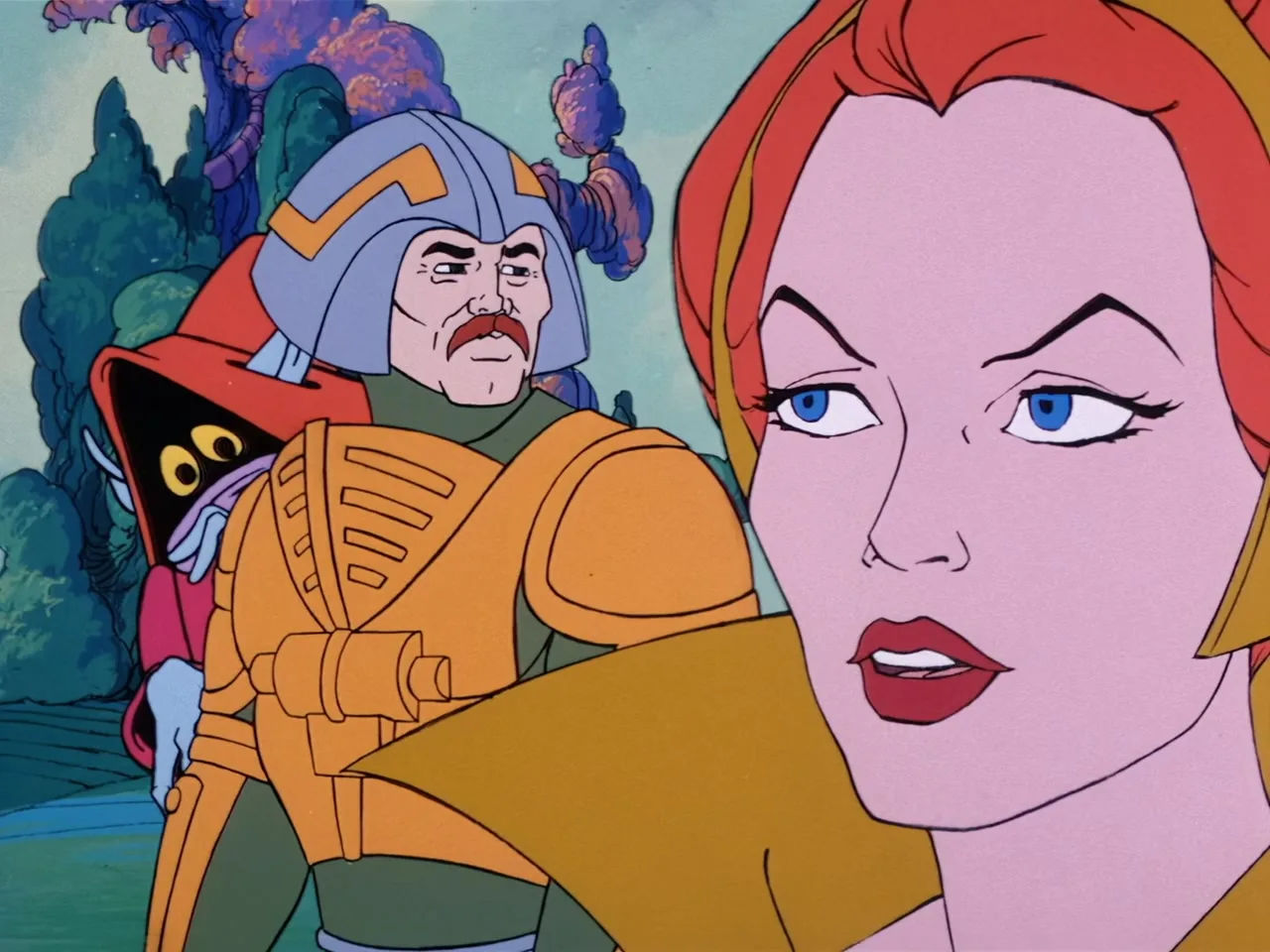
Rabar refuses to give it up, and a second Rock Man, Togar, joins the fight before the pair retreat into their cave and seal the entrance behind them with a rockslide, sword and all. Without it, He-Man has no way to turn back into Adam, a problem Orko and Man-At-Arms realize before He-Man does. They return to the palace for help, picking up Ram Man along the way, and dig back into the Rock Men's lair through a side passage Orko has already found on his own.
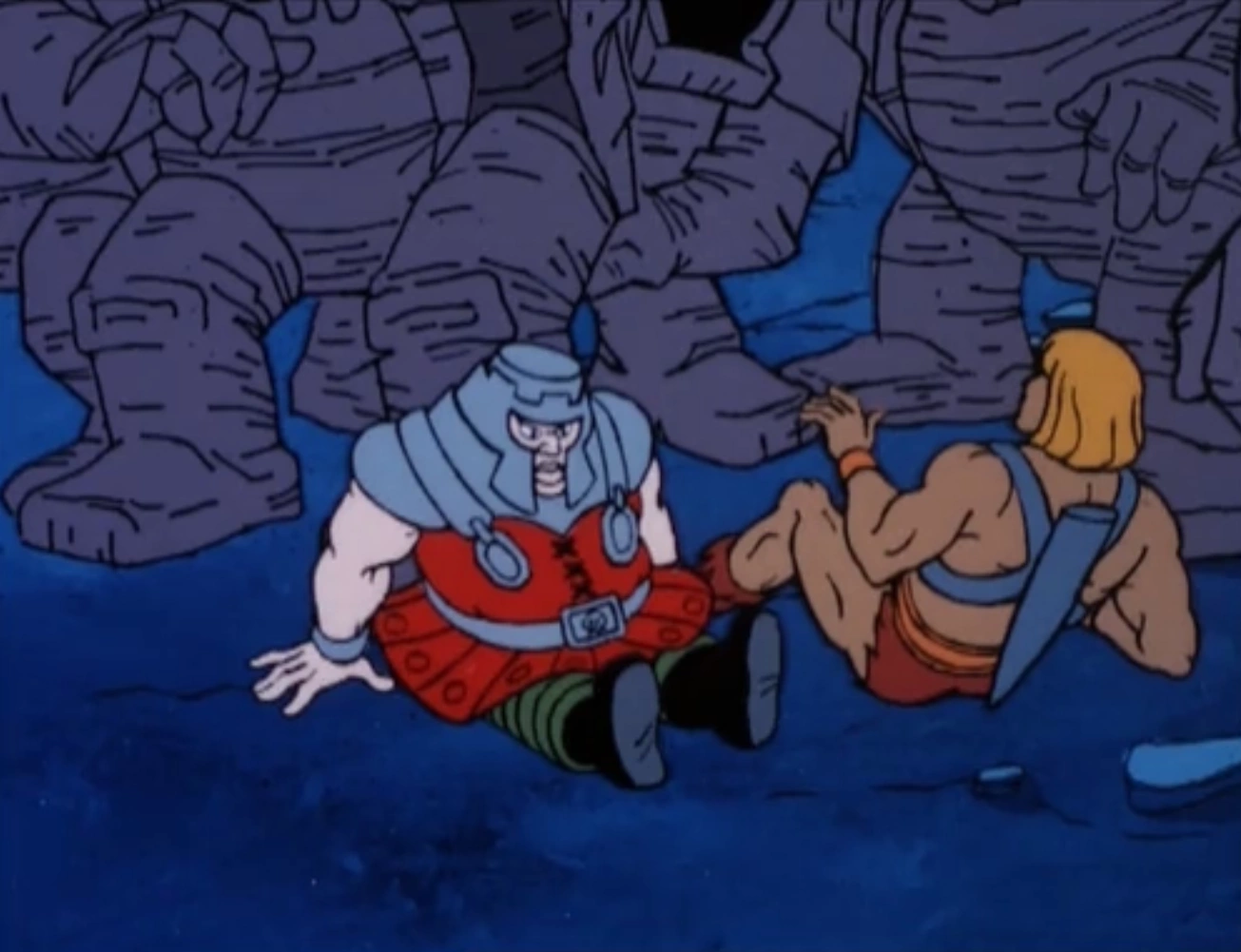
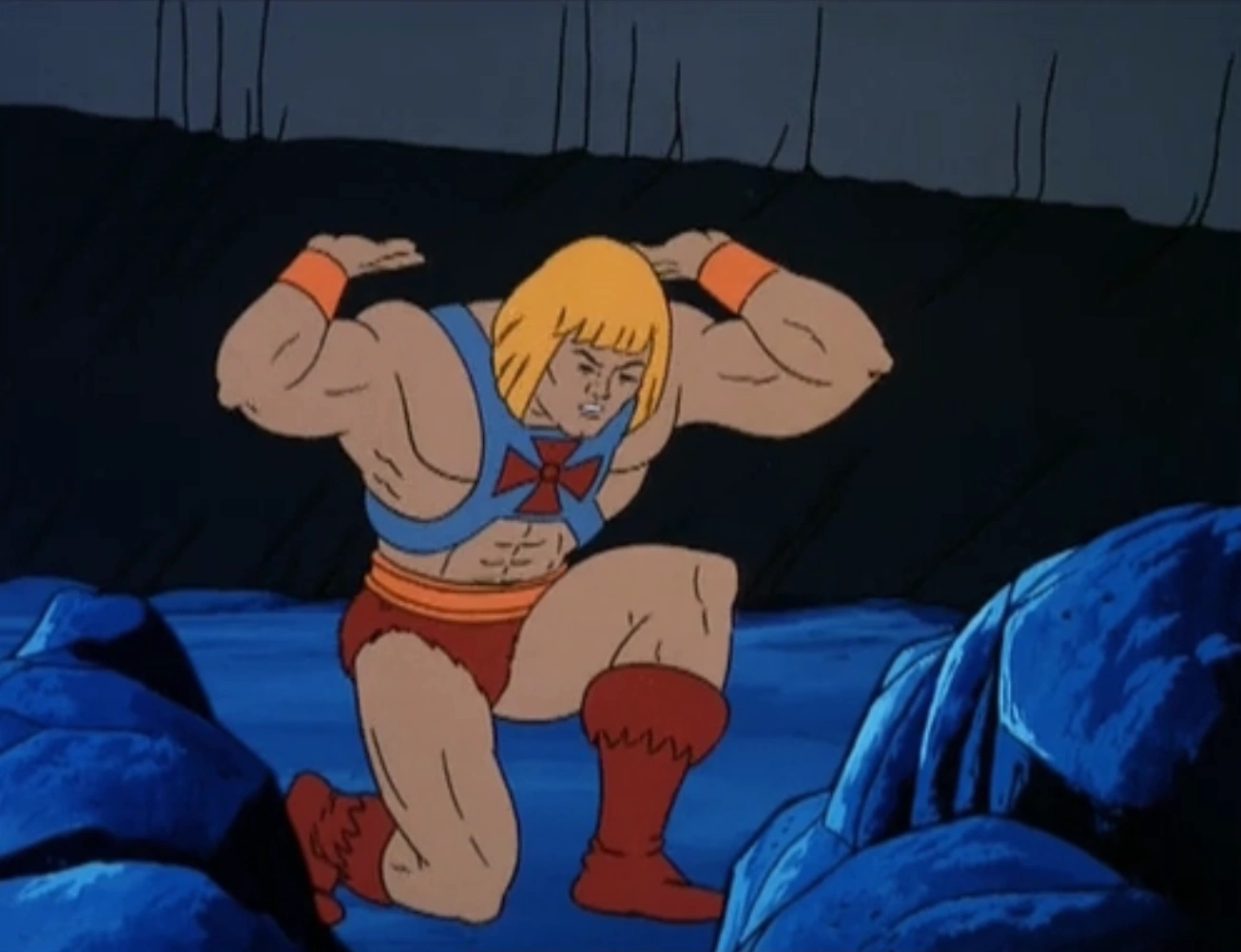
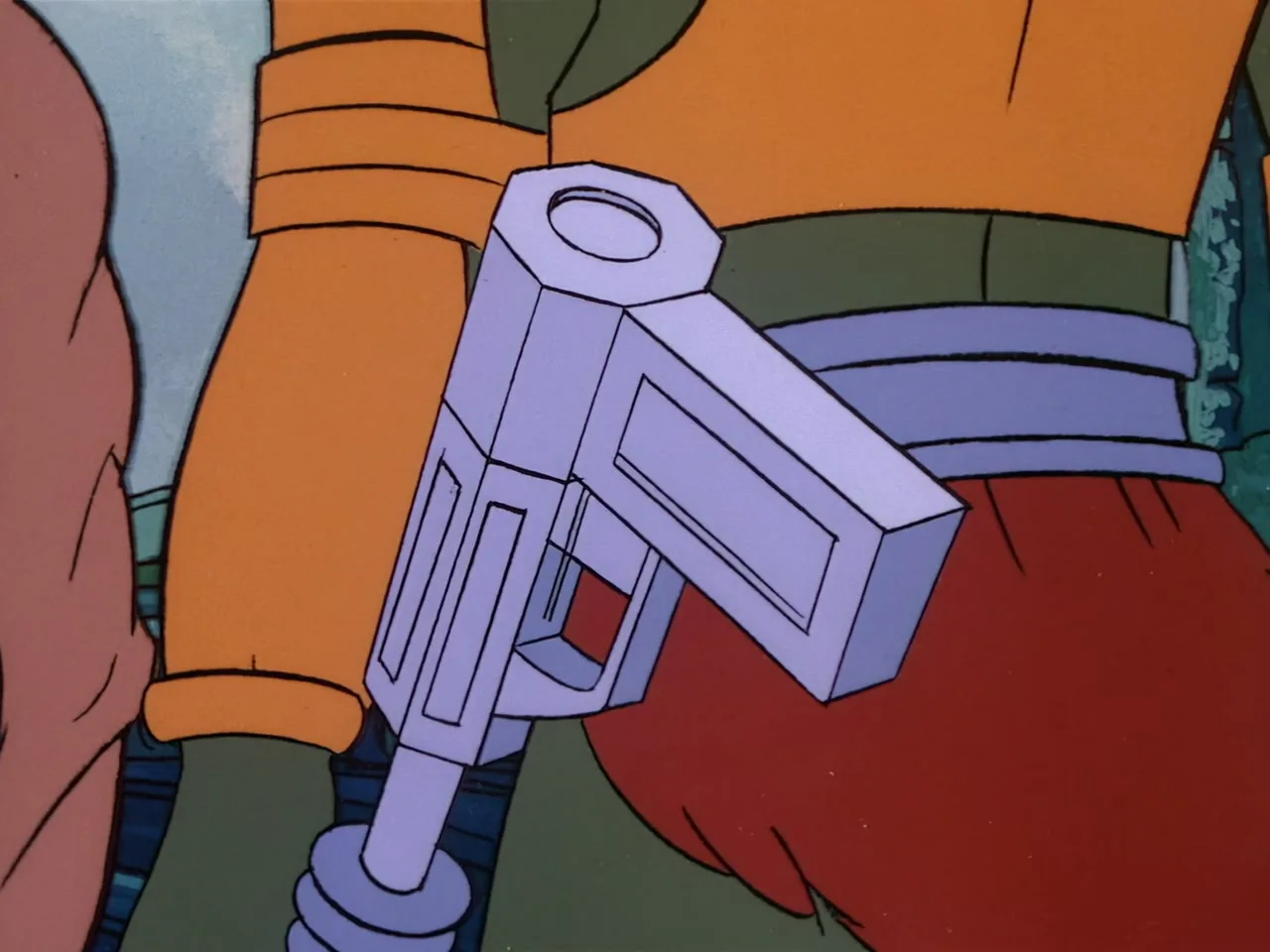
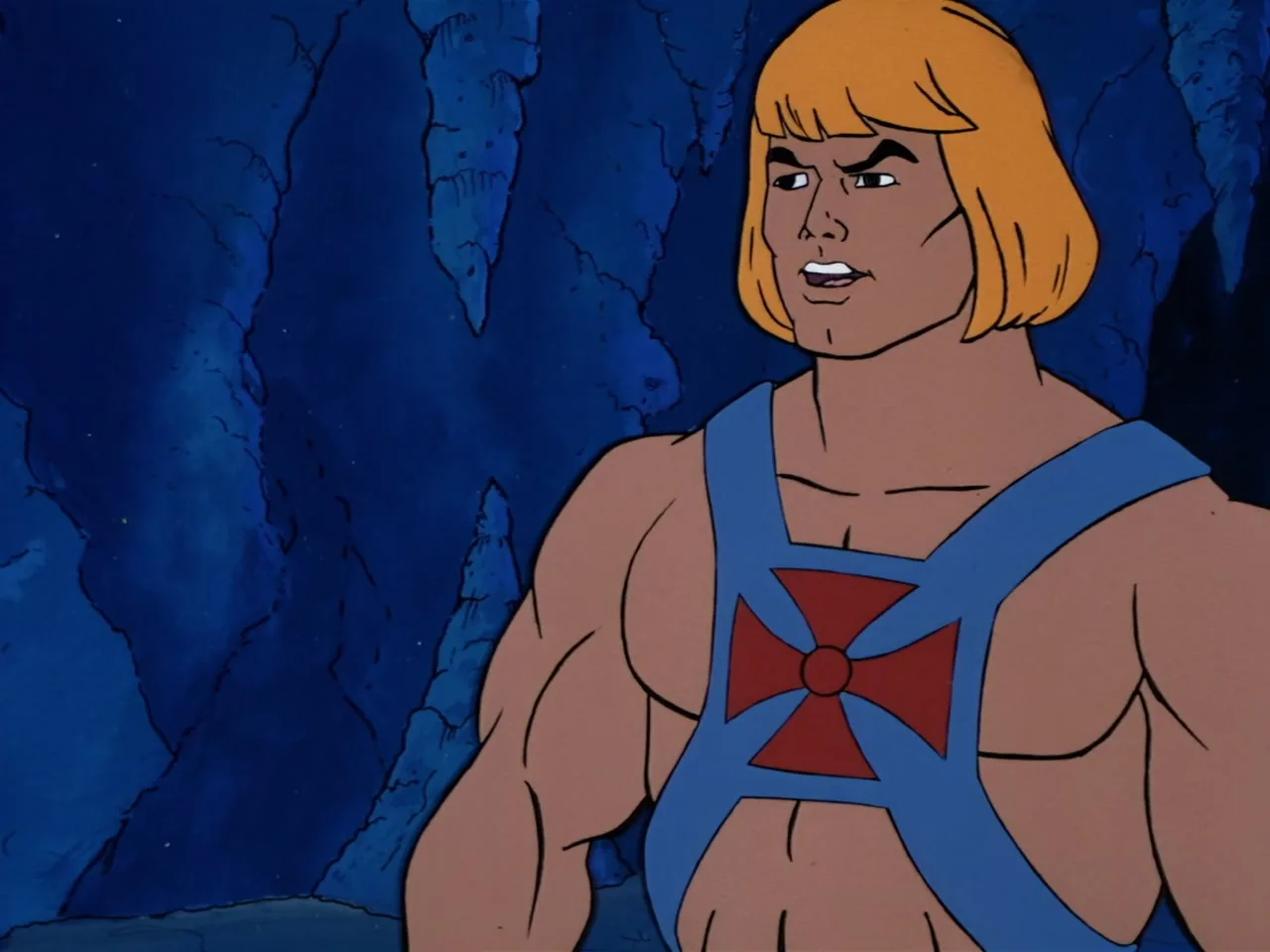
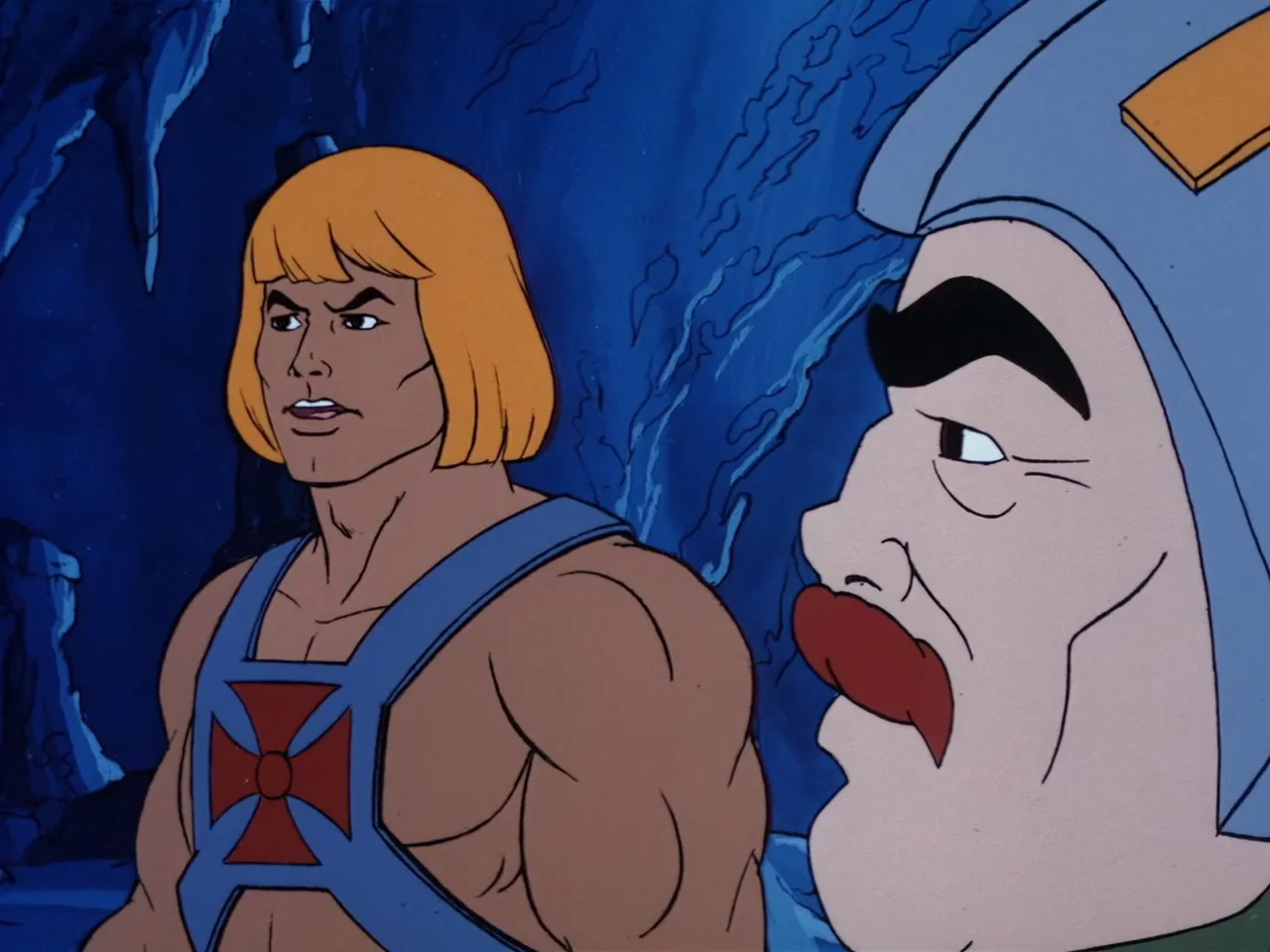
Inside, cave paintings reveal a gentler side to a people who have only shown the heroes their temper so far, and near a glowing, bottomless pit at the cave's center, Rabar has declared himself the rightful leader simply by virtue of holding the sword. A rescue attempt goes wrong when Togar grabs Man-At-Arms's laser and accidentally blasts out the foundation holding up the cavern roof, forcing He-Man to hold the ceiling up by main strength while the others scramble to shore it up and Orko talks the Rock Men into helping rather than fighting.
With the cave-in averted, Rabar and Togar decide that weapons caused all the trouble in the first place and throw both the sword and the laser into the pit, sealing He-Man off from his own identity, or so everyone believes. The Rock People choose to wall themselves off from the surface world for good, tearing down their own ladders, while Orko quietly slips away through his side entrance, dives after the falling sword, and produces it from his hat just outside, letting Adam reappear at the palace before Teela ever gets the chance to give him the scolding she had been saving up all day.
He-Man: "It's a good thing Orko got my sword back today, or Prince Adam might never have been seen again. The Rockman who took my sword thought it made him a leader, but he was wrong. A sword or any other symbol doesn't make a person a good leader. What does, is intelligence, respect for others and an unselfish desire to do good. People are proud of a leader with those qualities. So if you develop them in yourself, you could become a good leader too. See you soon."
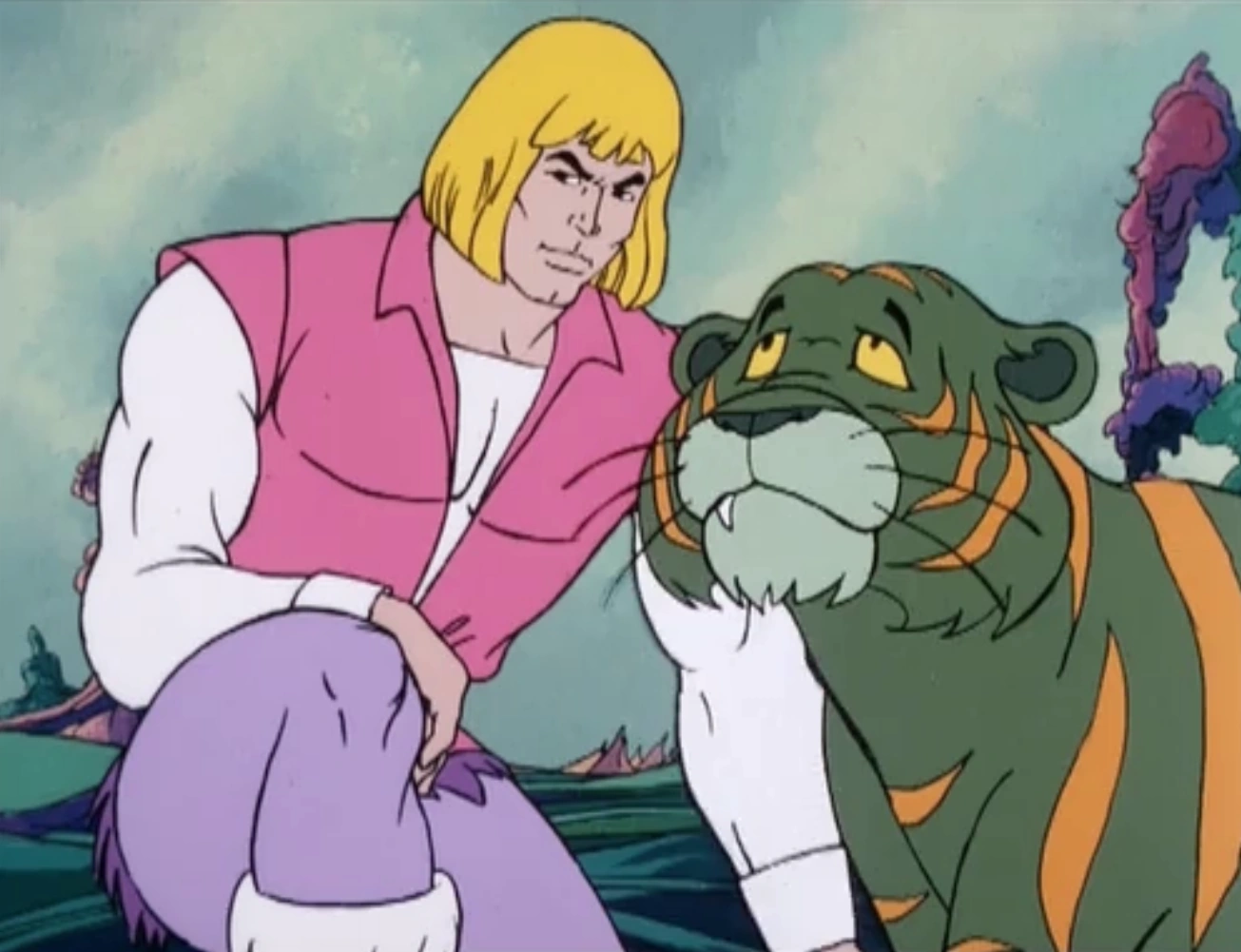
John Erwin as He-Man/Prince Adam and Ram Man
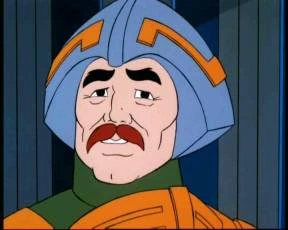

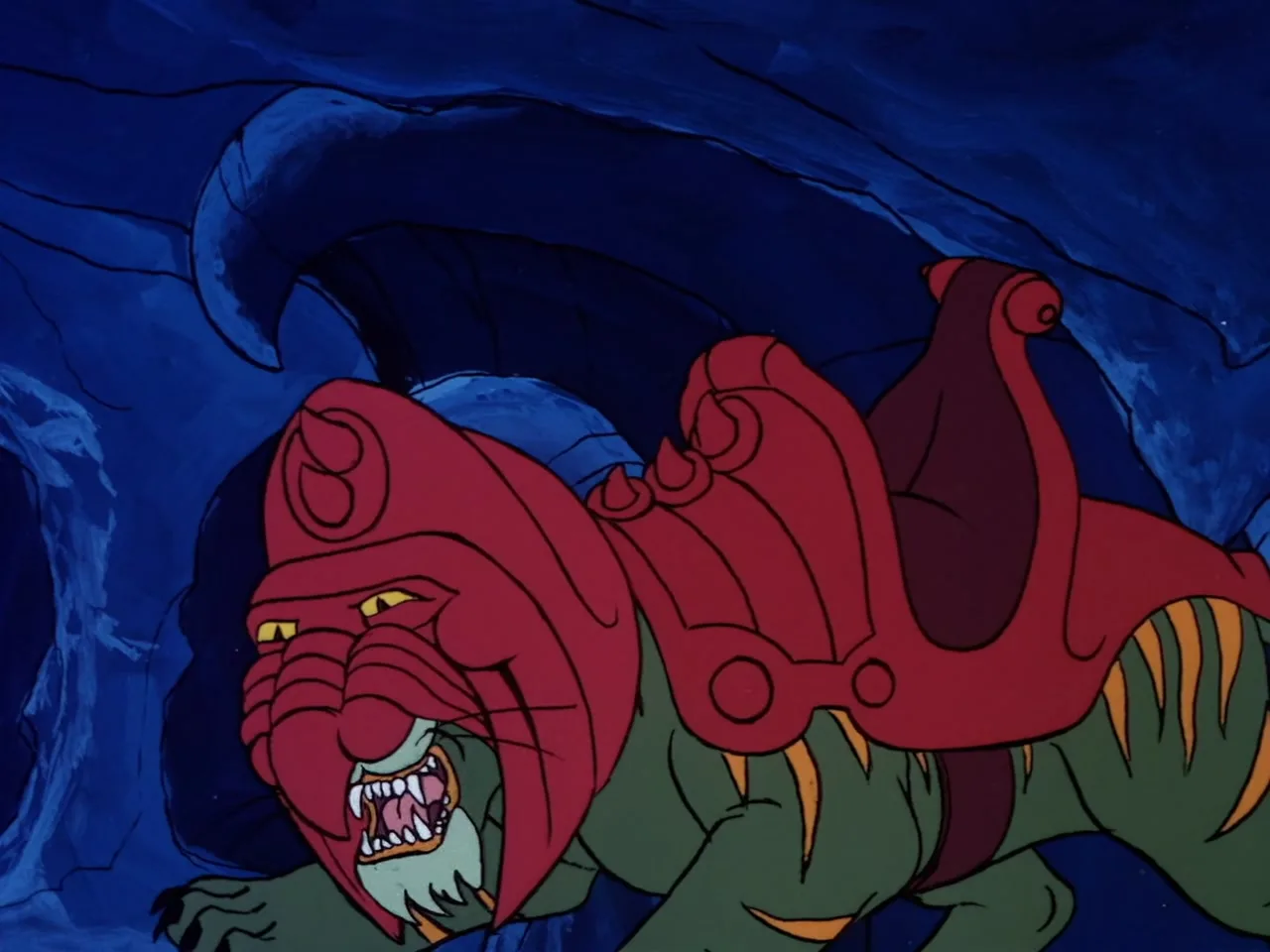
Alan Oppenheimer as Man-At-Arms. Cringer and Rabar
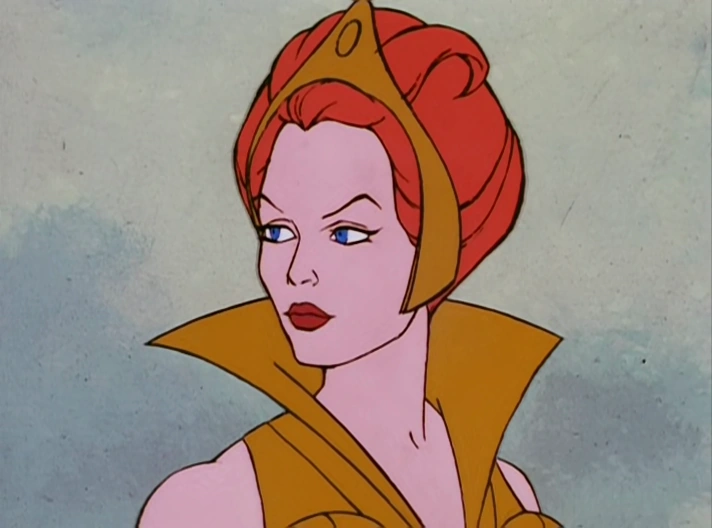
Linda Gary as Teela, mother and young girl
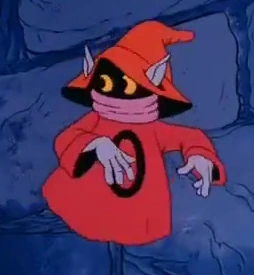
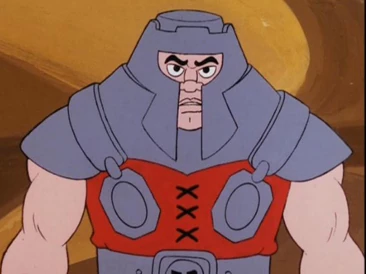
Lou Scheimer (credited as Erik Gunden) as Orko and Togar
"I'm sure that once I've gotten my sword back, I'll be able to produce Adam."
― He-Man
A sword does not make the man who holds it. "Quest for the Sword" spends twenty-two minutes proving that twice over, once for a villain and once for a hero. Marc Richards' script opens on the most ordinary beat the series has: a picnic, a squabble over firewood, Orko showing off for two children. The volcano that interrupts it is almost incidental. What matters is what falls into the crack it tears open, because once Rabar the Rock Man claims the Power Sword for himself, the episode has its real subject: what a symbol of power is actually worth to the person holding it.
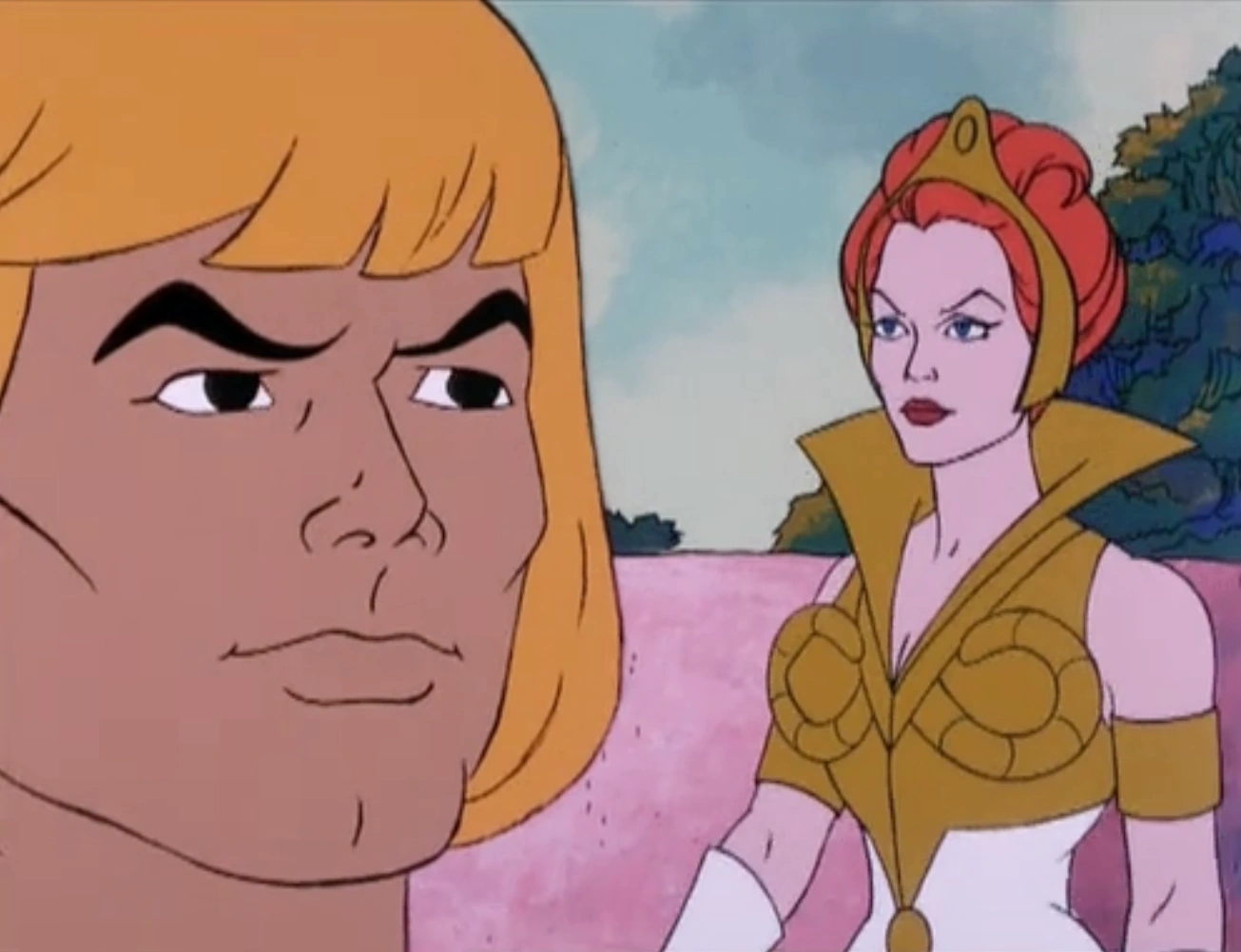
Rabar's logic is blunt, and inside his own cave it is persuasive. He has the sword, so he is "warrior leader." Togar makes the identical claim a minute later, on the identical grounds, and neither Rock Man seems to notice the problem. Man-At-Arms's closing line that "a sword or any other symbol does not make leader" could read as a lecture dropped in from outside the plot, but Richards earns it first: he lets the Rock Men's own cave demonstrate the opposite, right down to Togar grabbing Duncan's laser gun and nearly bringing the roof down on everyone before anyone has worked out what leadership is actually for.
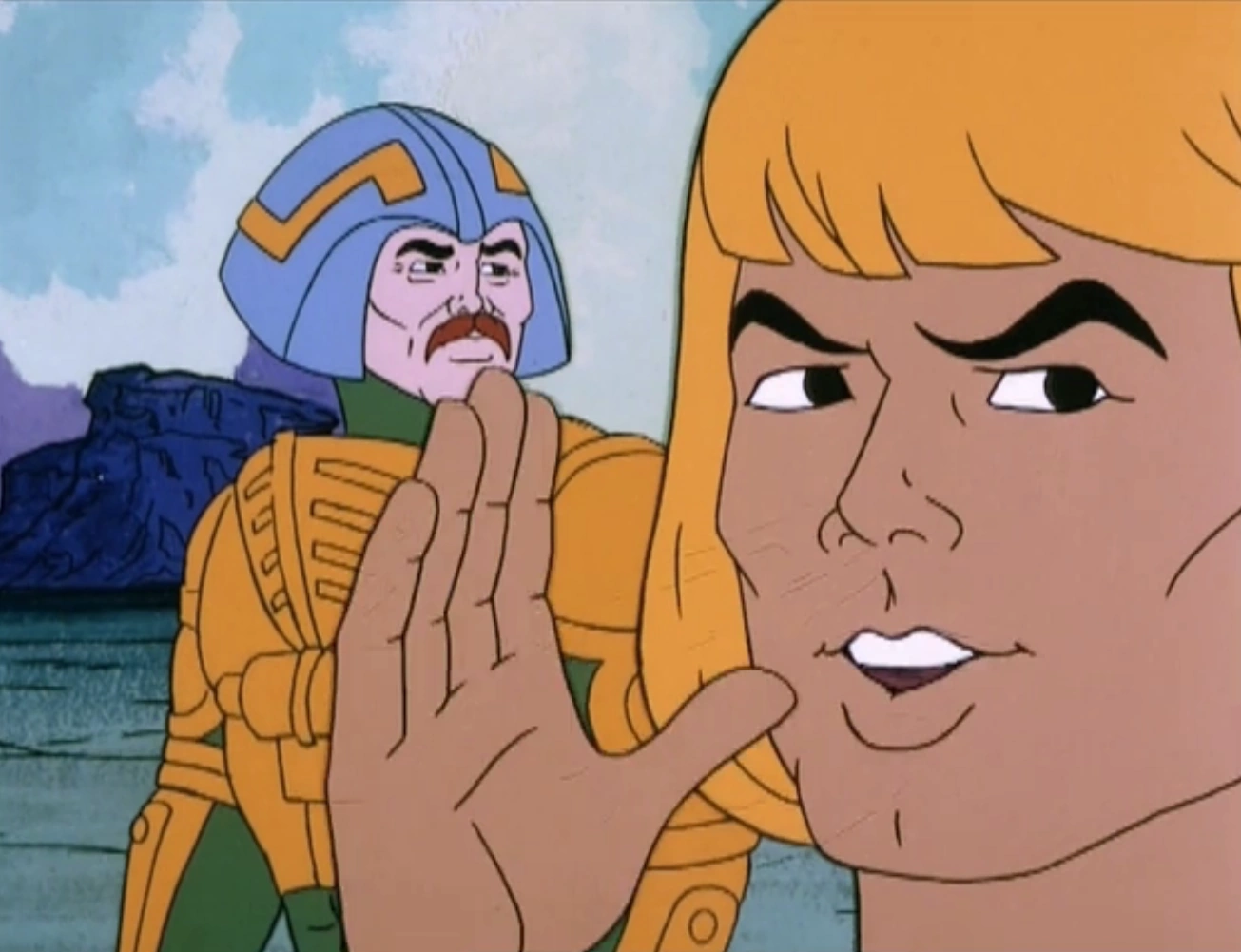
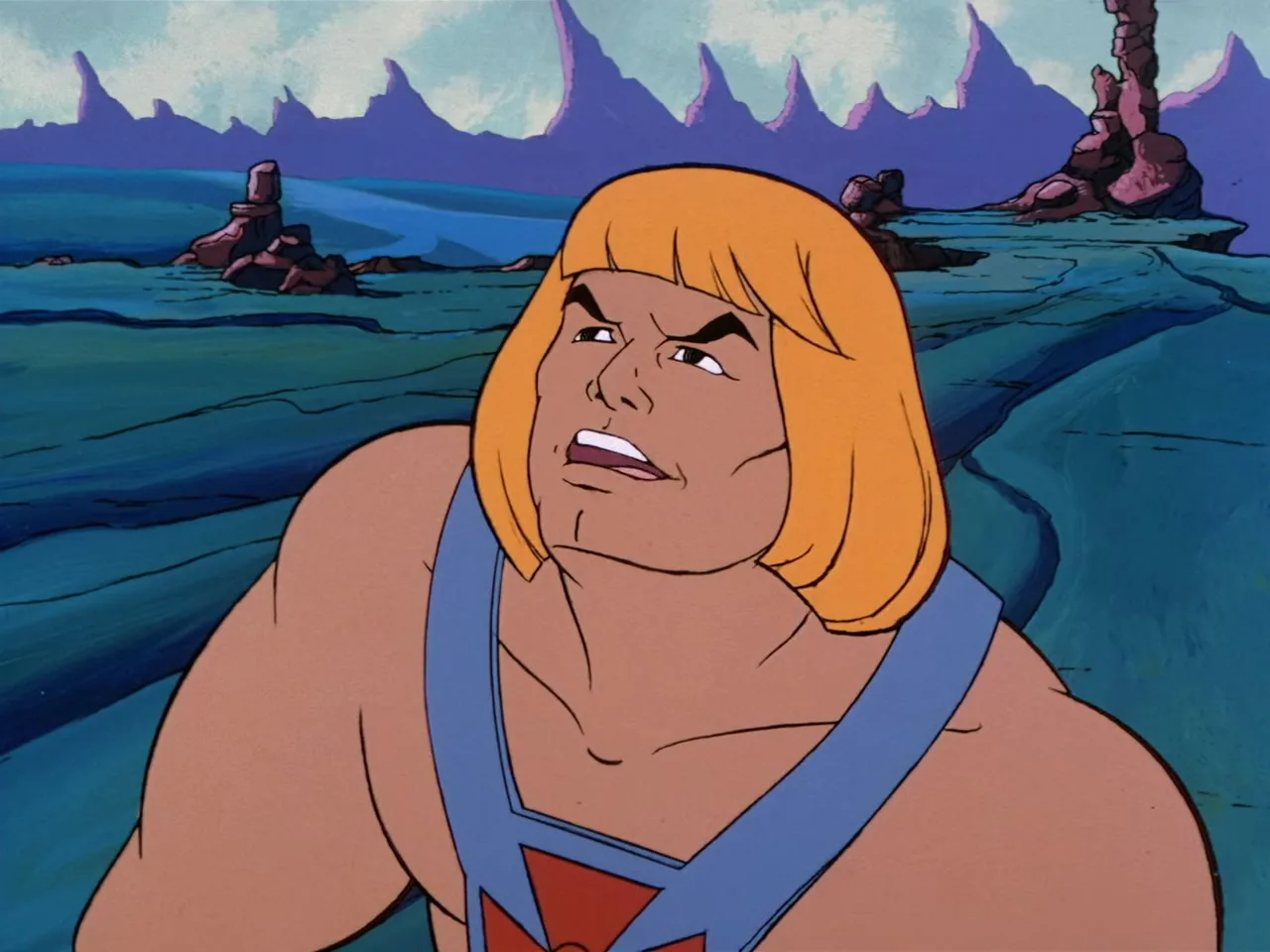
He-Man spends most of the episode without his sword. That is the structural trick worth noticing, and it is a good one. Deprived of the one prop the show usually leans on, he still ropes a cliff face, holds up a collapsing cavern, and talks Rabar out of a fight he could have won by force instead. John Erwin plays that difference well; there is a different register to "you are afraid, and I understand that" than to anything he usually says swinging a weapon. Ram Man gets the episode's best running bit almost by accident, baffled that Adam and He-Man are never in the same room, a small continuity joke the writers trusted the audience to catch without underlining it.
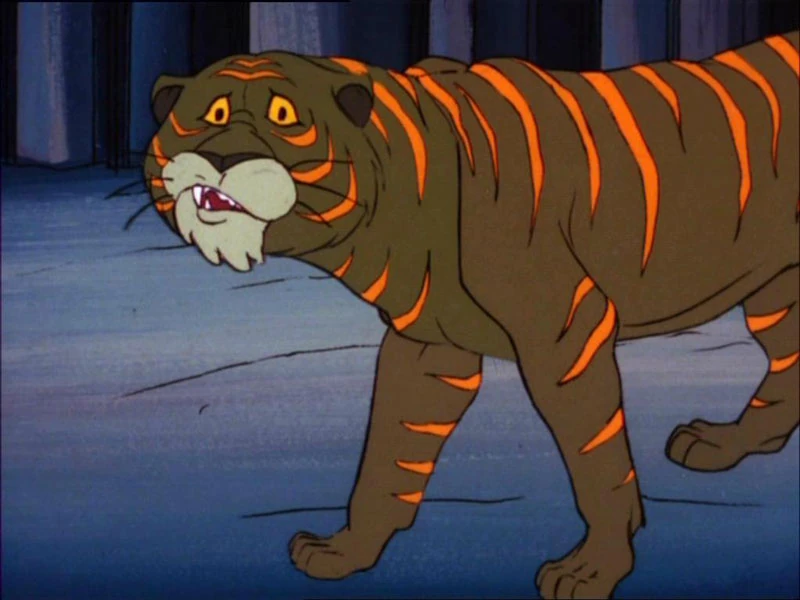

The cave paintings are the best piece of visual storytelling here, and the dialogue never has to explain them. A sun, a flower, a cat worked into blue stone: the Rock People were artists before they were threats, and the image quietly reframes Rabar's posturing as a new leader overcorrecting rather than a monster showing its true colors. Orko gets to be useful for once rather than merely a liability. It is his curiosity about the pit's raw energy, not a plan, that puts him in the right place to catch the sword as it falls, and Richards lets that payoff stay a little accidental instead of forcing Orko into a hero's arc he has not earned.
The weakness is pacing through the middle third. The approach to the cave, the false start with Ram Man's ramming, and the detour to find Orko's side entrance stretch a fairly simple idea past where it wants to go, and the chase starts to feel padded well before the collapse gives it urgency again [1]. The episode also leans on convenient timing more than once, which is a habit worth flagging even in a show built for children.
What holds it together is the closing turn, where the Rock Men choose isolation over a treaty, tear down their own ladders, and ask to be sealed off from the surface world entirely. It is a quieter ending than this show usually reaches for, and it trusts Rabar and Togar's own decision that weapons are the problem, not who holds them. He-Man's closing moral lands with real weight after a whole episode spent being powerless. "Quest for the Sword" is not among the series' most memorable adventures, but it is one of the more disciplined ones, a simple premise that never strays from the one idea it set out to argue.
[1] Man-At-Arms references "the center of the earth" twice while the group is standing on Eternia, not Earth, a slip that survived the final script revision of June 3, 1983.
- Behind the scenes: Script was approved May 31, 1983 and final script revision took place June 3, 1983.
- Continuity: The character model for Rabar was previously used as a Sand Demon in the episode Temple of the Sun and will again be made out of sand in The Witch and the Warrior and will then be seen as several identical Rock Men in'Into the Abyss. The character model for Togar was previously used as a rock turned evil by the Horn of Evil in the episode Dree Elle's Return. The animation of He-Man lifting and throwing was first seen in The Taking of Grayskull and would be re-purposed to be used again in Return of the Gryphon; The Gambler and a reanimated version was seen in Fisto's Forest. The animation of He-Man swinging on a rope with a shocked expression will be seen again in the She-Ra: Princess of Power episode Horde Prime Takes a Holiday.
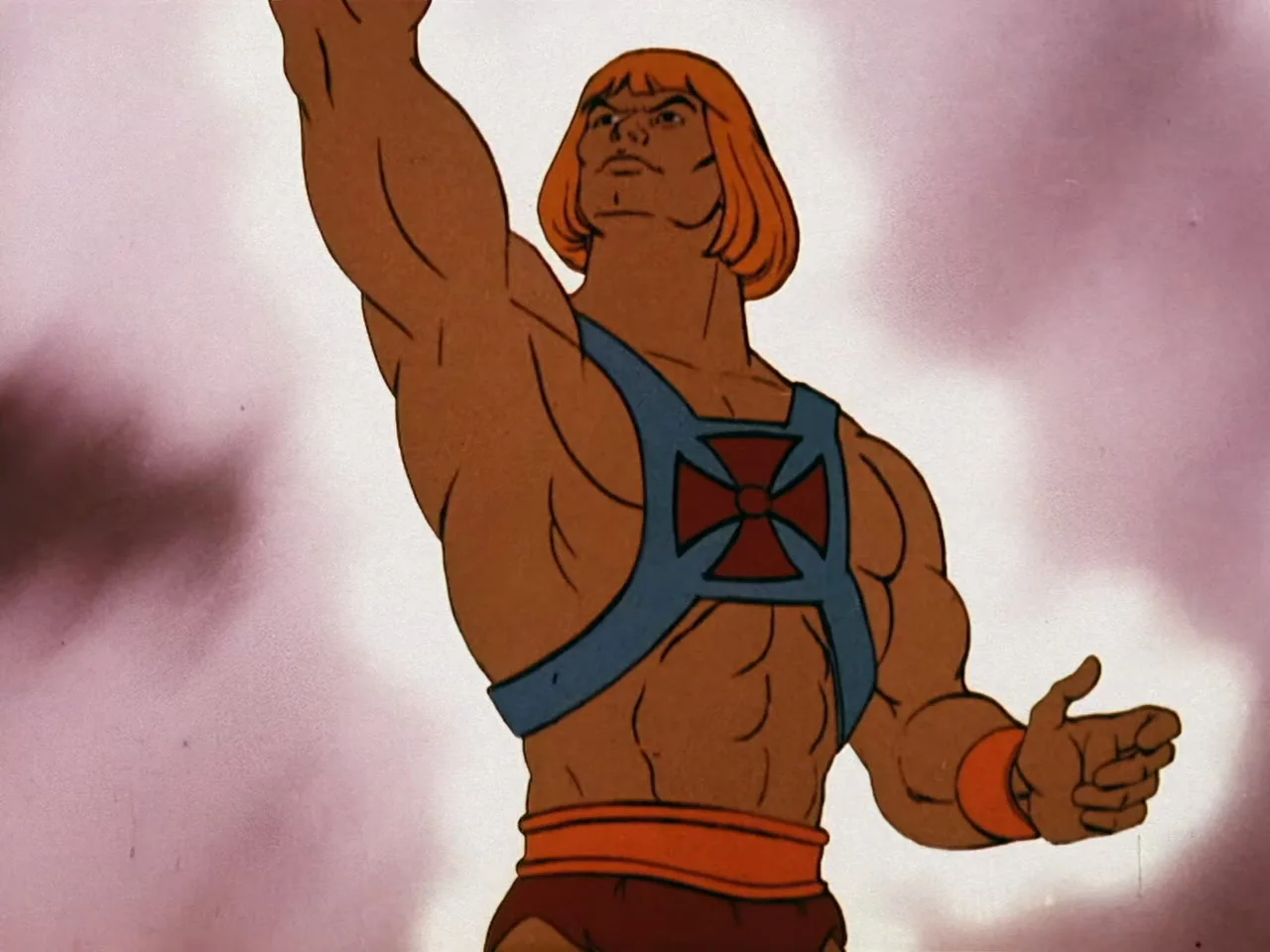
- More continuity: The animation showing He-Man holding aloft his magic sword the same way Prince Adam usually does is also seen in Quest for He-Man, The Secret of Grayskull and Teela's Triumph.
- Animation errors and goofs: Man-At-Arms references the center of the earth twice when they are on Eternia not Earth. Orko is much too large in comparison to Ram Man when he offers him help but Rammy compares him to a mosquito. When Orko says "I wouldn't want to see that big pillar fall, it holds up the whole thing", it cuts from him and Man-At-Arms to a different shot of He-Man, but the background remains the same. When Man-At-Arms tells He-Man "They're cheering Rabar and Togar, and us", the definition of He-Man's upper chest disappears for a couple of frames.
- A Dini-scripted broken-sword script that prefigures both the 2002 MYP and 2021 Revelation Power Sword reforging arcs. The Filmation version is structurally simpler but establishes the iconography.




DISCUSSION
Join the conversation.
Comments below are mirrored on the heman.org forum. Sign in once, post anywhere.