


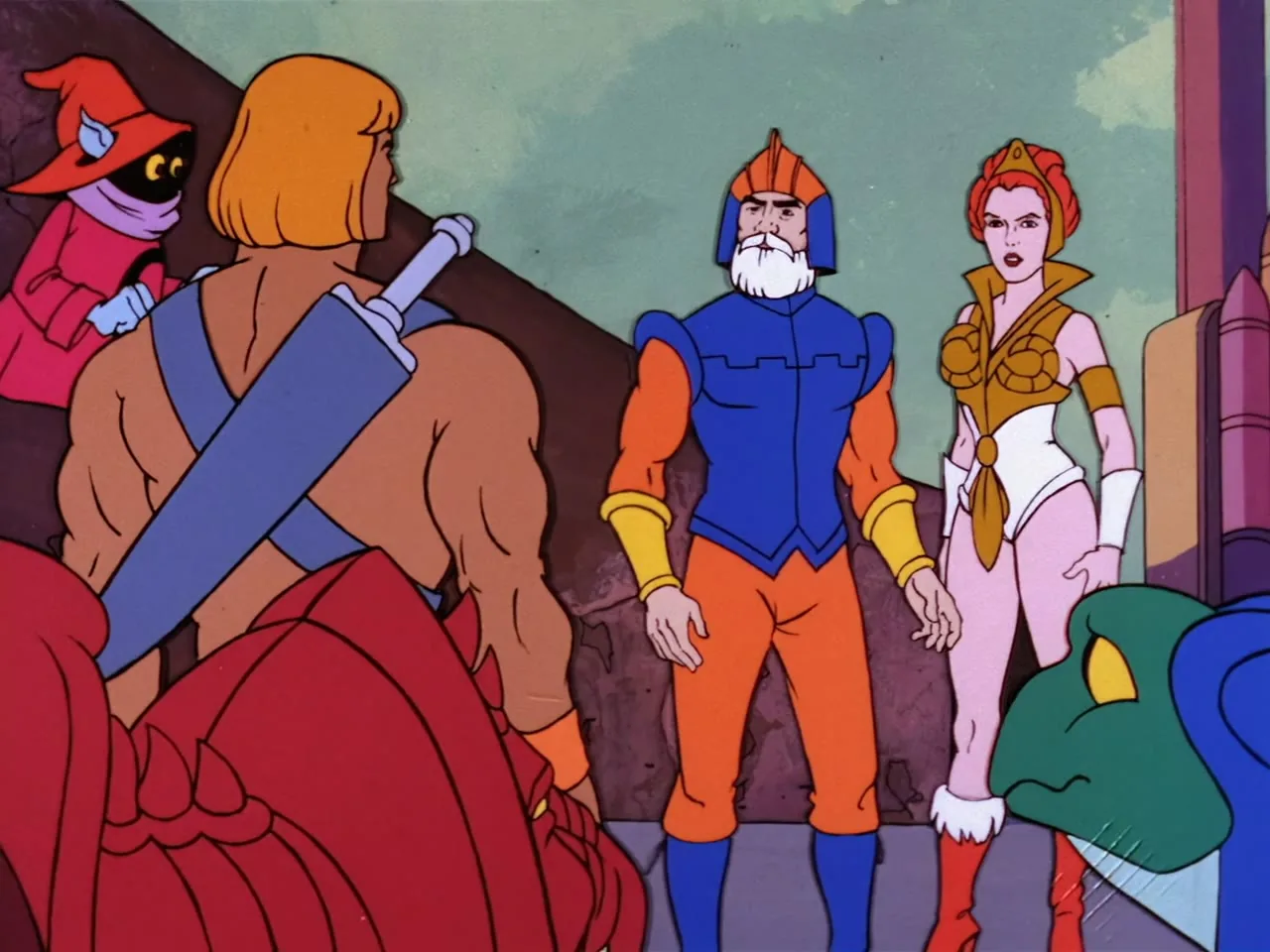
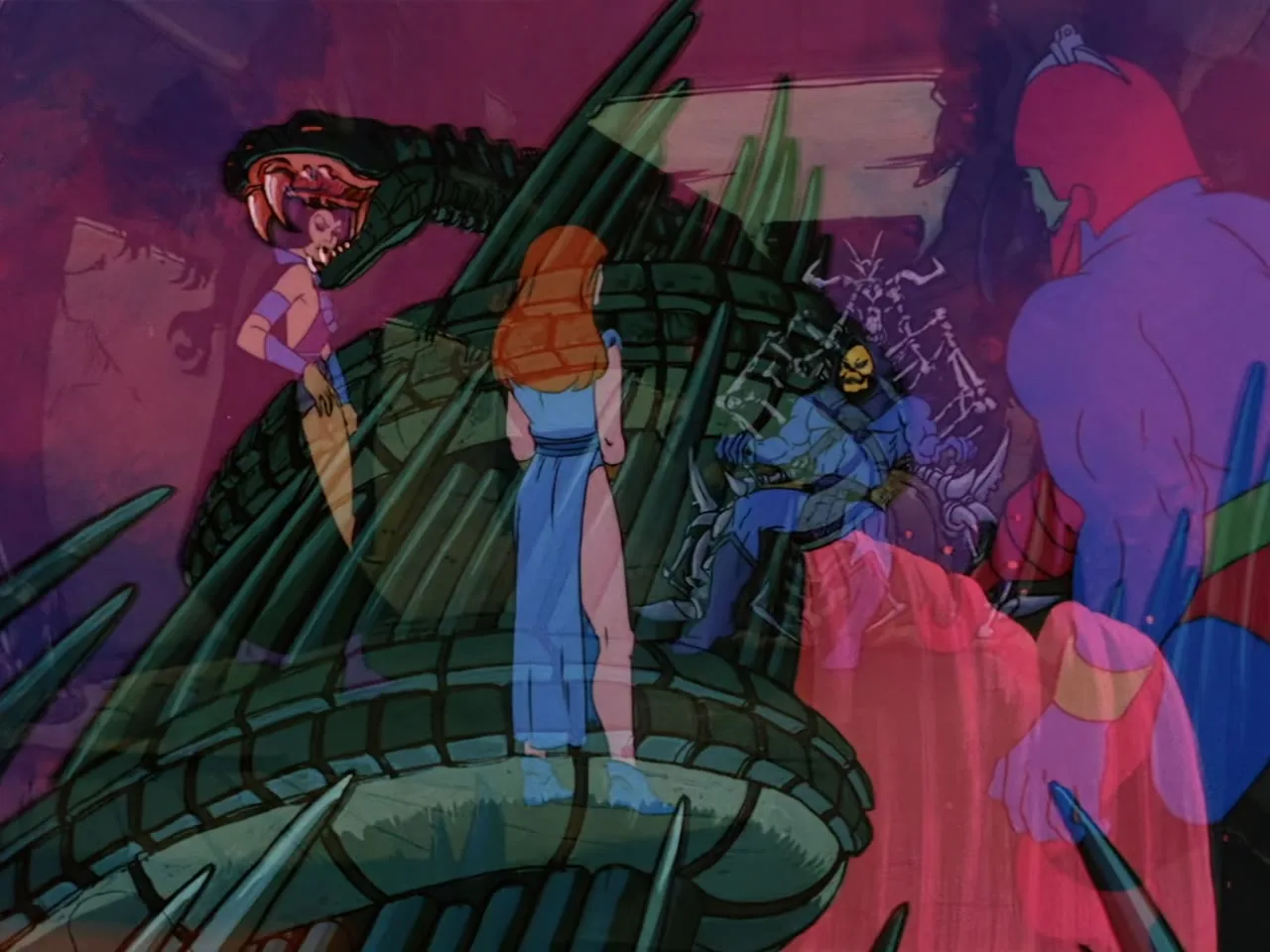
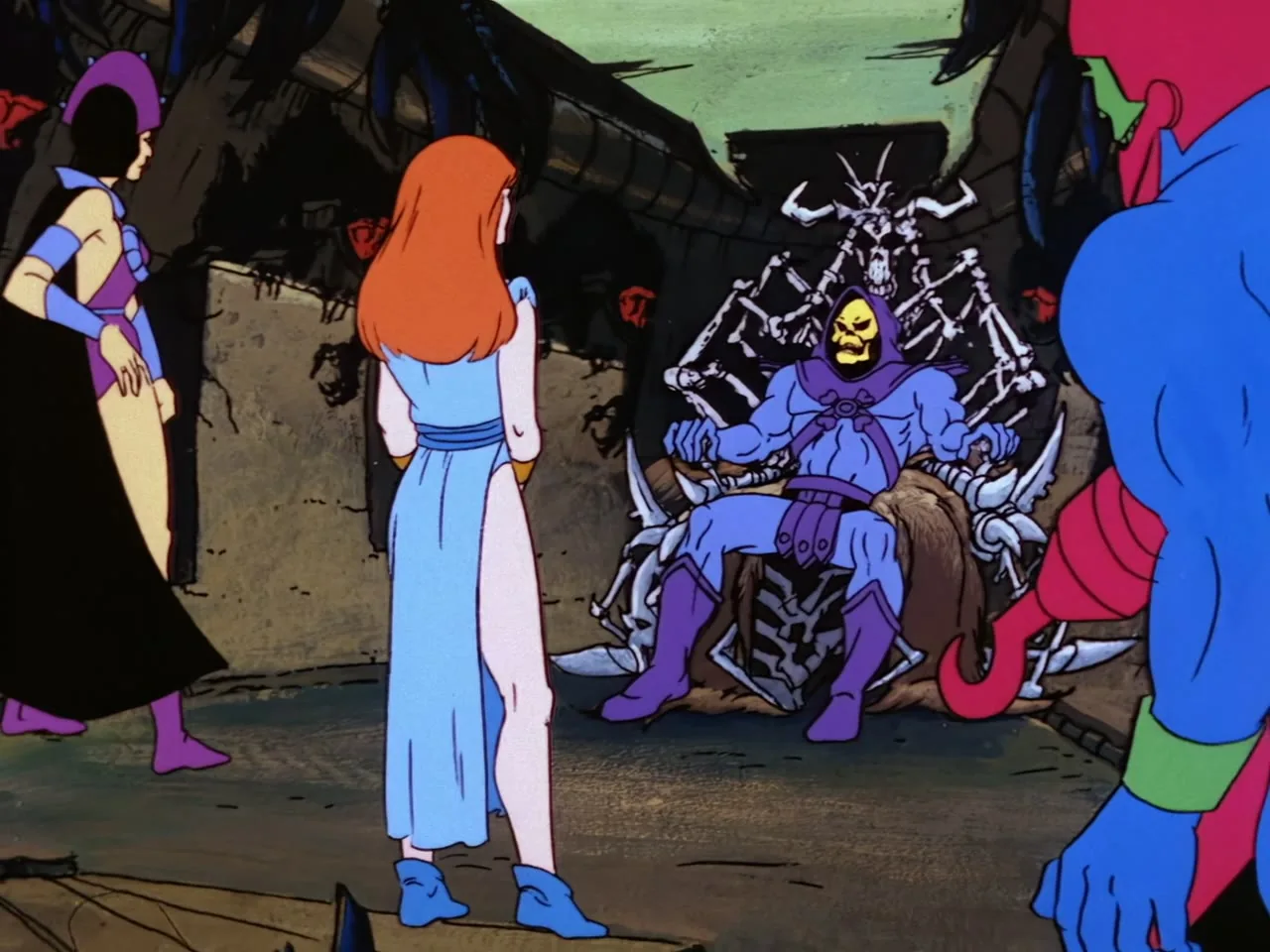
Skeletor realizes the fastest way to control the monster Yog is to control Celice, the one woman whose singing keeps it asleep, so he captures her instead of fighting the creature directly. It briefly makes the walled city of Tahryn hostage to a song, and leaves He-Man's team racing to free Celice before Skeletor can use Yog to level the place.
Teela: "In today's story, the beautiful voice of Celice kept the evil Yog from making all sorts of bad things happen. Now, I can't promise that a song will make any magic for you, but I can promise that when you're feeling lonely or sad, and we all do sometimes, if you try singing a song, or maybe whistling, or maybe just smiling, you'll feel a lot better. Honest! Try it and see. And I'll be seeing you, very soon. Bye now!"
John Erwin as He-Man/Prince Adam and Prime Minister Pangas
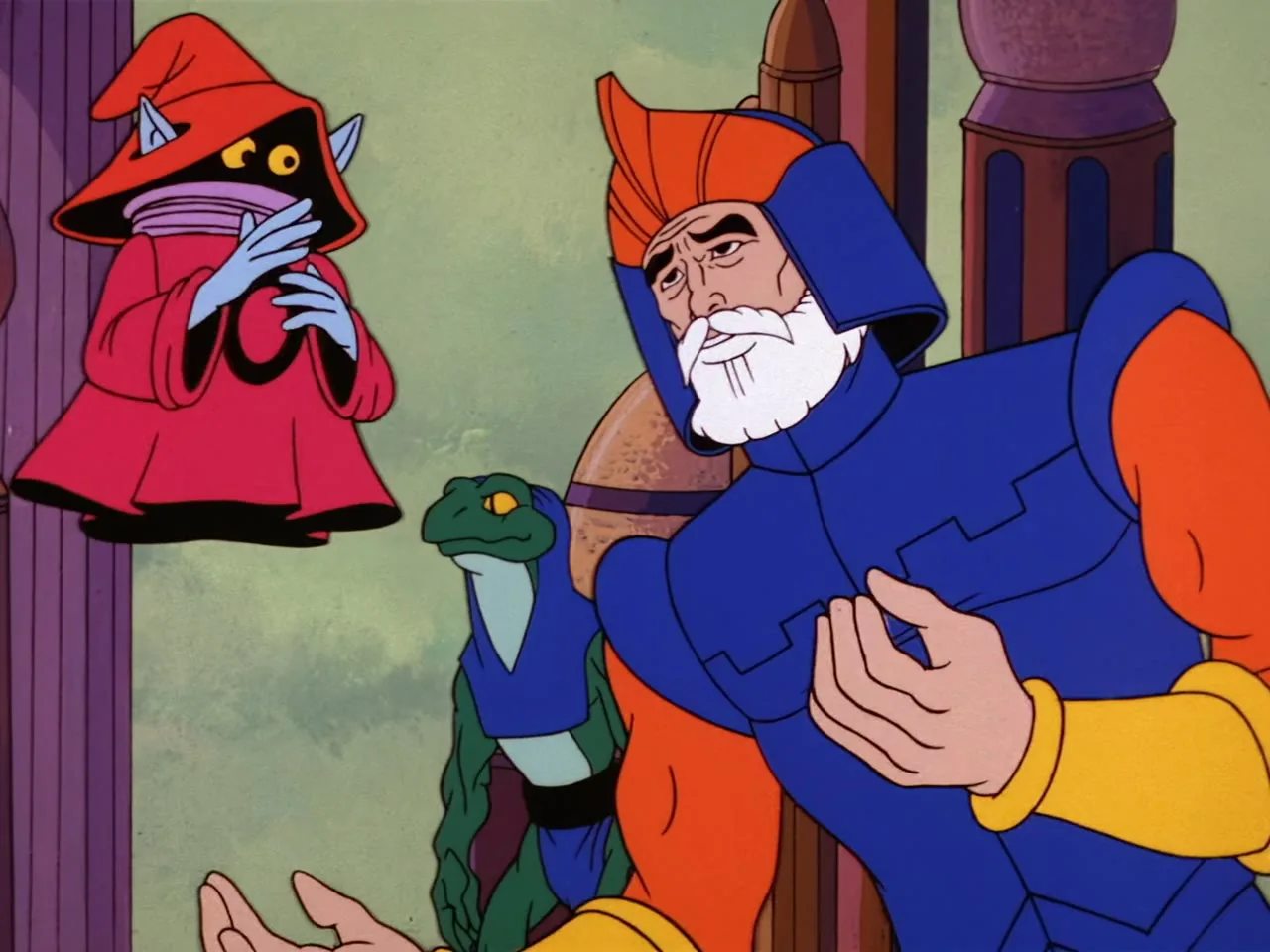
Alan Oppenheimer as Skeletor, Man-At-Arms and Cringer
Linda Gary as Teela, Evil-Lyn, Celice and the Sorceress
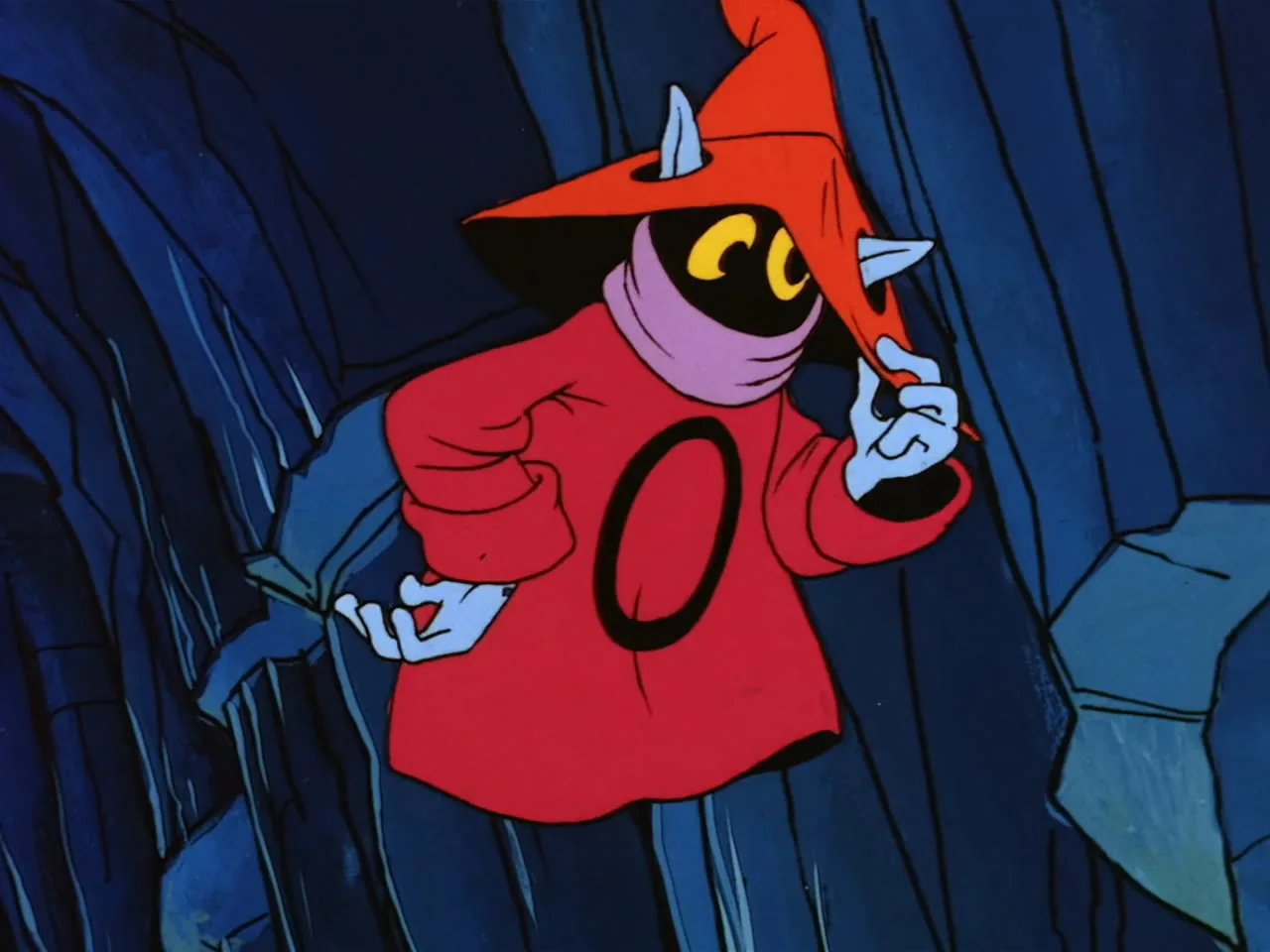
Lou Scheimer (credited as Erik Gunden) as Orko, Lizard Man, Trap Jaw and Orcs
Erika Scheimer as Celice's singing voice (uncredited)
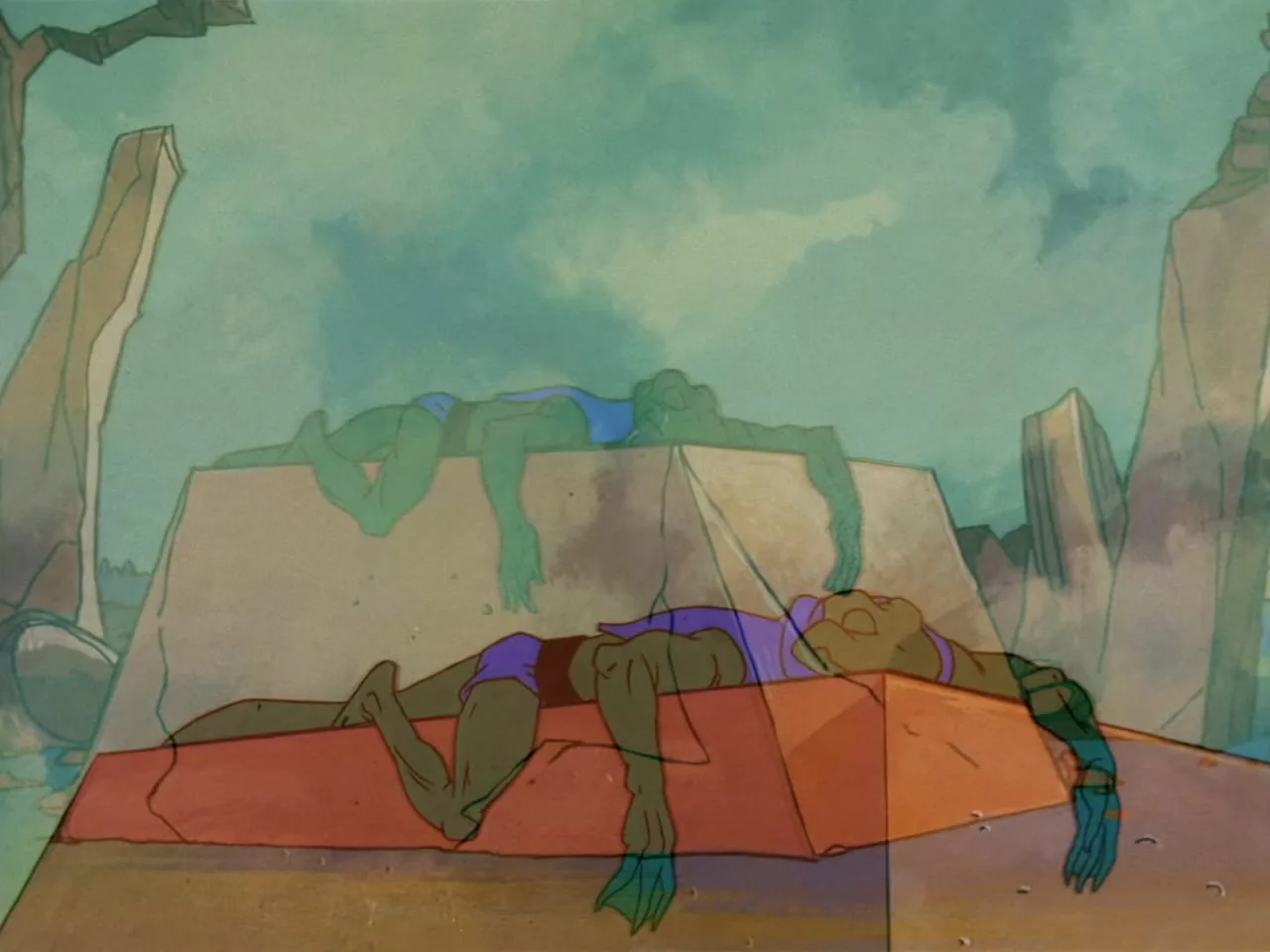
Michael Reaves and J. Brynne Stephens borrow a very old shape for this one: a walled kingdom, a monster kept docile only by one woman's voice, and a villain who realizes the fastest way to control the monster is to control the woman instead. Skeletor never fights Yog directly in this episode; he captures Celice, whose singing is the only thing keeping the creature asleep, and lets the threat of Yog do the intimidating for him. It is a smarter plan than Skeletor usually manages, built on leverage rather than brute force, and it briefly makes Tahryn's whole population hostage to a song.
The episode is less interested in Celice as a person than as a mechanism, which is the fair criticism to make of it: she sings, she is captured, she is fought over, and her own wants barely register next to what her voice can do for everyone around her. That puts Song of Celice in worse company than Teela's Quest a few episodes earlier, which gave its female lead an actual arc to walk through rather than a function to perform. Celice does not appear again anywhere else in this block, which suggests the writers treated her as a premise rather than a character worth carrying forward.
What the episode gets right is pacing the reveal of Yog itself; the threat stays mostly implied, a low growl and a kingdom's fear, until late in the runtime, which keeps the fairy-tale mechanics from curdling into a straightforward monster-of-the-week fight too early. Teela's closing message, that singing or humming can lift a bad mood, is a gentler and smaller lesson than the plot's stakes, and the mismatch is mostly harmless; nobody watching this episode for Skeletor's scheme is likely to mind that the moral undersells it. Song of Celice is a pleasant enough fairy tale wearing a Masters of the Universe costume, competently plotted and thin on the one character it is nominally about.
- Script approval came January 25, 1983, with a final revision dated July 28, 1983.
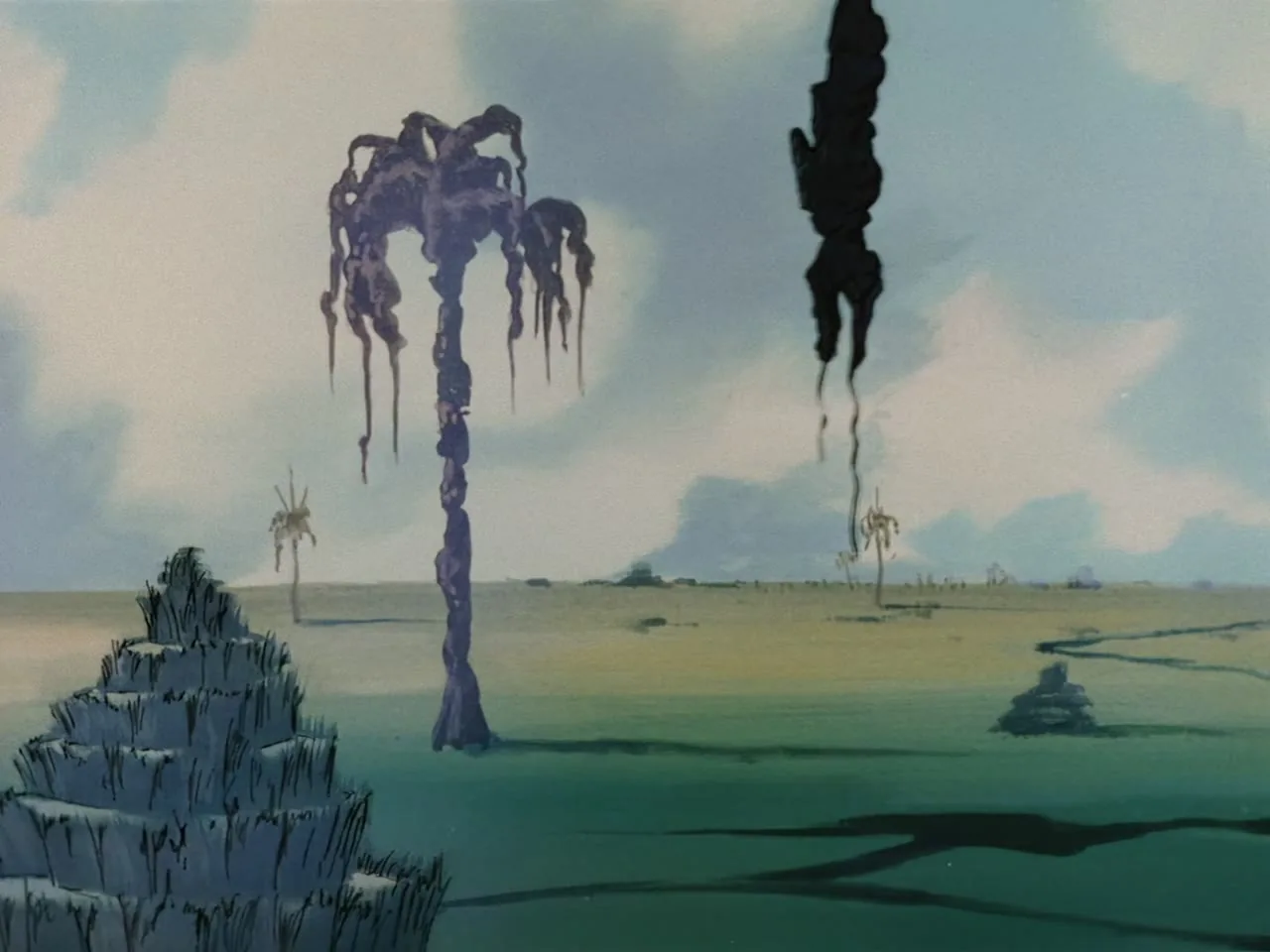
- The landscape Man-At-Arms and Teela fly over is named the Plain of Perpetua in the script and the Masters of the Universe series bible, though it's never named on screen.
- Celice's character model gets reused twice more, as Mira in Ordeal in the Darklands and as Princess Nami in City Beneath the Sea.
- The bottomless abyss Yog is thrown into is a recolored version of the Bottomless Hole of Trolla from Dawn of Dragoon.
- The tree-branch trick Man-At-Arms uses to hold off the Giant Crawler first appeared holding off a Shrieker in Creatures from the Tar Swamp.
- A Paul Dini script using a magical-young-girl premise. Celice never returns as a recurring character but the episode shows the show's willingness to introduce one-shot magical figures with substantive backstories.
















































































































DISCUSSION
Join the conversation.
Comments below are mirrored on the heman.org forum. Sign in once, post anywhere.